
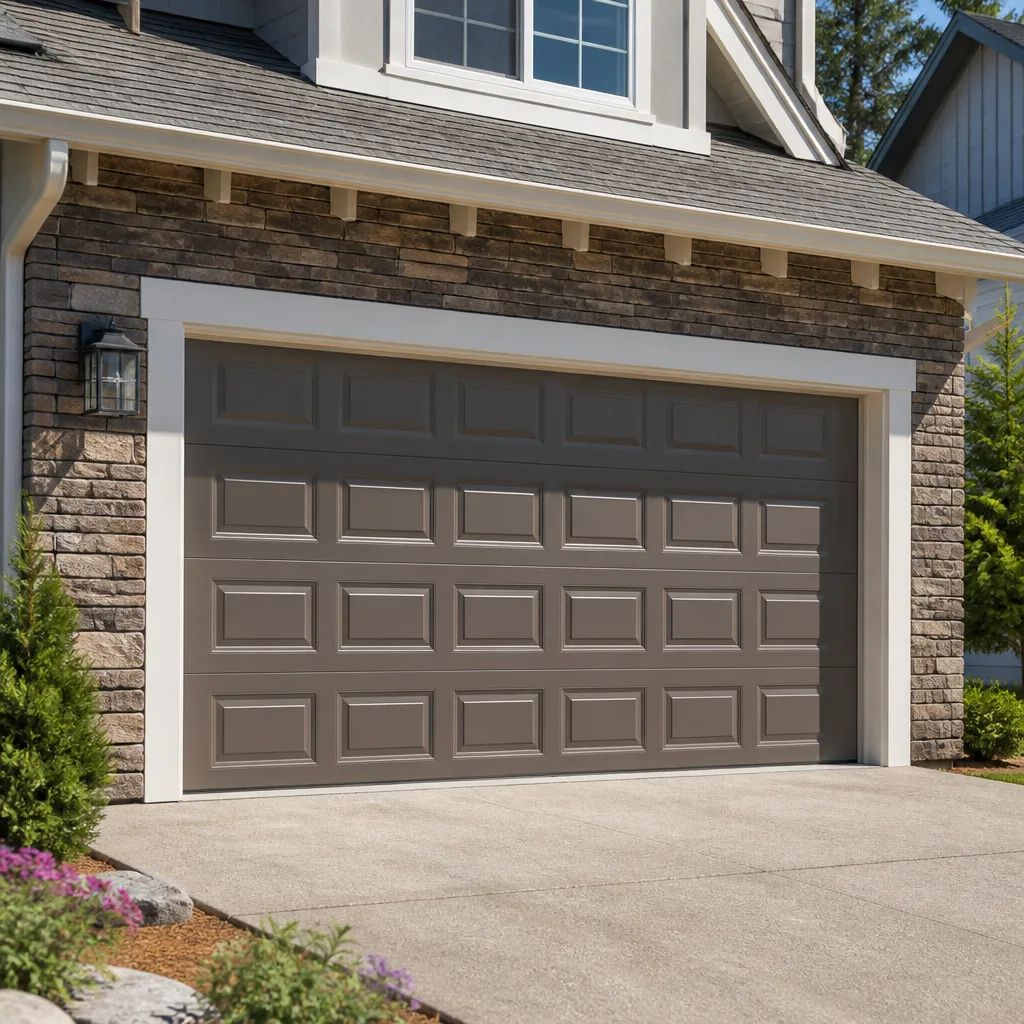
 Raised-panel steel
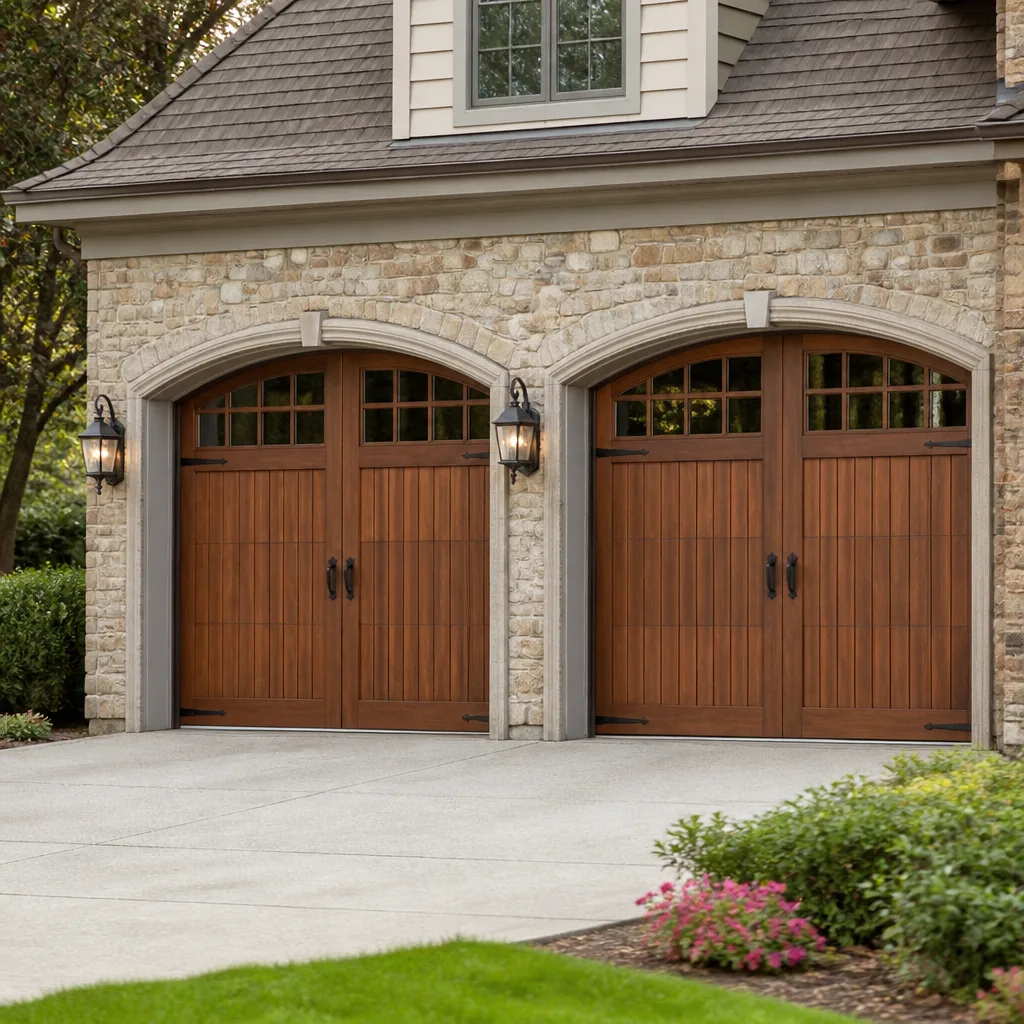 Carriage house
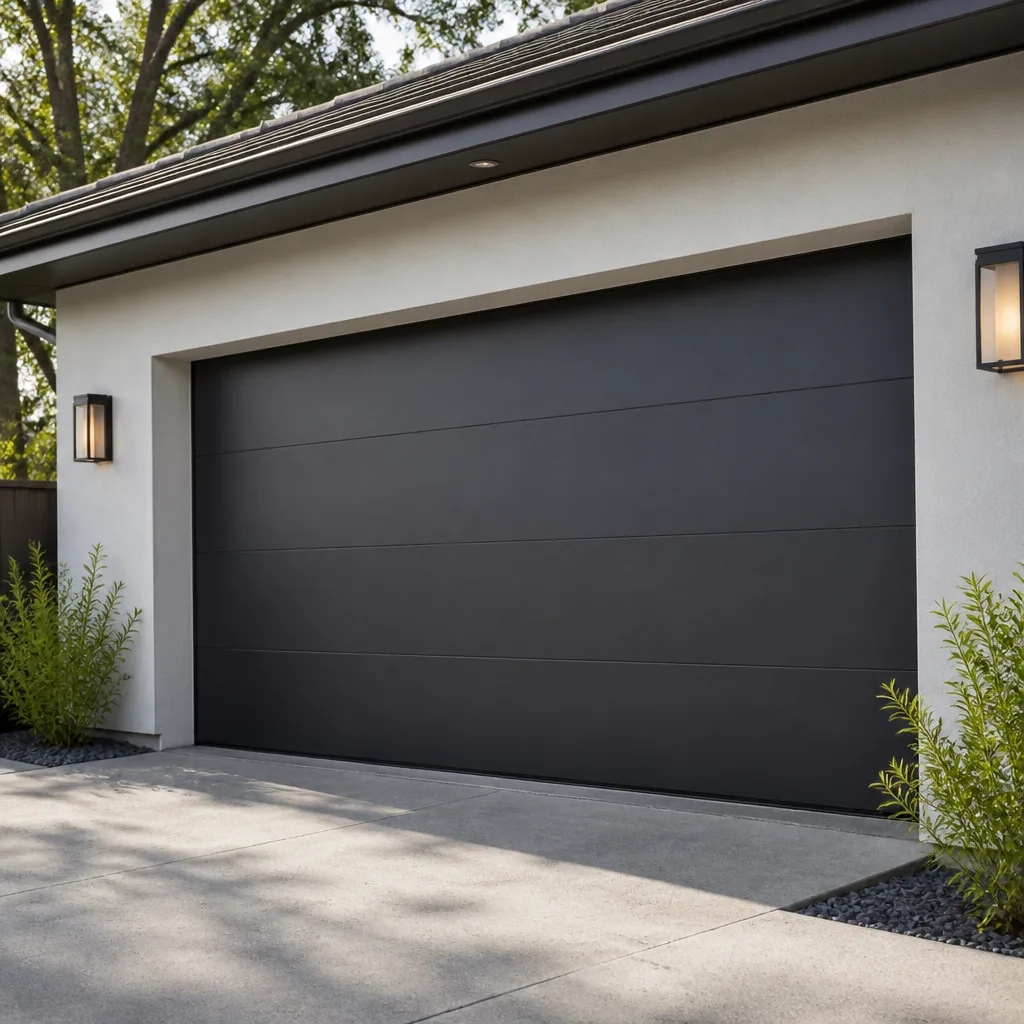 Modern flush
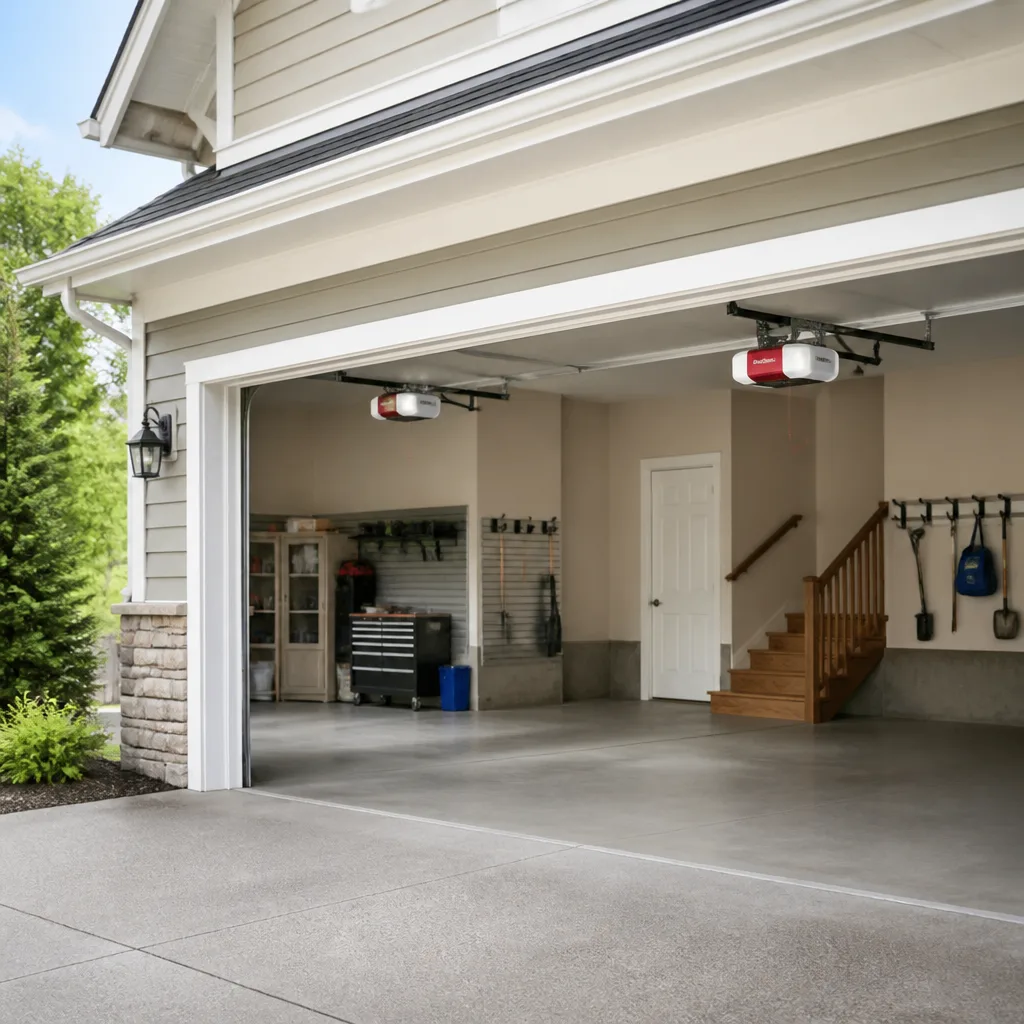 LiftMaster openers
 Chamberlain openers
Full 25-point door and opener safety check with every visit - springs, cables, rollers, tracks, and your LiftMaster or Chamberlain opener included
You get a price before we start. It does not change when the truck arrives.
Get your free estimateCraftsman Roller Replacement: The Austin Owner’s Guide
We replace Craftsman garage door rollers throughout Austin for $110 to $220 installed, parts included, and we stock the rollers on our trucks so most jobs are done in a single visit. If your door sounds like it’s dragging gravel across concrete, or you can see a roller wobbling in its track with a flat spot or a chipped wheel, that’s the part we’re talking about. The roller is the small wheel that carries the door up and down the vertical and horizontal tracks, and when one fails, the door starts working harder, getting louder, and wearing out everything around it.
Most homeowners notice a failing roller before they know what they’re looking at. The door hesitates halfway up. One side sits a little lower than the other. You hear a rhythmic thumping as the door moves, like a bad shopping cart wheel. The truth is, a roller doesn’t fail silently. It announces itself. We’ve been repairing Craftsman doors in Austin since 2001, and we’ve seen every version of this failure you can imagine, from hairline cracks in nylon wheels to steel rollers that have ground themselves into a hexagonal shape from years of neglect.
- Installed Craftsman roller replacement in Austin runs $110 to $220, parts and labor included.
- We stock steel and nylon rollers on the truck, so most replacements are completed the same day you call.
- Craftsman doors use standard 7/8″ stem rollers, but some series require a longer stem, and we verify the spec before we quote.
- Austin’s limestone dust and summer heat accelerate roller wear, especially on doors facing west.
- Every job gets a written price before we start and a 365-day written guarantee on the work.
Which Craftsman Models This Applies To
The good news about Craftsman door hardware is that most residential models made since the late 1990s use a standard 7/8-inch stem roller. That covers the vast majority of Craftsman garage doors installed in Austin’s housing boom neighborhoods: Avery Ranch, Steiner Ranch, Circle C, Mueller, and everything in between. The standard configuration is either a two-inch or three-inch wheel diameter, depending on whether the door is a standard lift or a high-lift setup. Where it gets tricky is with certain Craftsman carriage-house and insulated models from the 2000s that used a longer stem, typically a 1-1/8-inch, to accommodate thicker door sections. If you call and say you have a Craftsman door but aren’t sure of the model, we’ll ask you to read the label on the inside edge of the door panel, usually on the bottom section. If that label is gone or faded, we measure the stem on-site, because installing the wrong stem length on a Craftsman door will chew up the hinge and the track fast.
One compatibility gotcha worth knowing: Craftsman has sold doors under their name through multiple manufacturers over the years, so a 2003 Craftsman door and a 2018 Craftsman door may have quietly different hardware. The rollers are generally interchangeable, but the nylon bearing quality varies a lot between production runs. We carry both OEM equivalent and higher-grade aftermarket rollers with sealed bearings, and for Austin’s dust, we lean toward the sealed bearing option every time. Craftsman doesn’t sell rollers directly to independent shops, so what we install is either the OEM-spec equivalent or a better-built aftermarket roller that outlasts what the factory sent. We’re an independent service provider and have no affiliation with Craftsman, which means we have no incentive to defend their original equipment when a better part exists.
Styles & brands we work with
Signs Your Craftsman Roller Replacement Is Failing
- The door sounds like it’s dragging something. When the nylon wheel on a Craftsman roller develops a flat spot or the bearing dries out, the roller skids instead of turns, and you hear a scraping or grinding noise against the track. It gets worse before it gets better.
- The door jerks or shudders as it moves. A roller with a seized bearing forces the door to slide instead of roll through the curved section of track, and that resistance makes the whole door buck. This is also the fastest way to wear out your opener’s gears.
- One side of the door sits lower when closed. When a roller wheel chips or cracks, the door loses its contact point in the track and settles unevenly. What looks like a spring problem is often just one bad roller carrying less than its share of the load.
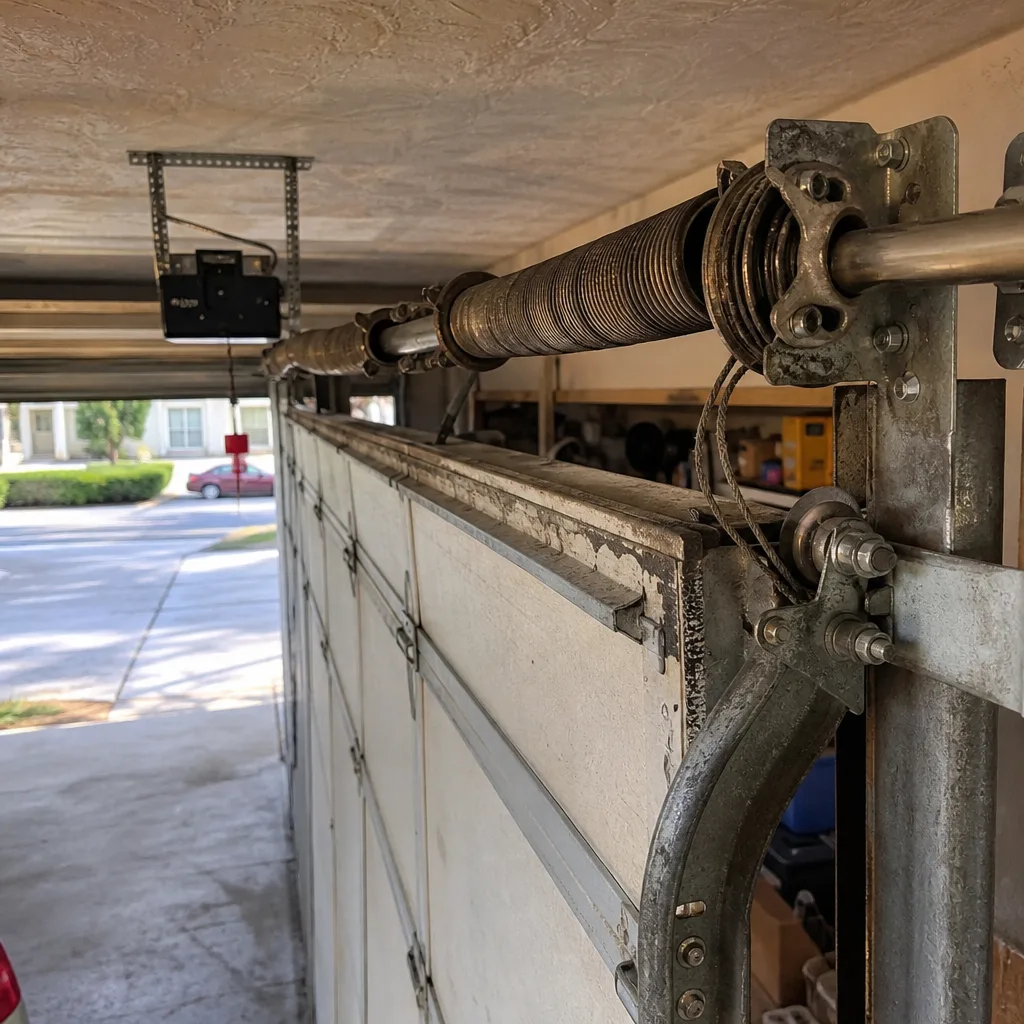
- Visible wear on the roller wheel itself. If you stand inside the garage and look at the rollers while the door is closed, you may see flat spots, cracks, or a wheel that’s visibly smaller than its neighbors. Steel rollers show wear as a flattened or tapered profile; nylon rollers show hairline cracks or missing chunks.
- The door is louder on warm days than cool days. In Austin’s heat, the metal stem of a roller expands slightly inside the hinge barrel, and a marginal bearing that’s fine at 70 degrees will bind at 105. We see this most often on west-facing garage doors in places like Round Rock and Cedar Park that take the full afternoon sun.
See the difference
 Before
 After
After Before
 After
After Before
 After
AfterReplacement Cost & What’s Included
For a Craftsman door in Austin, you’re looking at $110 to $220 to replace the rollers, depending on how many you replace and which roller type you choose. A ten-roller set on a standard 7-foot Craftsman door with basic nylon rollers typically lands around $130 to $150. If you upgrade to sealed-bearing nylon rollers, which we recommend for doors in the Austin area where dust and heat are hard on open bearings, expect to pay $180 to $220 for the full set installed. The price you’re quoted is the price you pay, and we write it down and hand it to you before we touch a bolt.
What’s included: the rollers themselves, all hinge and track inspection while we’re in there, minor track adjustments if the worn roller has bent or spread the track, and a 365-day written guarantee on the work from the date of repair. If a roller we installed fails within that year, we come back and replace it at no charge. That’s the Done Right Promise, in writing, every time. We don’t do verbal estimates, and we don’t call you back to the door with a second price once the panels are off.
DIY or Call Us?
Replacing a roller on a garage door is one of the repairs that looks easy on a YouTube video and goes sideways fast in real life. Here’s the honest split: you can safely inspect your rollers by looking at them while the door is closed, and you can listen for the sounds we described earlier. What you should not do is unbolt the hinge holding a bottom roller while the door is under tension. The cable that runs along the bottom of the door is connected to a high-tension spring, and the bottom roller is attached to that same cable assembly. If you unbolt the bottom hinge without unloading the spring correctly, the cable can whip free and the spring can release with enough force to cause serious injury. We tell every Austin homeowner the same thing Aaron Teague tells people standing in their garage: a garage door is the largest moving object in your house, and the parts under tension deserve a trained hand. Aaron grew up working with his hands and trained through Los Angeles Trade-Technical College before spending years working on everything from custom wood carriage doors to stripped-out torsion spring assemblies. If you’ve got a Craftsman roller that’s failing, call us at (361) 470-4316, and we’ll send a background-checked technician whose name and photo you’ll have before we knock on your door.
Know what’s broken, know what it costs, know who’s coming. That’s the whole job.
FAQs
Craftsman garage door rollers, the factory-installed nylon wheels, typically last 7 to 10 years in an Austin climate that sees 100-degree summers and a lot of limestone dust. After that, the bearing grease dries out and the wheel starts to wear the track. If your Craftman door is over 10 years old and you haven’t replaced the rollers, they’re on borrowed time. Call (361) 470-4316 and we’ll check them during a free inspection.
No, a worn roller is not a repairable part. The bearing inside the wheel is sealed, and once it dries out or develops play, the entire roller gets swapped. The good news is the replacement is straightforward, and we stock what we need on the truck.
Replacing all ten rollers on a standard Craftsman garage door takes 45 to 90 minutes. Most Austin jobs are done in one visit, same day, often within the hour, and that includes the time to inspect the tracks and hinges and clean out any debris the old rollers left behind.
Yes, we stock rollers for Craftsman doors on our trucks, including both stem lengths and both standard and high-lift wheel diameters. We also carry parts for LiftMaster, Chamberlain, and Genie openers, since a bad roller often reveals an opener that’s been working too hard. If you’re in Austin and need it done today, call (361) 470-4316, and a real person answers, day or night, weekend or holiday.
If your Craftsman door is making noise, shaking, or sitting crooked, call Doyle Garage Doors Austin at (361) 470-4316 for a free estimate. We’ll tell you what’s wrong, what it costs, and who’s showing up at your door, before you ever open it.
Written by Aaron Teague, Owner, Doyle Garage Doors Austin at Doyle Garage Doors Austin, serving Austin and nearby areas.