
Last updated October 16, 2026
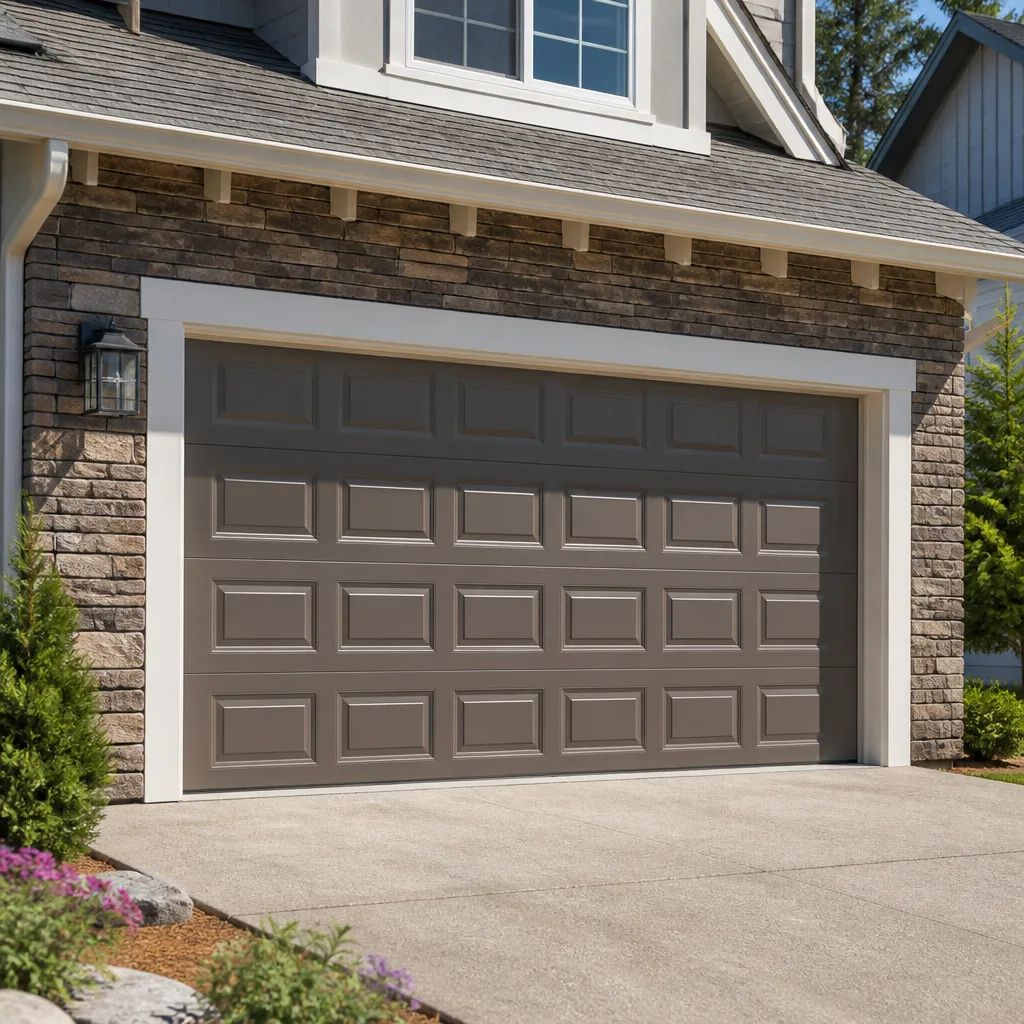 Raised-panel steel
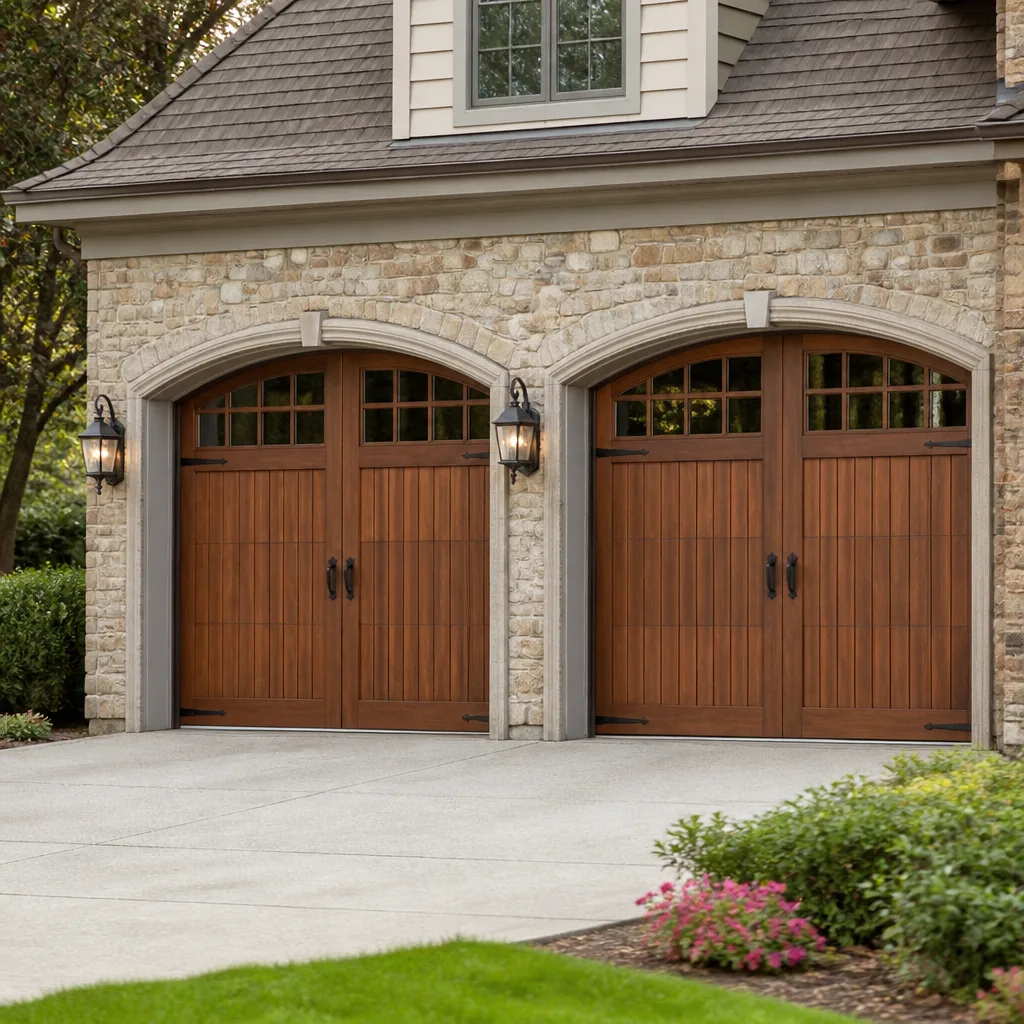 Carriage house
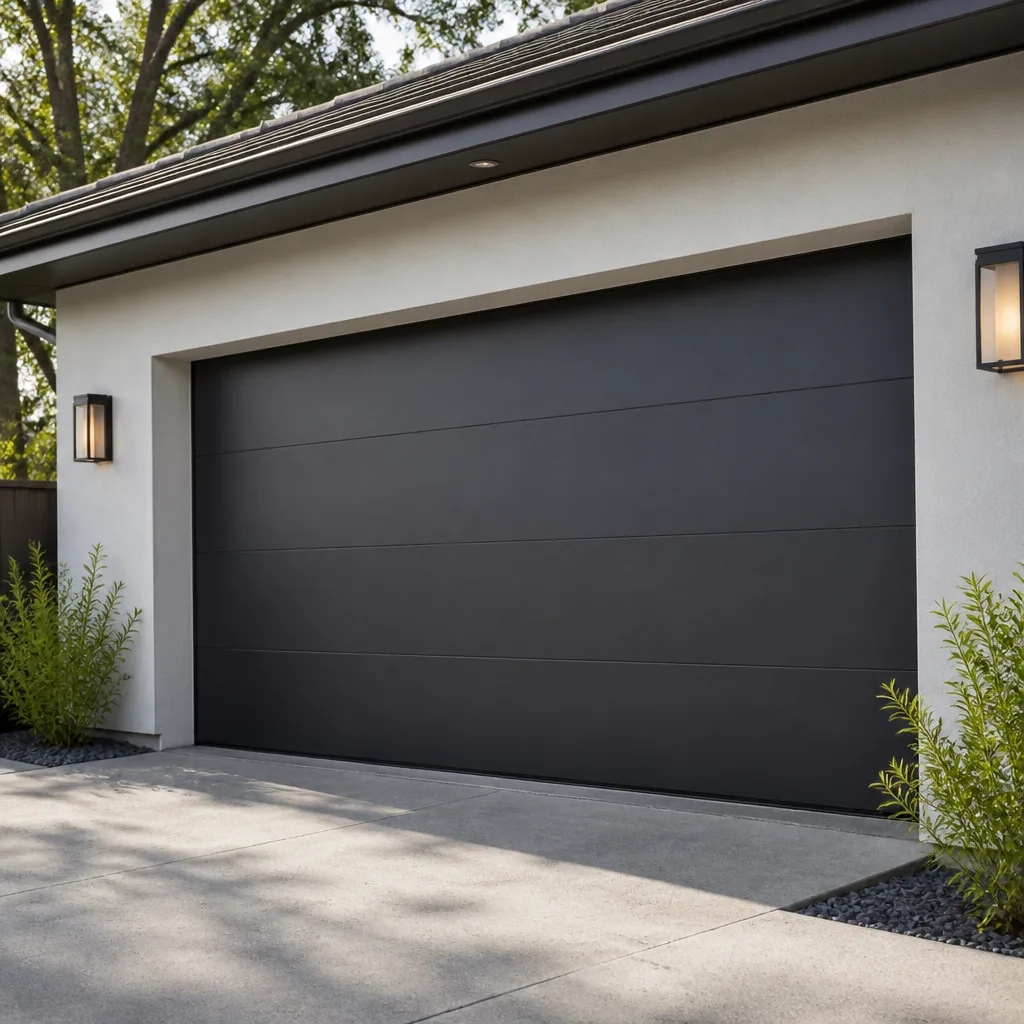 Modern flush
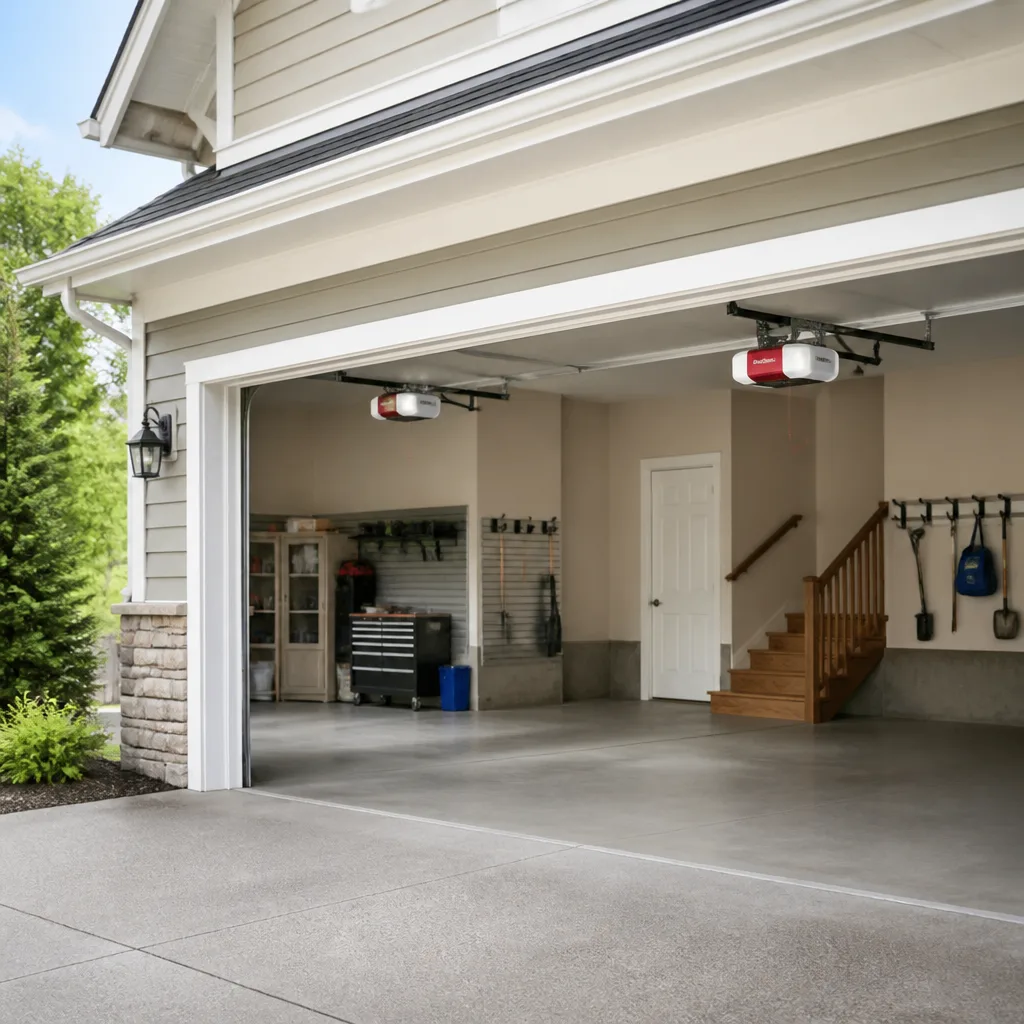 LiftMaster openers
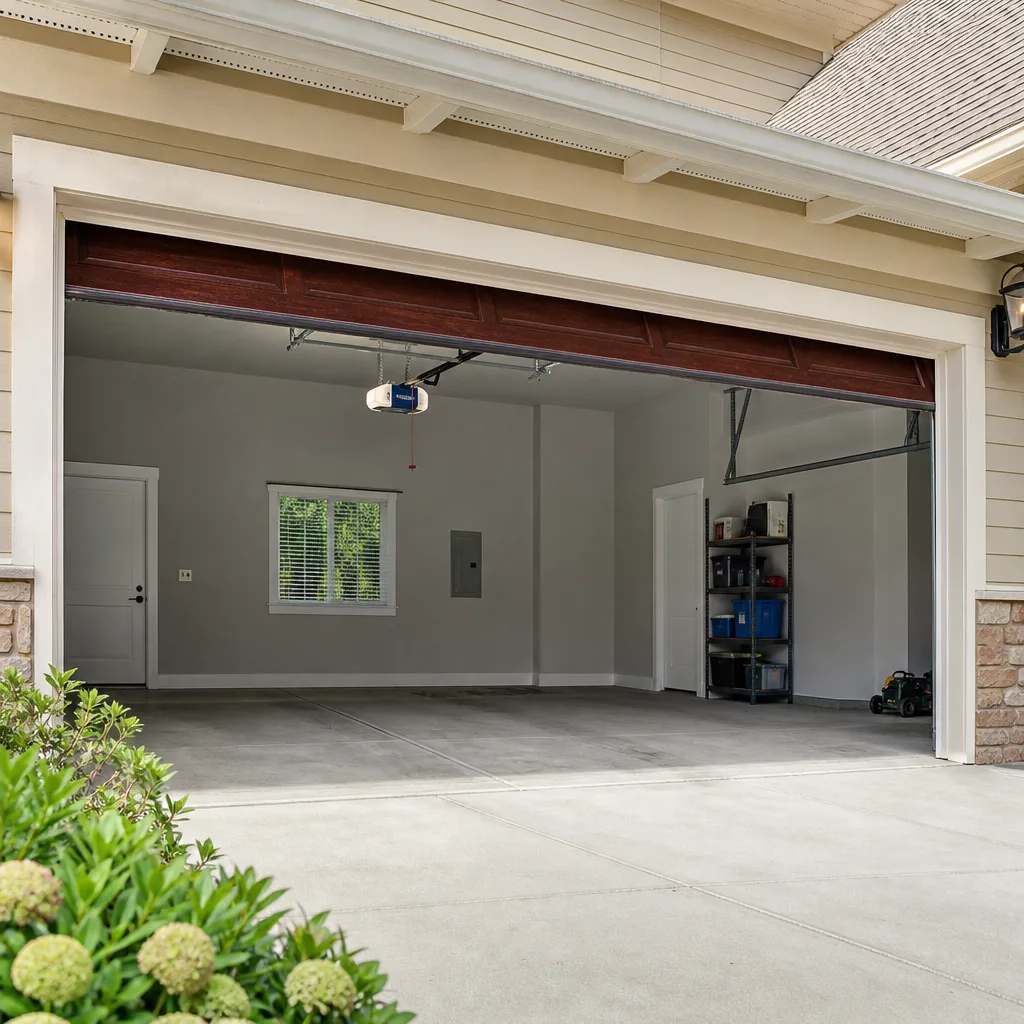 Chamberlain openers
Full 25-point door and opener safety check with every visit - springs, cables, rollers, tracks, and your LiftMaster or Chamberlain opener included
You get a price before we start. It does not change when the truck arrives.
Get your free estimateGarage Door Warning Signs: A Austin Homeowner’s Reference Guide
The grinding sound most Austin homeowners ignore for months is a worn nylon roller shedding its sleeve into the track. It costs about $180 to replace all the rollers on a standard double door. It costs about $650 to replace the track that eventually warps if you wait. This guide decodes the six specific sounds, motions, and visual cues that appear weeks before a door stops working, so you can act while the fix is still cheap and scheduled, not urgent and expensive.
We’re writing this from twenty-plus years of repairing doors across Austin, from Allandale to Zilker. We’ve seen what homeowners miss, what they mistake for normal, and what costs them real money. Here’s what actually matters.
Quick Answer
Most garage door failures announce themselves weeks in advance through six specific warning signs: a grinding or popping noise during operation, a door that hesitates or jerks, visible cable fraying near the top drums, rust patterns on springs that indicate metal fatigue, a door that sags in the middle when open, and an opener motor that hums but doesn’t move. If you hear grinding, see frayed cables, or notice a sagging section, stop using the door and call a technician. Everything else can usually wait a few days.
Styles & brands we work with
Table of Contents
- The Seven Sounds Your Garage Door Makes and What Each One Means
- Visual Warning Signs You’ll Miss If You’re Not Looking
- The 30-Second Balance Test Every Austin Homeowner Should Know
- Why Austin’s Temperature Swings Create False Alarms
- Watch It vs. Call Today: The Triage List
- What These Repairs Actually Cost in Austin
- Common Mistakes to Avoid
- When to Call a Professional
The Seven Sounds Your Garage Door Makes and What Each One Means
Your garage door talks constantly. Most people tune it out. The seven sounds below map directly to specific mechanical components, and each one tells you how much time you have before the door stops working entirely.
1. Grinding (like rocks in a blender)
This is the most common sound we hear on service calls in Austin, and the most ignored. It’s almost always a worn roller. Rollers are the small wheels attached to the sides of the door that ride inside the vertical and horizontal tracks. Quality rollers have a nylon sleeve around a steel bearing. When that nylon sleeve wears through, the steel core grinds directly against the metal track. The fix is a roller replacement, typically $180 to $240 for all rollers on a standard door. The consequence of waiting is a warped or grooved track, which runs $500 to $700 to replace.
2. Popping or snapping (sharp, intermittent, during movement)
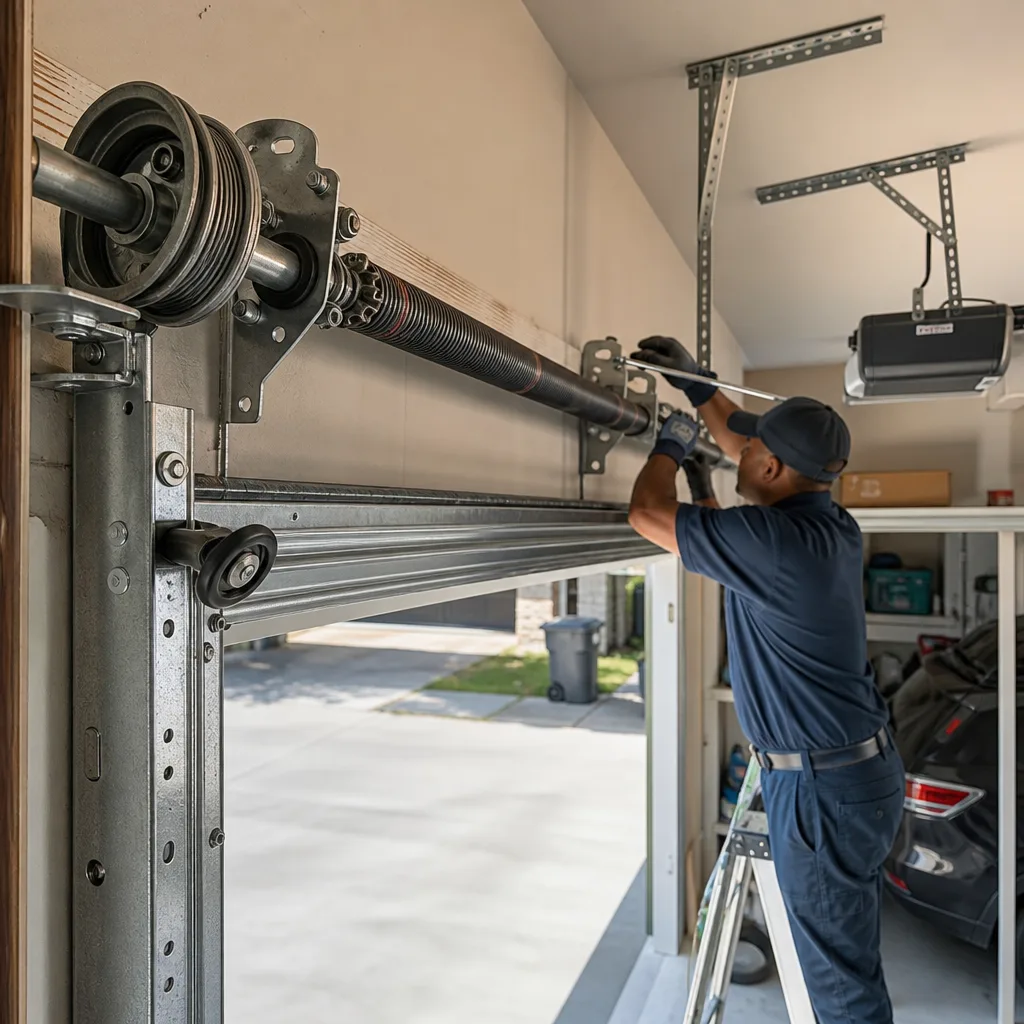
A popping sound that happens as the door moves typically comes from the torsion spring, which is the large coil mounted above the door on the header that does most of the actual lifting. As springs age, the coils can bind and release against each other, creating a sharp pop. This doesn’t mean the spring is about to fail immediately, but it does mean the spring has lost some of its internal lubrication and is nearing the end of its service life. Springs are rated for cycles, not years, and a popping spring is telling you its cycle count is high.
3. Scraping or metal-on-metal squeal
A continuous scraping sound usually means the door itself has shifted slightly in its tracks and is now rubbing against the track wall. This can happen when hinges loosen, when the door settles, or when a roller has failed and the door is no longer centered. In some Austin homes, foundation settling is the root cause, the door frame shifts a fraction of an inch and the door starts kissing the track. The fix may be as simple as tightening hardware, or it may require realigning the tracks, which runs $150 to $275.
4. Slapping or flapping (loose, floppy noise during travel)
A slapping sound is typically the bottom seal, the rubber strip along the bottom of the door, coming loose and whipping against the door panel as it travels. This is a $40 to $80 fix and one of the cheapest repairs we do. It also matters for reasons beyond noise: a failed bottom seal is how Austin’s June bugs, scorpions, and the occasional snake find their way into your garage.
5. Humming (opener motor runs, door doesn’t move)
If you press the wall button or remote and hear the opener motor humming but the door stays put, the opener is working, but the drive mechanism isn’t engaging. On older Chamberlain and LiftMaster openers, this typically means the gear and sprocket assembly inside the opener has failed. On newer models, it can mean the travel module or logic board has failed. This is a repair that sits right at the line between worth fixing and worth replacing, depending on opener age.
6. Clicking (repeated, rhythmic, from the opener unit)
A repeated clicking sound from the opener usually means the safety sensors are misaligned or the logic board is failing. The sensors, the small photo-eye units mounted near the floor on either side of the door, send an invisible beam across the opening. If that beam is interrupted or the sensors are pointed slightly off, the opener refuses to move the door and may click as it tries. In Austin, this happens constantly because the heat expands door rails and shifts sensor brackets a degree or two.
7. Silence, then a jerk
If you press the button, hear nothing for a split second, and then the door lurches into motion, the opener’s drive gear or chain is slipping. On chain-drive openers, the chain itself may have stretched. On belt-drive units, the belt tensioner may have backed off. Either way, this is the opener telling you it’s struggling, and continued use will strip the gear entirely. The repair is usually $150 to $250, and it’s one of the few repairs we recommend scheduling within a day or two rather than letting it ride.
Visual Warning Signs You’ll Miss If You’re Not Looking
Most homeowners never inspect their garage door between service calls. That’s normal. But three visual cues show up early, and catching them means the difference between a $200 repair and a $900 replacement.
Cable fraying at the drum
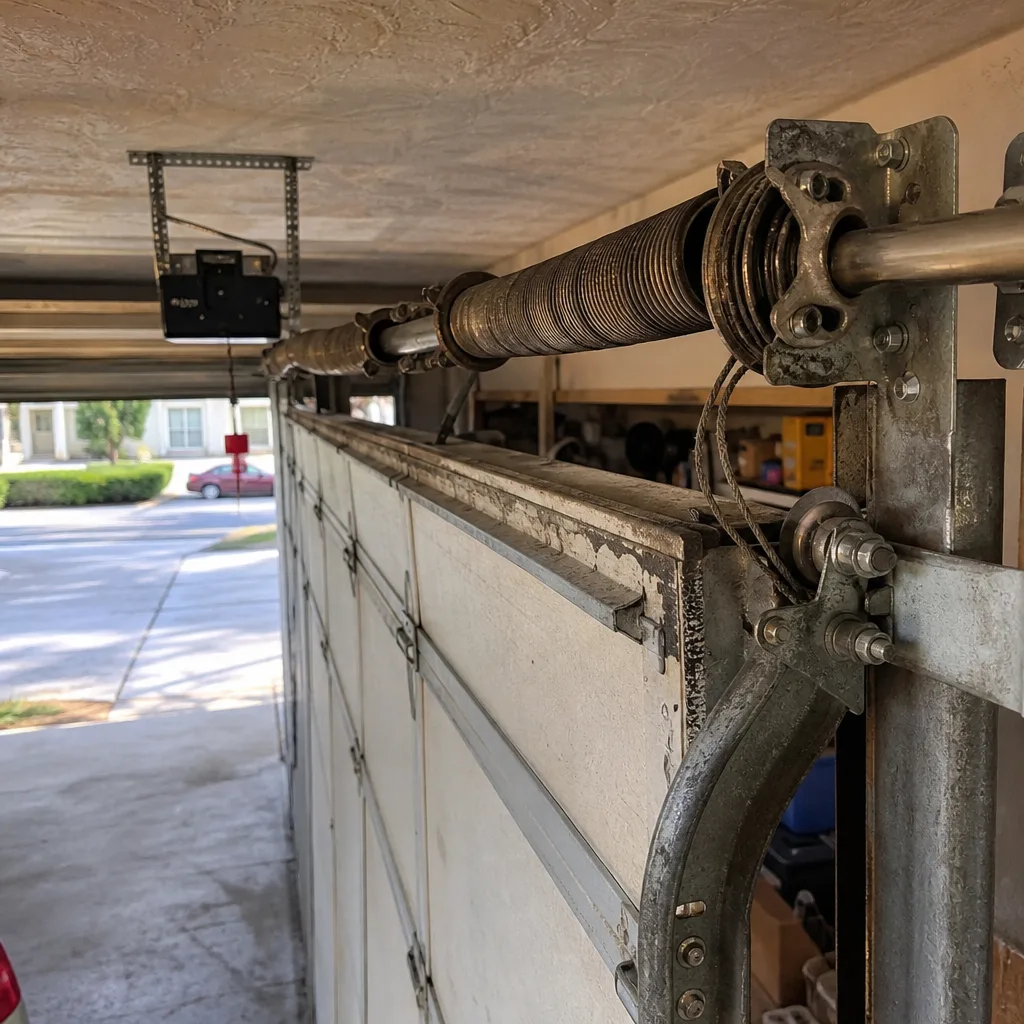
The lifting cables, the steel strands that run along both sides of the door, wrap around a drum at the top of the door. The point where the cable meets the drum is the highest-wear point on the entire system. To check: stand inside the garage with the door closed, look up at the corners above the door. If you see small steel hairs sticking out from the cable where it wraps around the drum, or if the cable looks fuzzy rather than smooth, the cable is fraying. A frayed cable is a countdown, not a maybe, and when it snaps, the door becomes almost impossible to open manually, and the door’s full weight is suddenly unbalanced. Call for replacement as soon as you see this. We treat a frayed cable as a do-not-use situation.
Spring rust: fatigue vs. cosmetic
Not all rust on a torsion spring means failure is imminent, but there’s a pattern worth knowing. Cosmetic rust, which appears as light surface discoloration and looks like it’s sitting on top of the metal, is normal in Austin’s humidity and doesn’t shorten spring life much. Fatigue rust, by contrast, looks darker, deeper, and sometimes appears in rings or bands that align with the coils. That banding means the spring has been flexing with compromised sections, and the steel is degrading from inside the coil. If you see banded rust, the spring is running on borrowed time.
A sagging door section
Open the door halfway and step back. A properly tensioned door should be straight across, with no visible dip in any section. If you notice one section sagging, the door panel itself has begun to separate from its internal frame, or the hinges and struts supporting that section have failed. This is a structural issue, not an operational one. In Austin’s heat, glue bonds inside door sections break down over years, and a sagging section usually means the panel is degrading. You can run a sagging door for a while, but the panel will eventually crack or fall out of the door. A replacement section typically runs $350 to $600 depending on door width and finish.
The 30-Second Balance Test Every Austin Homeowner Should Know
This is the single most useful diagnostic a homeowner can perform, and it requires no tools. It tells you whether your springs are doing their job or whether they’re weakening and planning a failure.
What you’re testing: the torsion springs are supposed to counterbalance the door’s weight. When the springs are healthy, the door should stay in place wherever you leave it, without dropping or rising. When springs weaken, the door gets heavy.
The test
- Close the garage door.
- Pull the red emergency release handle hanging from the opener rail. This disconnects the door from the opener so you’re moving the door’s true weight.
- Lift the door manually to waist height, about three feet off the ground.
- Let go.
Here’s how to read the result. If the door stays right where you left it, the springs are in good shape. If the door slowly drifts downward, the springs are starting to lose tension, you have weeks to months before failure. If the door slams to the ground, do not use the door, the springs have failed or are very close to failing, and the door’s full weight is now uncontrolled. If the door creeps upward on its own, the springs are over-tensioned, which causes accelerated wear on the springs themselves and the opener’s gears.
Run this test every three or four months. It takes thirty seconds, and it gives you advance warning that nothing else will. For seasonal garage door care in Austin, this test is your foundation.
Why Austin’s Temperature Swings Create False Alarms
Austin’s climate creates some unique false positives: symptoms that look like a failing door but are actually just physics. Knowing the difference saves you a service call.
The most common false alarm is the door reversing on a cold morning. Austin can drop from 85 degrees to 35 degrees overnight in winter, and that temperature swing changes how the opener’s force settings respond. Cold metal contracts, tracks tighten slightly, and the opener senses increased resistance and reverses as a safety response. This doesn’t mean the door is broken, it means the opener’s force settings were calibrated for warmer temperatures. If the reversing only happens on cold mornings and operates fine by afternoon, it’s thermal, not mechanical.
Another false alarm is the opener light flashing after a cycle. On most LiftMaster and Genie units, a flashing light is the opener’s way of saying the safety sensors were tripped, not that the opener is failing. If you move something stored near the door, check the sensor alignment, or wipe dust from the sensor eyes, and the flashing stops, you don’t need a technician.
But here’s the line: if the door reverses inconsistently at all temperatures, or the flashing accompanies a door that won’t move, that’s no longer a false positive. That’s a real fault in the sensor circuit or force settings, and it requires diagnosis.
Watch It vs. Call Today: The Triage List
Some warning signs mean “book an appointment when it’s convenient.” Others mean “treat the door as unsafe until a technician arrives.” Here’s the line between the two, based on what we see across Central Austin service calls.
Watch it (schedule within a few days to a couple weeks)
- Grinding rollers: the door still operates, but the sound is worsening. You have time, but not unlimited time.
- Popping spring: the spring is aging but not yet in imminent failure. Schedule a spring inspection.
- Slapping bottom seal: cosmetic and cheap. No urgency.
- Loose hardware or minor scraping: if the door is only slightly off-track and still moving, a scheduled appointment is fine.
- Intermittent cold-morning reversing: weather-related, not a mechanical failure.
Call today (do not use the door until serviced)
- Frayed cable at the drum: this is the highest-urgency visual warning sign. A snapped cable is dangerous and difficult to work around.
- Failed balance test (door drops or slams): the springs are done. Continuing to use the door is risking injury and door damage.
- Door section sagging visibly: structural. Continued use worsens it.
- Opener hums but door doesn’t move, combined with the door feeling heavy when you use the release handle: the spring has likely failed and the opener is no longer able to lift the door.
- Loud bang from inside the garage, followed by the door being extremely heavy or impossible to lift: a spring has snapped. Do not use the door.
When in doubt, the safest move is worse than unnecessary caution: treat the door as a structural system under tension. The torsion spring stores enough energy to cause serious injury if it fails while you’re working near it.
What These Repairs Actually Cost in Austin
Here’s what we tell our Austin customers to expect, so nobody is surprised when the invoice comes. These are local market ranges based on our two decades of service in this city.
| Repair | Typical Austin Price Range | Urgency |
|---|---|---|
| Roller replacement (all rollers) | $180 – $240 | Schedule within 2 weeks |
| Track replacement (warped track from worn rollers) | $500 – $700 | Schedule within 2 weeks |
| Torsion spring replacement (one spring) | $220 – $350 | Call today; do not use door |
| Cable replacement | $150 – $220 | Call today; do not use door |
| Bottom seal replacement | $40 – $80 | Schedule when convenient |
| Opener gear and sprocket replacement | $150 – $250 | Schedule within a few days |
| Door section replacement | $350 – $600 | Schedule within a few days |
| Full Garage Door Repair in Austin (typical service call) | $100 – $400 depending on issue | Varies |
Every price we quote is written down and handed to the customer before any work starts. That’s not a courtesy, it’s the way we’ve always done it, and it means the number on the invoice matches the number you agreed to.
Common Mistakes to Avoid
- Ignoring grinding for months. The grinding roller is the single most expensive example of deferred maintenance in garage door repair. A $200 roller job becomes a $650 track replacement, plus the cost of the original repair.
- Manually lifting a door with a broken spring. Many homeowners, when the door won’t open, pull the release handle and try to muscle it up. With a failed spring, the door weighs 150 to 250 pounds, and trying to lift it can cause back injury and door damage. In Austin’s older homes, some doors are even heavier due to solid wood construction.
- Assuming the opener is the problem. When a door won’t move, homeowners often assume the opener motor has died. In reality, the spring usually fails first, and the opener simply can’t lift the dead weight. Replacing the opener without checking the spring means spending $400 on an opener that still won’t move the door.
- Greasing the track. This is the most persistent DIY myth in the trade. Tracks should never be greased; grease attracts dust and grime and creates a sticky surface that actually increases friction. The rollers themselves need periodic light lubrication, and the hinges do too, but the track stays dry.
- Ignoring rust because “it’s just surface rust.” Cosmetic rust is real, and it’s fine to ignore. Fatigue rust is a different animal, and banded rust means the spring has already begun to weaken internally. If you’re not sure which one you’re looking at, a technician can tell you in thirty seconds.
- Resetting the opener repeatedly. If the door reverses weekly or monthly and you keep resetting the opener’s force settings to compensate, you’re not fixing anything. You’re training the opener to push through a mechanical problem that’s getting worse. Every time the force setting creeps up, the underlying issue is growing.
When to Call a Professional
If the balance test fails, a cable is frayed, or a spring has visible fatigue rust, call a technician. Torsion springs are under extreme tension, and working on them without proper training and tools is the single most dangerous DIY project in a typical home, worse than electrical panel work by a wide margin. If the door is sagging structurally, if the opener hums without moving the door, or if you’ve reset the opener more than twice in a month, stop troubleshooting and make the call.
Doyle Garage Doors Austin offers free estimates across Austin, and Doyle Garage Doors Austin home service includes a written price before any work starts, on every job. Call (361) 470-4316. A live person picks up, day, night, weekend, or holiday, and we’ll tell you honestly whether you need service this week or whether you can wait.
See the difference
 Before
 After
After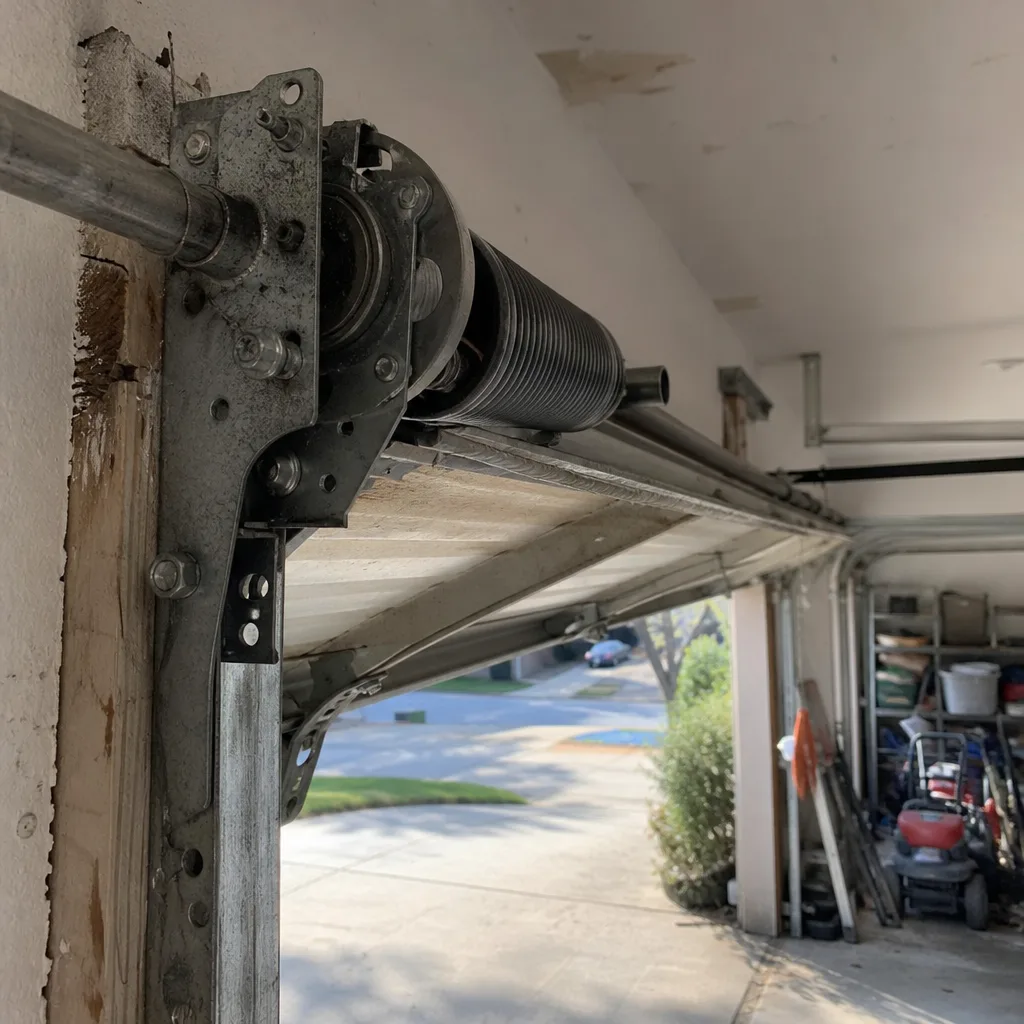 Before
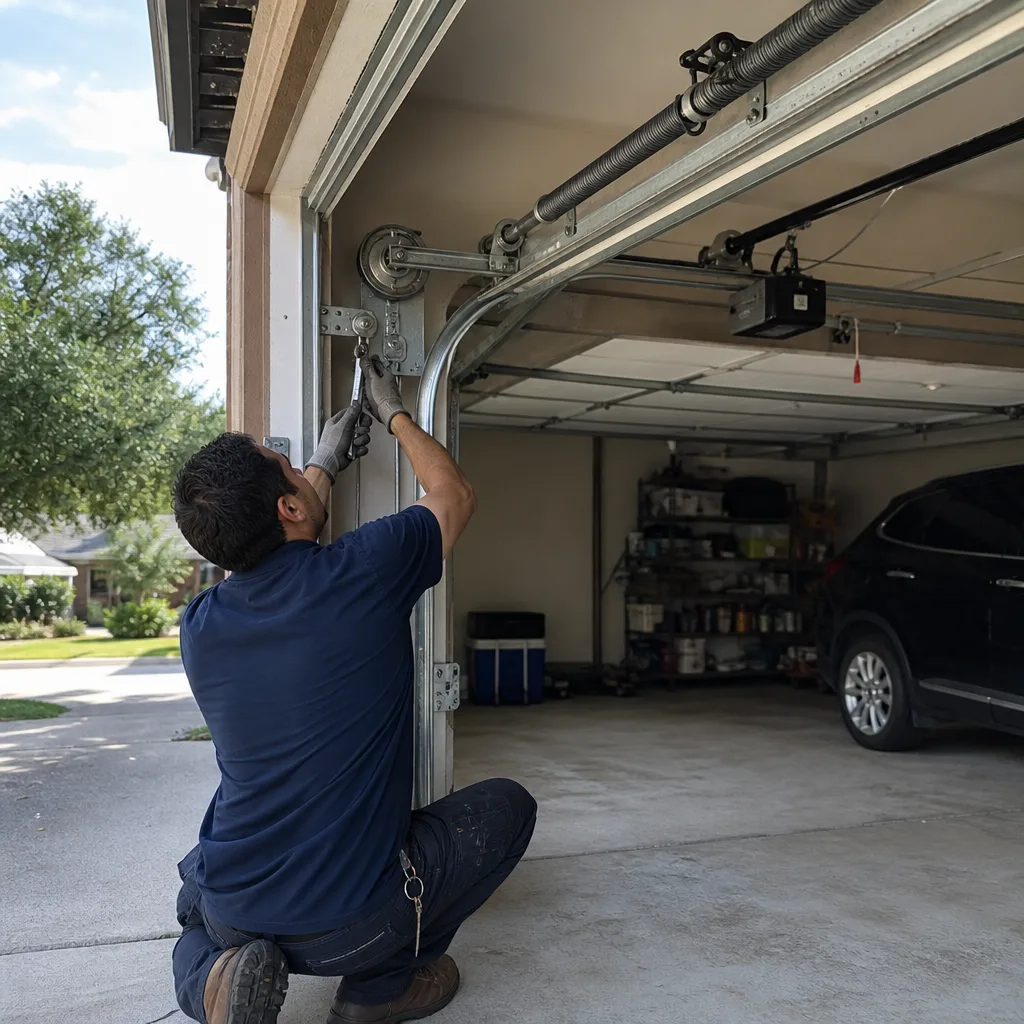 After
After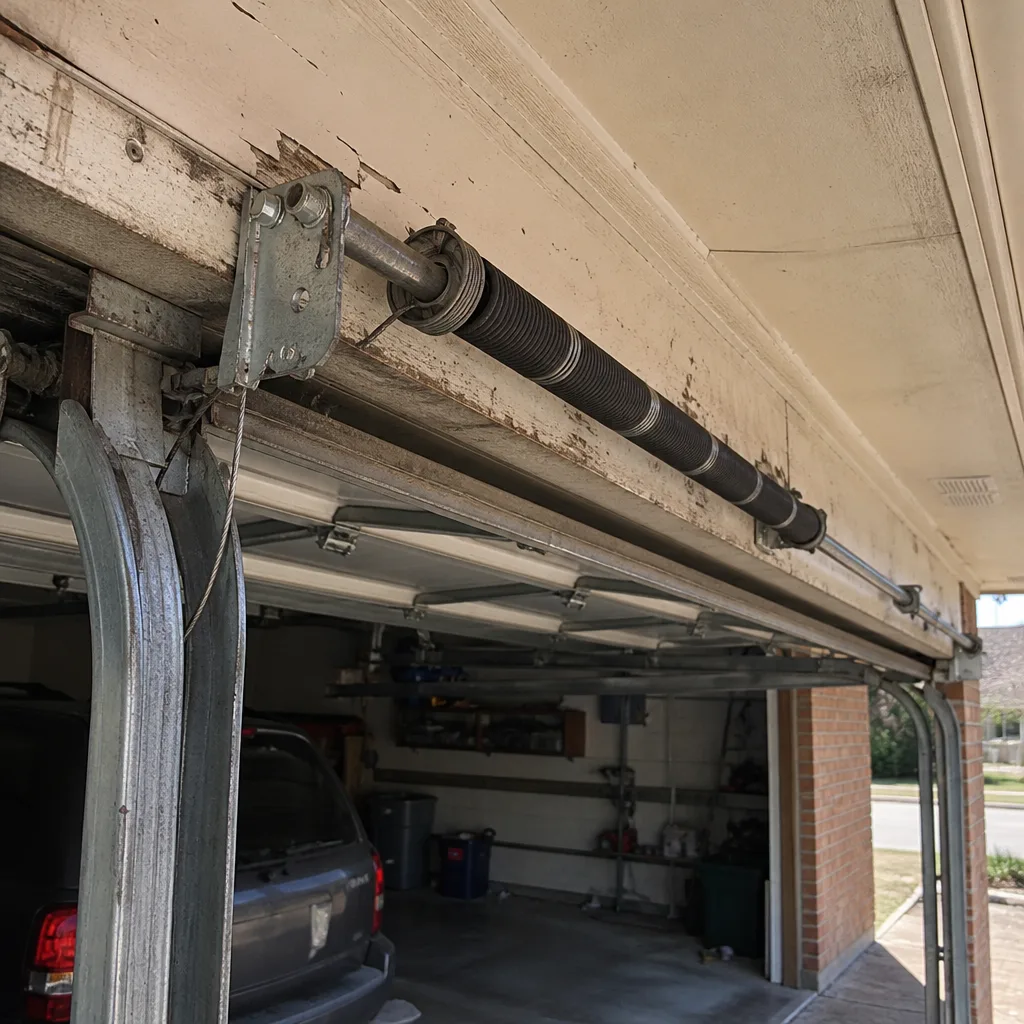 Before
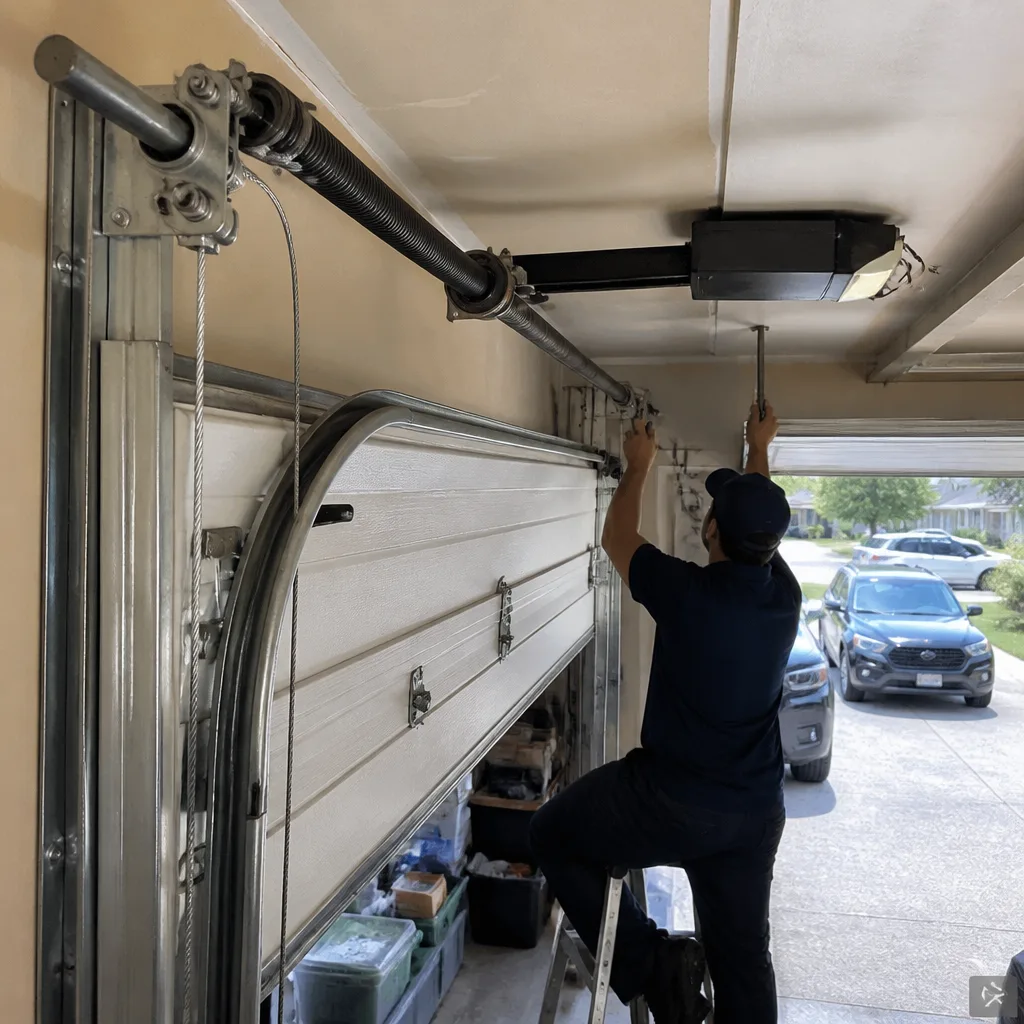 After
AfterFrequently Asked Questions
A garage door that reverses right before closing is almost always sensing too much resistance at the bottom of its travel. This can mean the door is encountering an obstruction, the close-force setting is set too low, or the door itself has developed a mechanical issue like a failing roller or misaligned track. On cold mornings in Austin, thermal contraction of the track can also cause temporary reversing. If the reversing only happens on cold mornings, it’s likely thermal. If it happens at all temperatures, the door needs a service inspection.
Most torsion springs are rated for 10,000 cycles, which translates to roughly 7 to 10 years for a typical Austin home where the door opens and closes three to five times a day. If you’re not sure how old your springs are, run the balance test. If the door drops or drifts when released at waist height, the springs are nearing the end of their service life and should be replaced. Spring replacement in Austin typically runs $220 to $350 per spring, and we replace both springs at the same time because they wear at the same rate.
On most LiftMaster, Chamberlain, and Genie openers, a flashing light is the unit’s way of signaling that the safety sensors have been tripped or are misaligned. The sensors are the two photo-eye units mounted near the floor on either side of the door. If something is blocking the beam, or if the sensors have shifted out of alignment, the door will refuse to close and the light will flash. Wiping the sensor lenses and confirming the small lights on each sensor are on and steady usually fixes it. If the sensors are aligned and the light keeps flashing, the sensor circuit or logic board may have failed, and that requires a service visit.
It depends on the noise. Grinding from worn rollers is not dangerous to operate but gets expensive if ignored, because the steel roller core will damage the track. Popping from a torsion spring is an early warning that the spring is aging, and while the door is still safe to operate for now, a spring failure is not a matter of if but when. A loud bang followed by the door becoming extremely heavy is a snapped spring, and that is a do-not-use situation. You can learn more about Garage Door Installation in Austin considerations if the door itself is aging past repair.
If the door has a sagging or cracked section, visible separation between panels, or extensive rust on the steel frame, replacement is usually the more honest recommendation. Repairs make sense when the individual components, springs, rollers, cables, opener, are failing but the door panels and structure are still sound. A good way to think about it: springs, rollers, and cables are wear parts, and they’re meant to be replaced periodically. The door itself should last 20 to 30 years. If your door is under 15 years old and the failures are in the moving parts, repair. If the door itself is degrading, replacement prices in Austin typically start around $1,200 for a standard single door.
No, and this isn’t a recommendation so much as a safety warning. The lifting cables are under constant tension from the torsion spring, and if a cable snaps while you’re working on it, the released energy can cause serious injury. A frayed cable is a job for a trained technician with the right tools and the right safety procedure. If you see fuzzing or loose steel hairs at the cable drum, stop using the door and call for service. A cable replacement in Austin runs $150 to $220, and it’s a fraction of what the consequences of a DIY attempt can cost. If you’re also having opener issues, we recommend Garage Door Opener Repair in Austin combined with the cable work, since a frayed cable often follows a failing spring or opener.
The Bottom Line
Garage door failure is almost never sudden. The grinding roller, the popping spring, the fraying cable, the sagging panel, these are messages your door is sending weeks before it stops working, and each one maps to a specific repair with a specific price. The balance test takes thirty seconds and tells you more about your springs than any other check. Austin’s temperature swings create false alarms, but they also accelerate real wear, so when the noise or the motion changes, trust what you’re seeing. If it’s a cable, a spring, or a structural sag, call a professional. If it’s a roller or a seal, schedule it and relax. Either way, the best time to act is before the door makes the decision for you. Explore more guides & resources to keep your door running smoothly.
Written by Aaron Teague, Owner at Doyle Garage Doors Austin, serving Austin since 2001.