
Last updated October 16, 2026
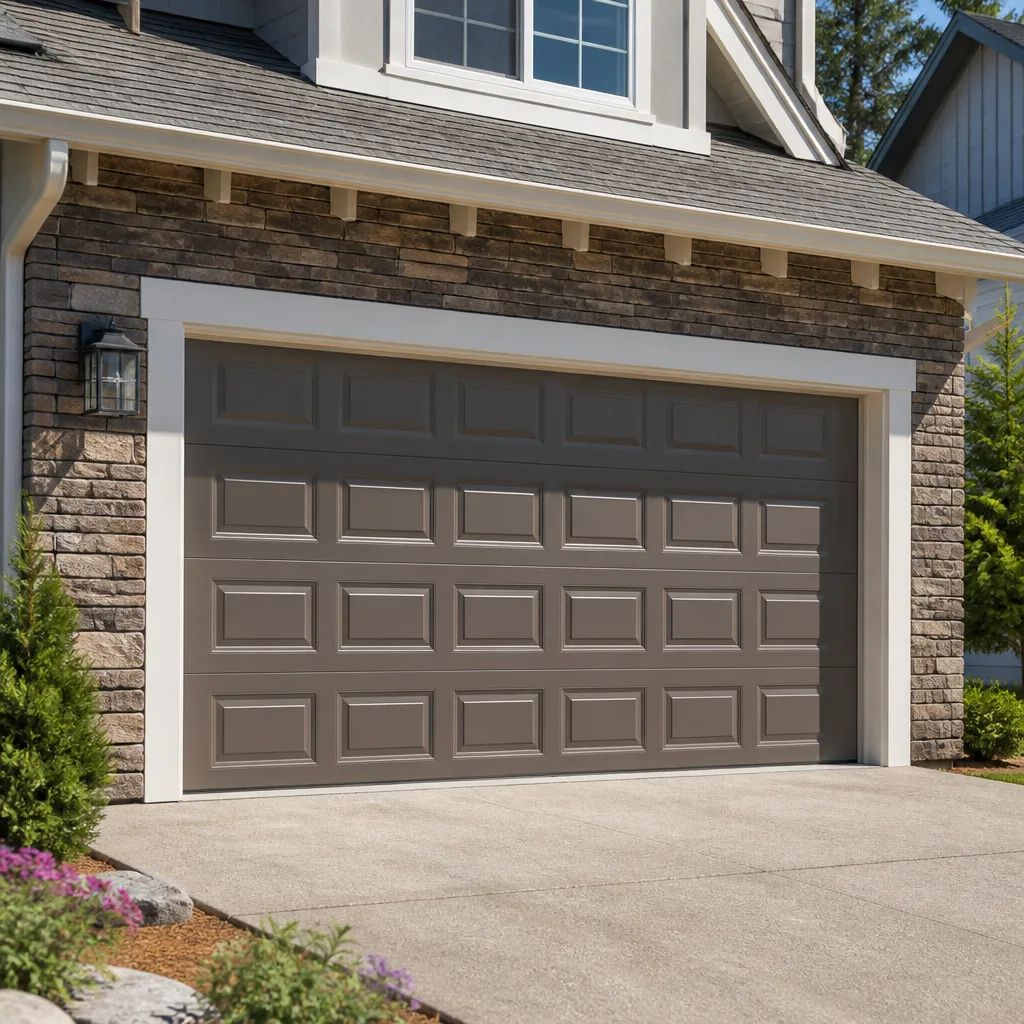 Raised-panel steel
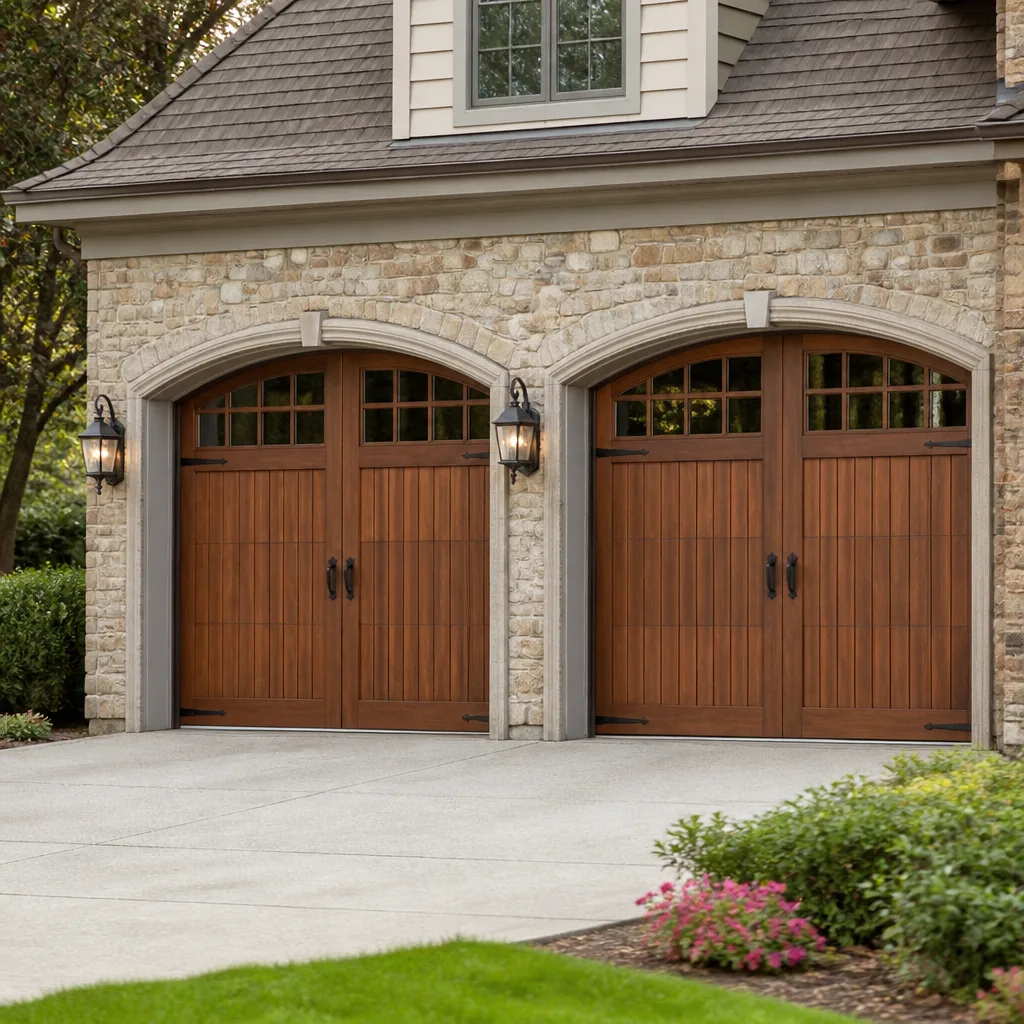 Carriage house
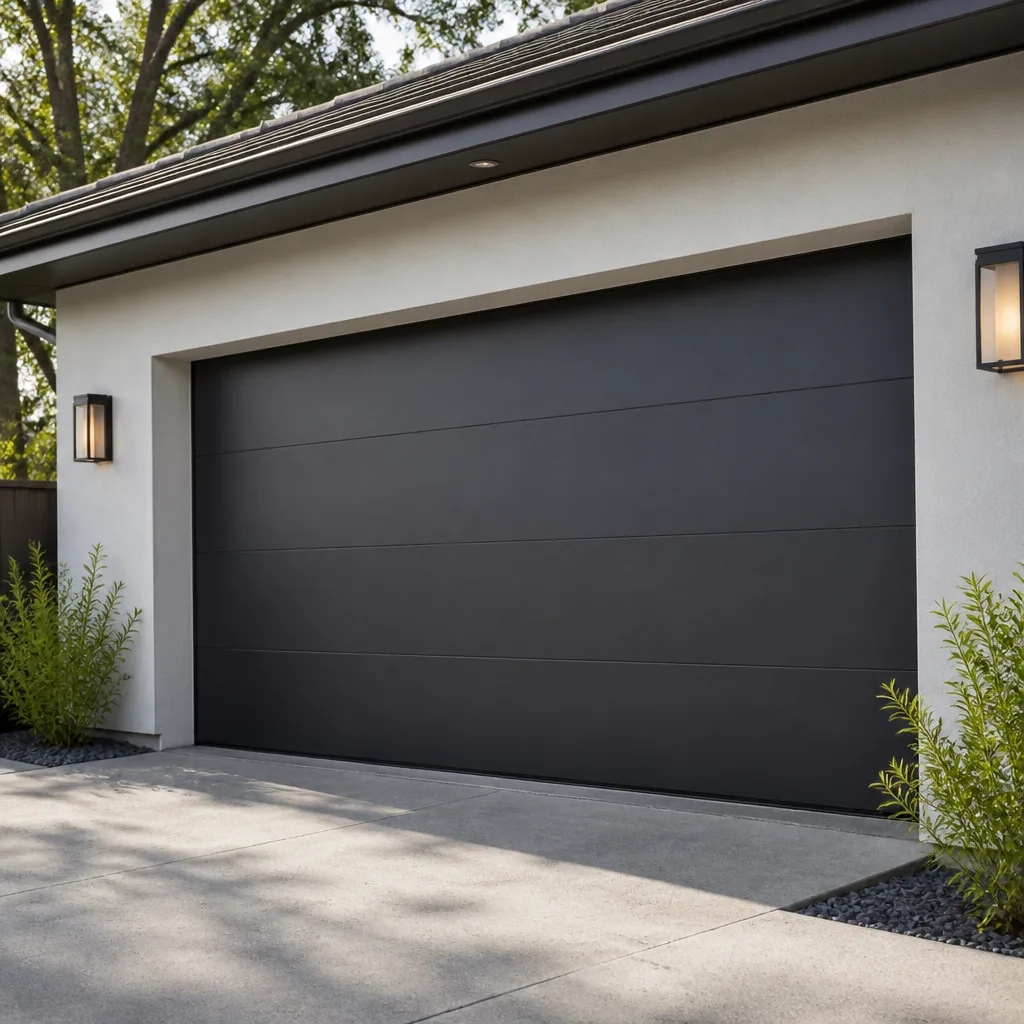 Modern flush
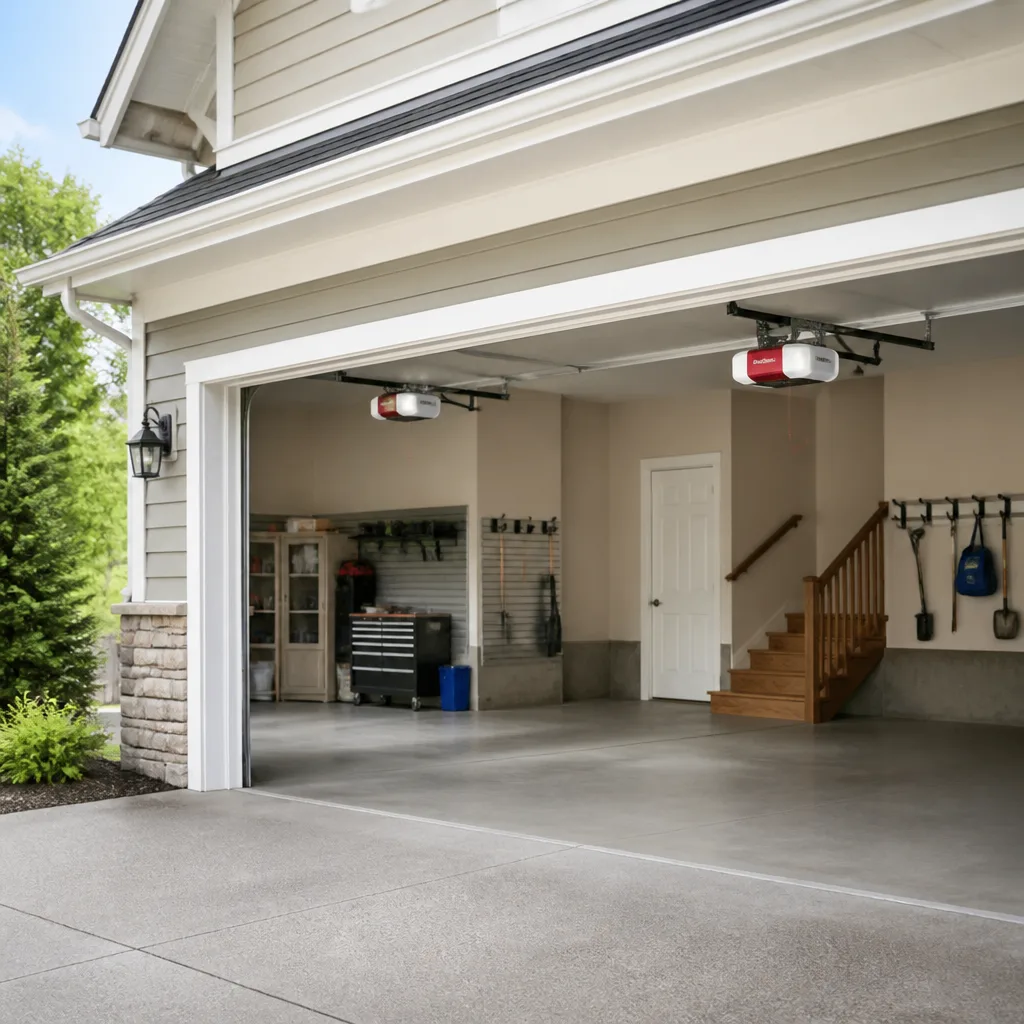 LiftMaster openers
 Chamberlain openers
Full 25-point door and opener safety check with every visit - springs, cables, rollers, tracks, and your LiftMaster or Chamberlain opener included
You get a price before we start. It does not change when the truck arrives.
Get your free estimateSeasonal Garage Door Care for Austin: Year-Round Homeowner’s Guide
Austin doesn’t have four seasons. It has two brutal ones, one allergy siege, and one narrow window when garage door maintenance actually works the way it’s supposed to. The single best time to lubricate, tension-test, and weatherstrip a garage door in Austin is a six-week stretch from early October to mid-November. Do it in July and the lubricant thins out in the heat before it bonds to the hinge knuckles. Do it in February and the grease is already too viscous to penetrate anything. This guide walks through what to do, when to do it, and the one thing you should never touch yourself regardless of season. For The Complete Guide to Garage Door in Austin with more depth, see our full resource.
Styles & brands we work with
Quick Answer
Seasonal garage door care in Austin should be scheduled around the city’s actual climate pattern, not a generic spring-and-fall calendar. The optimal maintenance window is October through mid-November, when temperatures are mild enough for lubricants to apply correctly and before the first freeze hits. During cedar season (January through March), flush track pollen buildup. During summer (June through September), test your opener’s limit switches monthly. And year-round, keep your hands off torsion springs: that job requires a trained professional, no exceptions.
Table of Contents
- Why Austin’s Climate Demands a Different Maintenance Calendar
- October – November: The Definitive Pre-Winter Prep Window
- February Freeze Protocol: What to Do When Your Door Freezes to the Floor
- Cedar Season (January – March): Pollen Paste and Track Buildup
- Summer (June – September): Heat Expansion and Limit Switch Drift
- The One Task You Should Never Do Yourself: Torsion Spring Adjustment
- The 15-Minute Monthly Garage Door Inspection
- Common Mistakes to Avoid
- When to Call a Professional
- Frequently Asked Questions
- The Bottom Line
Why Austin’s Climate Demands a Different Maintenance Calendar
Most garage door maintenance advice online is written for places with predictable seasons: a spring tune-up, a fall tune-up, done. That calendar fails in Austin. Our weather swings from 105-degree July afternoons to February ice events that shut down the city for days. The garage door sits on the boundary between your conditioned house and that chaos, and every component, from the torsion spring above the door to the bottom seal pressed against the slab, responds to temperature and humidity shifts in ways that generic advice never addresses.
Here’s what actually happens in Austin, season by season:
- January through March: Cedar pollen counts spike, sometimes exceeding 20,000 grains per cubic meter. That pollen doesn’t just make you miserable. It builds up as a fine paste in your door tracks, mixes with existing grease, and creates a gritty compound that accelerates roller wear. It also means if you do need a repair during this stretch, the tech is working in conditions that make half the city’s homeowners miserable too.
- February: Ice events. When the temperature drops below 28 degrees overnight, condensation freezes the bottom rubber seal to the concrete floor. One impatient press of the opener button and the bottom bracket tears right off the door panel.
- June through September: Sustained 100-plus degree days. Metal components expand. The limit switches inside your opener, small mechanical or electronic stops that tell the motor where the door’s travel ends, drift out of tolerance. Doors start reversing unexpectedly or stopping eight inches short of the floor.
- October through mid-November: The sweet spot. Temperatures settle into the 60s and 70s. Humidity drops. Lubricants apply at their designed viscosity. This is the maintenance window that matters.
We’ve been working on garage doors across Austin since 2001, from Allandale to Wells Branch, and the pattern is consistent: homeowners who do one thorough maintenance pass in October and a quick monthly check the rest of the year get far more life out of their doors than those who follow generic spring-and-fall advice. More detail on our full Garage Door Repair in Austin services if you want a professional second set of eyes.
October – November: The Definitive Pre-Winter Prep Window
The window is narrow, roughly six weeks from the first week of October through mid-November. After Thanksgiving, Austin’s temperatures can swing either direction, and you’ve lost the predictable conditions that make maintenance effective. Lubricant needs temperatures between about 55 and 80 degrees to flow properly into hinge knuckles and roller bearings. Below that, it sits on surfaces. Above that, it thins and drips before it bonds. October in Austin delivers exactly what the job requires.
Here’s the pre-winter prep list, in order. Budget 45 minutes if you do this yourself, or 20 minutes if you’d rather have it handled as part of a Garage Door Installation in Austin checkup or a standalone service call.
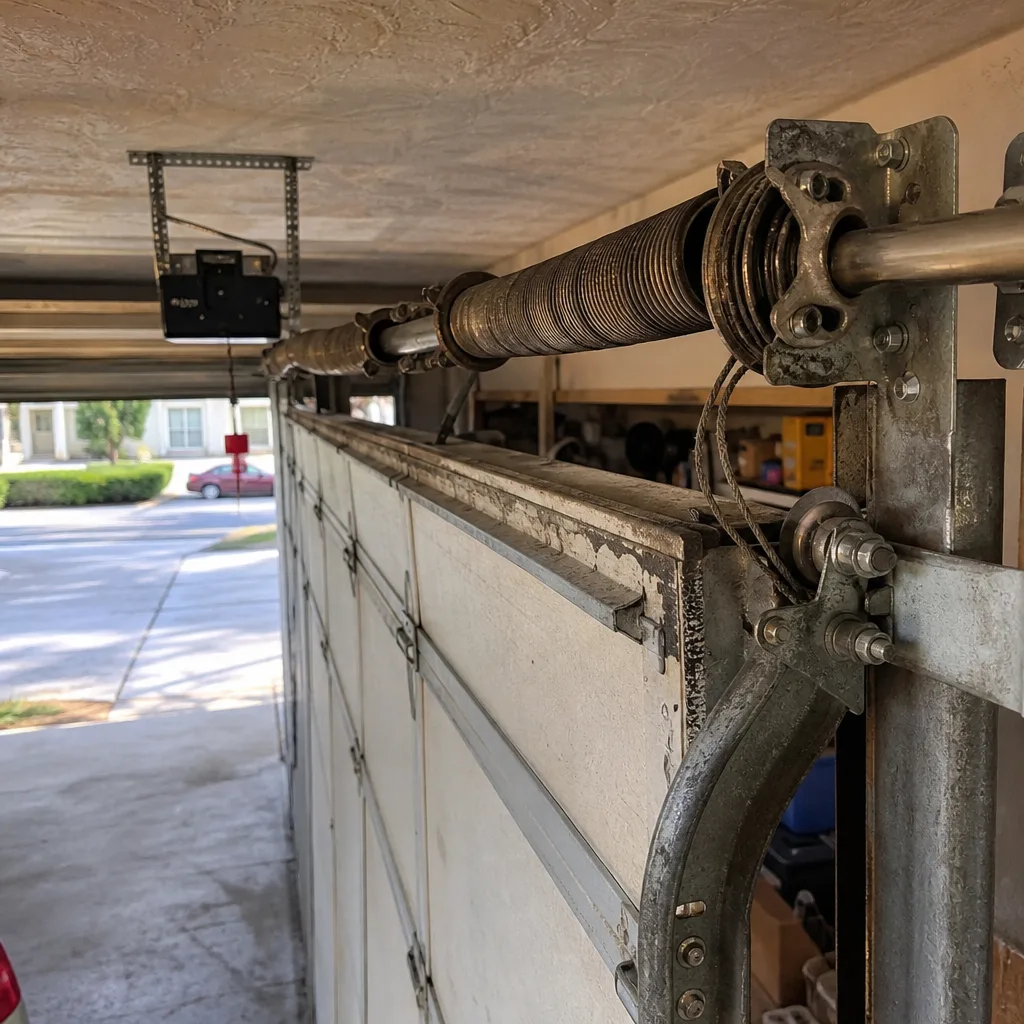
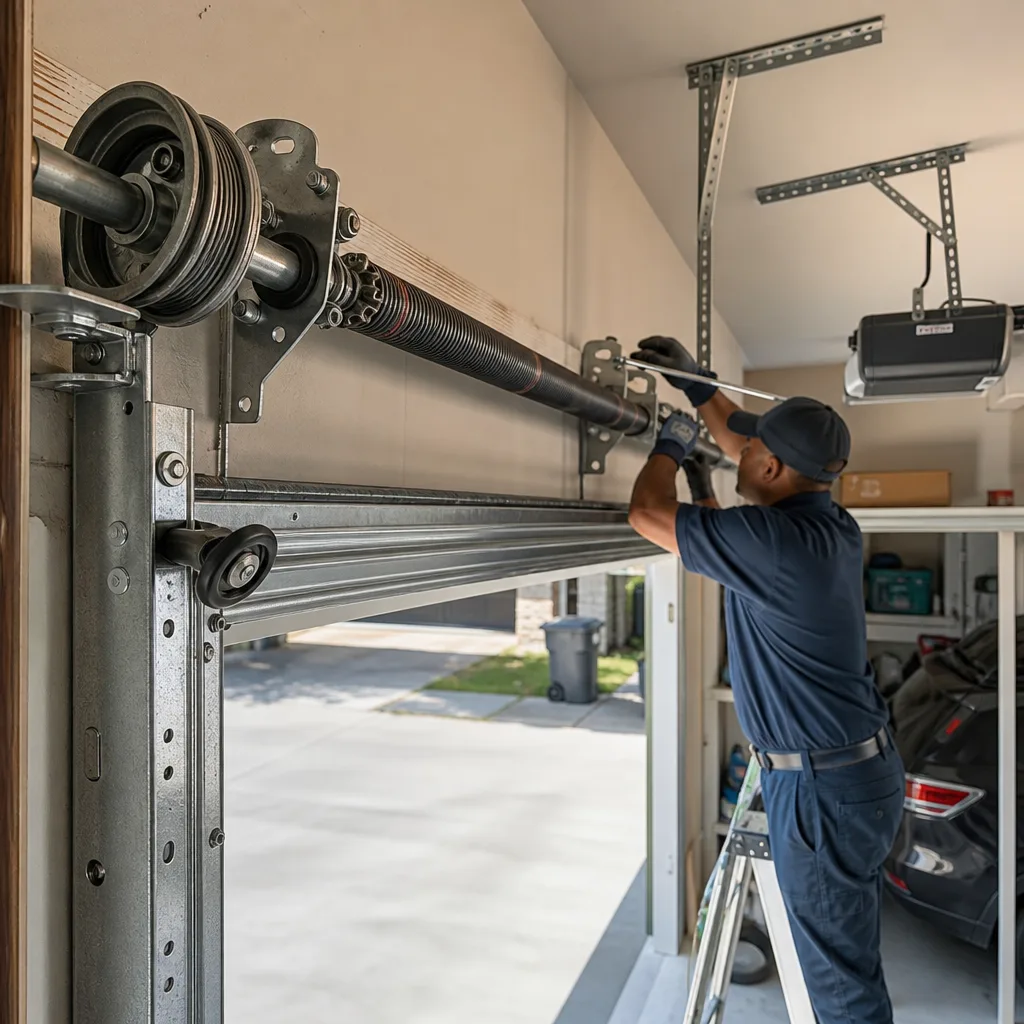
- Inspect the torsion spring. Look at the large coil mounted horizontally above the closed door. Check for gaps in the coil, rust, or a spring that looks stretched. If the spring is in two pieces and there’s a gap between them, it has failed and needs replacement. Do not attempt adjustment or replacement. This is a service call.
- Lubricate all moving metal-on-metal points. Use a silicone-based or lithium-based garage door spray, not WD-40. WD-40 is a solvent and degreaser, not a long-term lubricant. Apply to: each hinge pin, the roller stems (not the nylon wheel itself, which sits in the track and should run clean), the spring coil, and the lock if you have one. Spray, then run the door through two full open-close cycles to work the lubricant in.
- Tension-test the springs. Disconnect the opener by pulling the red emergency release cord. Manually lift the door to waist height. A properly balanced door stays put. If it falls, the springs are weakening. If it flies up, the springs are overtensioned. Either condition is a sign it’s time for professional adjustment.
- Replace the bottom weatherstrip. This is the rubber seal along the bottom edge of the door. In Austin, the UV exposure alone typically kills a bottom seal in two to three summers. If it’s cracked, compressed, or no longer meets the concrete evenly, replace it now before February ice arrives. A proper seal keeps cold air out and water from pooling under the door.
- Check and clear the tracks. Look for debris, pebbles, or wasp nests in the vertical tracks on either side. Wipe them down with a clean rag. Do not use grease in the tracks. The rollers should move through dry, clean track.
- Tighten all hardware. Garage doors vibrate with every cycle. Bolts, especially on the hinges and track brackets, loosen over months of summer operation. Go through with a socket set and snug everything down, but do not overtighten bolts going through wood frames.
- Test the auto-reverse safety feature. Place a 2×4 flat on the floor under the door’s path. Close the door. It should hit the wood and reverse within two seconds. If it doesn’t reverse, the opener needs service. According to federal law (CPSC regulations), every automatic opener manufactured since 1993 must include this feature, and it protects both people and cars.
Doing this prep now, during Doyle Garage Doors Austin home territory’s mildest stretch, means the door enters winter with fresh lubrication, balanced springs, a working safety reverse, and a seal that will actually do its job when temperatures drop.
February Freeze Protocol: What to Do When Your Door Freezes to the Floor
It happens every winter in Austin, even in milder years: a cold front pushes through, temperatures drop below freezing overnight, and condensation or runoff freezes the bottom rubber seal to the concrete slab. The garage door is now stuck. Here’s the protocol, and it matters because the natural instinct, pressing the opener button and letting the motor yank the door free, does real damage.
When a door freezes to the floor, the bottom bracket, the metal plate that connects the bottom door panel to the lifting cable, takes the entire force of the opener’s pull. That bracket is designed to support the door’s weight in normal operation, not to act as an ice breaker. In our experience across Austin winters, a frozen-to-the-floor door pulled by the opener almost always bends or tears the bottom bracket off the panel. The repair is a new bracket, sometimes a new bottom panel, and in the worst cases, a new door. Never a cheap fix.
Here’s the correct protocol:
- Do not press the opener button again. If you’ve already pressed it once and the door didn’t move, disconnect the opener using the red emergency release cord.
- Assess the freeze point. Usually it’s the bottom seal frozen to the concrete. Occasionally it’s ice in the track itself, blocking the rollers.
- Warm the seal, don’t chip it. A hair dryer or heat gun on low setting works. Or pour warm water (not boiling, and not on a glass window panel) along the seam where the seal meets the concrete. Give it two to three minutes.
- Lift manually. Once the ice releases, lift the door by hand using the handle. It should move. If it doesn’t, the freeze is in the track or the spring system, and you need a professional.
- Dry the area. Once the door is free, wipe down the bottom seal and the concrete where it meets. This prevents a repeat freeze later the same night.
If you find your bottom seal freezing repeatedly, the real fix is replacing the seal before winter or adjusting the door’s down-stop limit so it closes fully against the floor without leaving a capillary gap for water to seep under. If a freeze event has already done damage, Garage Door Opener Repair in Austin or a full door inspection is the right call.
Cedar Season (January – March): Pollen Paste and Track Buildup
From roughly mid-January through early March, Austin’s cedar pollen counts routinely hit levels that would shut down outdoor work in other cities. For your garage door, the issue isn’t what the pollen does to your sinuses. It’s what it does mixed with lubricant.
Pollen is fine, slightly sticky, and highly textured at the microscopic level. When it settles into the horizontal track above your garage door, or the vertical tracks on either side, it mixes with whatever grease or lubricant residue is already present. The result is a paste that ranges from gritty to gummy depending on humidity. Rollers then push through this paste rather than rolling cleanly. The door gets noisier. The opener motor works harder. Roller bearings wear faster. And if enough of it accumulates, the door can bind mid-travel and trigger the auto-reverse, meaning the door won’t close properly.
Here’s the correct flush procedure versus what most people do:
- Wrong approach: Spray more lubricant on top of the paste. This temporarily quiets the noise but adds another layer to the gunk. Over several seasons, the buildup can be so thick it requires scraping.
- Right approach: Wipe the tracks dry with a clean rag first. Then use a dry brush or compressed air to remove loose pollen. Then apply lubricant only to the hinge pins and roller stems, never to the track surface itself. The track should stay clean and dry.
If your garage faces west or north in a neighborhood like Hyde Park or Crestview where alleys channel pollen and dust, expect heavier buildup than a south-facing door in a new subdivision. Plan to flush the tracks twice during cedar season. The job takes ten minutes. Ignore it and you’ll hear the difference by March.
Summer (June – September): Heat Expansion and Limit Switch Drift
Garage door openers contain limit switches, small mechanical or electronic stops that tell the motor where the door’s travel ends at both the full-open and full-closed positions. These settings are made at installation and normally stay put. But in sustained Austin heat, with the garage interior regularly exceeding 110 degrees or more on a July afternoon, metal components expand. Mounting brackets flex. And the limit switch settings, which are typically set by manually turning a small plastic dial or a screw, can drift out of tolerance by a quarter inch or more over a season.
When limit switch drift happens, one of two annoying behaviors appears. Either the door stops eight or ten inches short of the garage floor and won’t close the rest of the way, or the door reaches the floor, compresses briefly, and then reverses back open as though something tripped the safety sensor. Both behaviors are signs the opener’s internal stops no longer match the door’s actual travel. The fix is a limit switch readjustment, which takes a technician about fifteen minutes if they’re already on site.
Here’s the two-minute test that tells you if your opener is about to reverse unexpectedly:
- Close the door. Watch it throughout its full travel. Note whether it stops cleanly at the floor and stays.
- Open the door. Watch it at the top. Note whether it stops smoothly or seems to strain for a second before the motor cuts off.
- Close the door again, but this time stand inside the garage and place one hand lightly on the door panel as it travels. You’re feeling for hesitation, a slight stutter mid-travel, or a faint thump when it hits the floor and immediately reverses.
If you observe any of these, the limit switch is drifting. It may work fine for weeks and then misbehave on a hot afternoon when the metal has expanded furthest. The professional fix is straightforward: reposition the switch, verify travel at both ends, and retest the auto-reverse. For more on how these systems work and what needs attention, our Garage Door Opener Repair in Austin page covers the process in detail.
The One Task You Should Never Do Yourself: Torsion Spring Adjustment
There’s exactly one garage door component that no homeowner should ever touch, under any circumstances, regardless of season: the torsion spring. This is the large, tightly wound coil mounted on a steel shaft directly above the door opening. It’s called a torsion spring because it stores mechanical energy by twisting, and in a standard two-car garage door, that spring is under roughly 700 to 900 pounds of lifting tension even when the door is closed and resting.
That stored energy is the entire reason garage doors can be lifted with one hand despite weighing 150 to 250 pounds. It’s also the reason torsion spring failures are genuinely dangerous when they let go. The spring, or parts of it, can release that stored energy in a fraction of a second. Installing wire size, spring diameter, spring length, and winding direction all have to be calculated correctly, and winding the spring requires inserting steel winding bars into the collar and turning under full tension. A mistake, any mistake, and the bar can kick back. People have suffered broken bones and worse.
Here’s the math on why this isn’t a weekend DIY project:
- A typical 7-foot residential door uses a spring wound with about 7.5 to 8 turns of tension.
- Each turn stores increasing torque. At full wind, the spring is holding between 700 and over 900 pounds of force, depending on door weight.
- The spring’s expected service life is 10,000 cycles (one open plus one close equals one cycle). In a household that opens and closes the door four times daily, that’s roughly seven years. Most Austin homes we service get between six and nine years from a quality spring.
When a torsion spring fails, it sounds like a gunshot in the garage. After that, the door won’t lift more than a foot or two, because the opener motor alone is not designed to lift the full weight. The repair, replacing one or both springs with correctly matched units, is a job for a trained professional with the right bars, the right winding technique, and the experience to make precise tension adjustments. Our techs do this work every week. We carry multiple spring stock on the truck, and every repair includes a written price handed to you before any work begins. If you hear that gunshot sound, call us. Do not attempt to wind a new spring yourself.
The 15-Minute Monthly Garage Door Inspection
Between the seasonal deep dives, a monthly check catches most problems before they become emergencies. This is the same checklist our technicians work through when they’re on site, and it takes about fifteen minutes. Set a recurring calendar reminder for the first Saturday of each month. In Austin, the months where this matters most are January through March (pollen and freeze) and June through September (heat).
- Open and close the door twice. Listen for grinding, squealing, or any new sound. A healthy door should be quiet except for the opener motor and a light roller sound.
- Watch the door in motion. It should travel smoothly without jerking, hesitating, or wobbling. A wobbling door usually means a loose bracket or a failing roller.
- Check the balance. Pull the red emergency release cord and manually lift the door to waist height. It should stay put. If it falls, you have a spring issue forming.
- Inspect the cables. Look at the steel cables that run along each side of the door. Any fraying, unraveling, or visible rust means replacement is needed. Do not touch a cable under tension.
- Test the auto-reverse. Use the 2×4 test described above. Do this every single month. An auto-reverse that fails on your child, your pet, or your car is the worst possible outcome, and the test takes sixty seconds.
- Check the photo-eye sensors. They’re the small units mounted about six inches off the floor on either side of the door. Make sure the small indicator light on each one is lit, and that nothing, a broom, a box, a spider web, blocks the beam. A misaligned sensor is the most common reason a door refuses to close.
- Look at the weatherstrip. Quickly scan the bottom seal and the side seals for cracks, gaps, or daylight. Daylight means the seal is no longer sealing.
If the monthly check reveals anything you’re unsure about, note it and call a professional rather than ignoring it. Small issues have a way of becoming four-figure repairs in a garage.
Common Mistakes to Avoid
- Lubricating on the wrong schedule. Doing your annual lubrication in July or August means the product thins and drips before it bonds. Doing it in January means the grease is too cold to penetrate. October is your window in Austin.
- Using WD-40 as garage door lubricant. WD-40 is a solvent and water displacer, not a long-term lubricant. It strips away existing grease. Use a garage-door-specific silicone or lithium spray instead.
- Force-opening a frozen door. When February ice locks the bottom seal to the concrete, pressing the opener button repeatedly can tear the bottom bracket off the panel. Warm the seal, lift manually, and only after the ice releases.
- Greasing the tracks. The tracks should be clean and dry. If you grease them, you’ll collect Austin’s cedar pollen and dust into a grinding paste that accelerates wear on rollers and hinges.
- Ignoring a noisy door. A door that gets progressively louder is telling you something: a dry hinge, a failing roller bearing, or a weakening spring. Early intervention is always cheaper.
- Adjusting or replacing torsion springs without training. This is the one task where the stakes are life-changing injury. The stored energy in a wound spring is enough to break bones. Call a professional. This is not a money-saving opportunity.
- Closing the door on a low battery. If your opener has a battery backup, and most modern LiftMaster and Chamberlain units do, a dead battery can cause unpredictable behavior, including doors that reverse at random. Replace the battery per the owner’s manual schedule.
When to Call a Professional
Some garage door work is genuinely do-it-yourself territory: lubricating hinges, cleaning tracks, replacing weatherstrip, testing the auto-reverse. The rest is professional territory, and the division isn’t always obvious to a homeowner. Our DIY vs Professional Garage Door: The Austin Homeowner’s Decision Guide breaks this down in detail. Call a professional when the door makes a gunshot sound and won’t lift, when cables are frayed or loose, when the door falls during a balance test, when the opener reverses unpredictably and you can’t identify a sensor obstruction, or when a roller has come out of its track and the door is jammed at an angle. Also call if you suspect a spring is near the end of its life, which is typically around seven years of daily use in Austin. Doyle Garage Doors Austin offers free estimates in Austin, and a live person answers the phone 24/7, including nights, weekends, and holidays. Call (361) 470-4316 and we’ll send a technician with a name, a photo, and a badge, and you’ll have a written price in hand before any work starts.
Frequently Asked Questions
Twice a year is the right cadence for Austin: once in October as the main pre-winter prep, and once in March or April after cedar season to flush out pollen residue and reapply. Every additional lubrication beyond that has diminishing returns, and over-lubricating creates the gummy paste problem. If your door is noisier than usual between those windows, inspect for a different problem rather than reaching for more spray. Call (361) 470-4316 and we’ll diagnose it over the phone if we can.
A single torsion spring replacement in Austin typically runs between $180 and $340, including the spring, the labor, and the service call, depending on spring size and door weight. See our Garage Door Cost Breakdown: The Austin Homeowner’s Reference for 2026 for fuller pricing context. A pair of springs, which is often the right call when both are the same age, runs $300 to $500. You’ll get a written price before the work starts, every time. Call (361) 470-4316 for an exact quote. Estimates are free.
Yes. We keep same-day availability for emergency repairs across Austin, and a live person answers the phone 24/7, including weekends and holidays. When your car is stuck in the garage at 7am on a workday, you don’t have time for a callback form. Call (361) 470-4316 and we’ll get a technician headed your way.
No. The price we quote is the price on the written estimate, and that written estimate is handed to you before any work begins. If the technician finds something additional that needs attention, you’ll get a second written price for the additional work. You approve every dollar before we turn a single bolt.
Lubricating hinges and roller stems, cleaning tracks, replacing weatherstripping, and tightening loose bolts are all reasonable homeowner tasks. Torsion spring adjustment, cable replacement, and anything involving the opener’s internal wiring are not. The spring under your door stores enough energy, hundreds of pounds of force, to cause serious injury if released incorrectly. That’s a professional-only job, full stop.
That’s classic limit switch drift from heat expansion. In Austin’s sustained summer temperatures, the metal components inside the opener expand and the stop settings shift by a quarter inch or more. The door thinks it has reached its down limit early and reverses. The fix is a limit switch readjustment, done while the door is at full summer operating temperature. Call (361) 470-4316 and we’ll schedule it while the weather is still hot, so the setting holds through the season.
The Bottom Line
The garage door is the largest moving object in most Austin homes, and it gets ignored until it stops moving. Seasonal care isn’t complicated: one thorough prep in October, a monthly fifteen-minute inspection, and a few weather-specific routines for freeze season, cedar season, and summer heat. What you get in return is a door that lasts several years longer, an opener that doesn’t reverse at random, and a safety system that protects your family. And for the one job no homeowner should ever attempt, torsion spring work, you know exactly who to call. For more guides & resources on keeping your door running smoothly, explore our blog. Doyle Garage Doors Austin has served this city since 2001, with background-checked, identity-verified technicians, written prices before any work, and a 365-day written guarantee on every repair. The phone is answered by a real person, 24/7, every day of the year.
Written by Aaron Teague, Owner at Doyle Garage Doors Austin, serving Austin since 2001.
See the difference
 Before
 After
After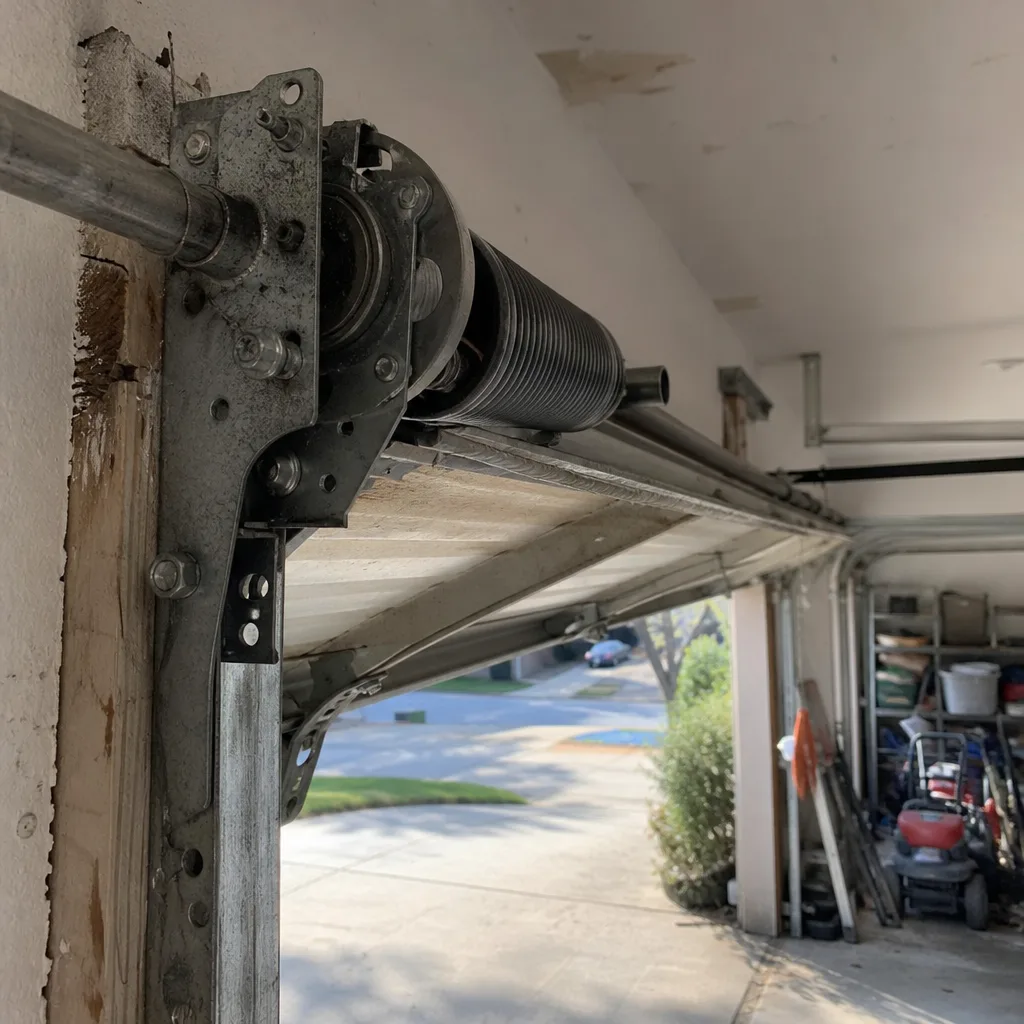 Before
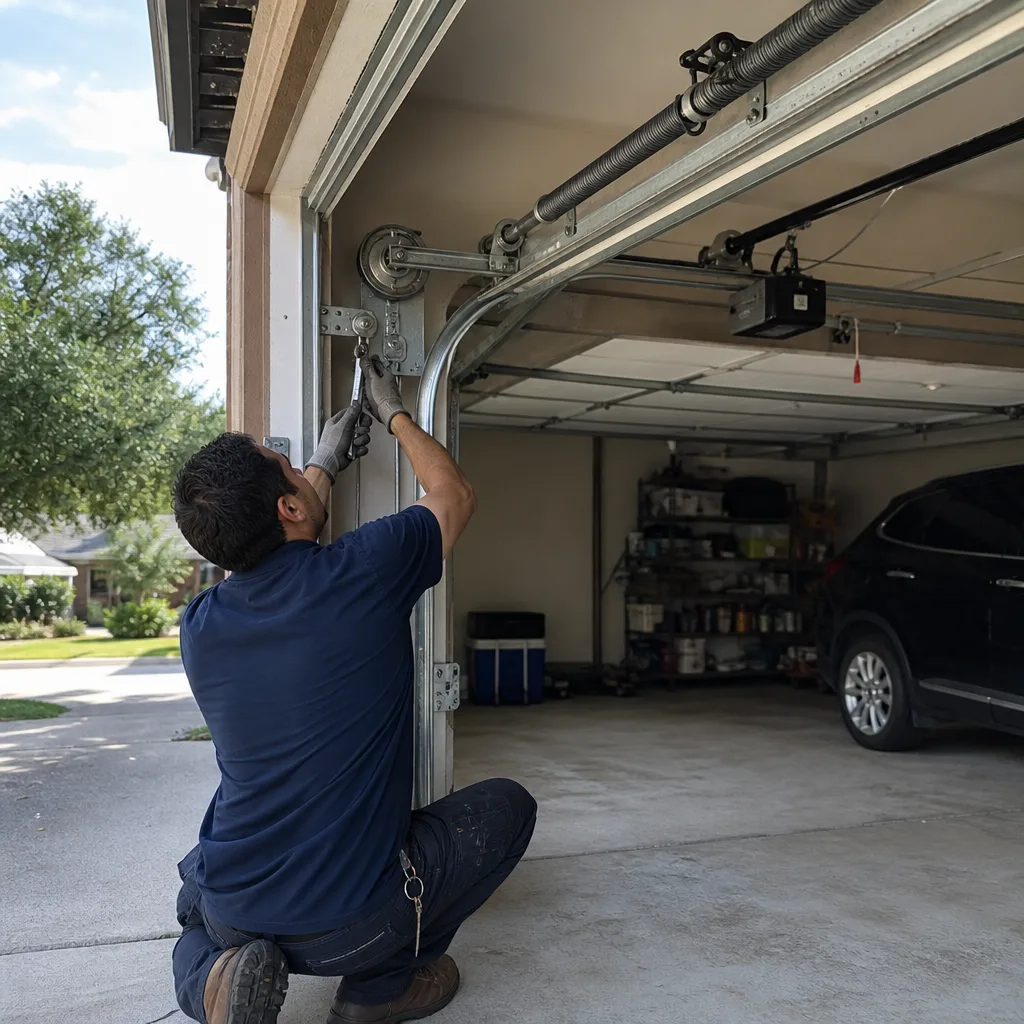 After
After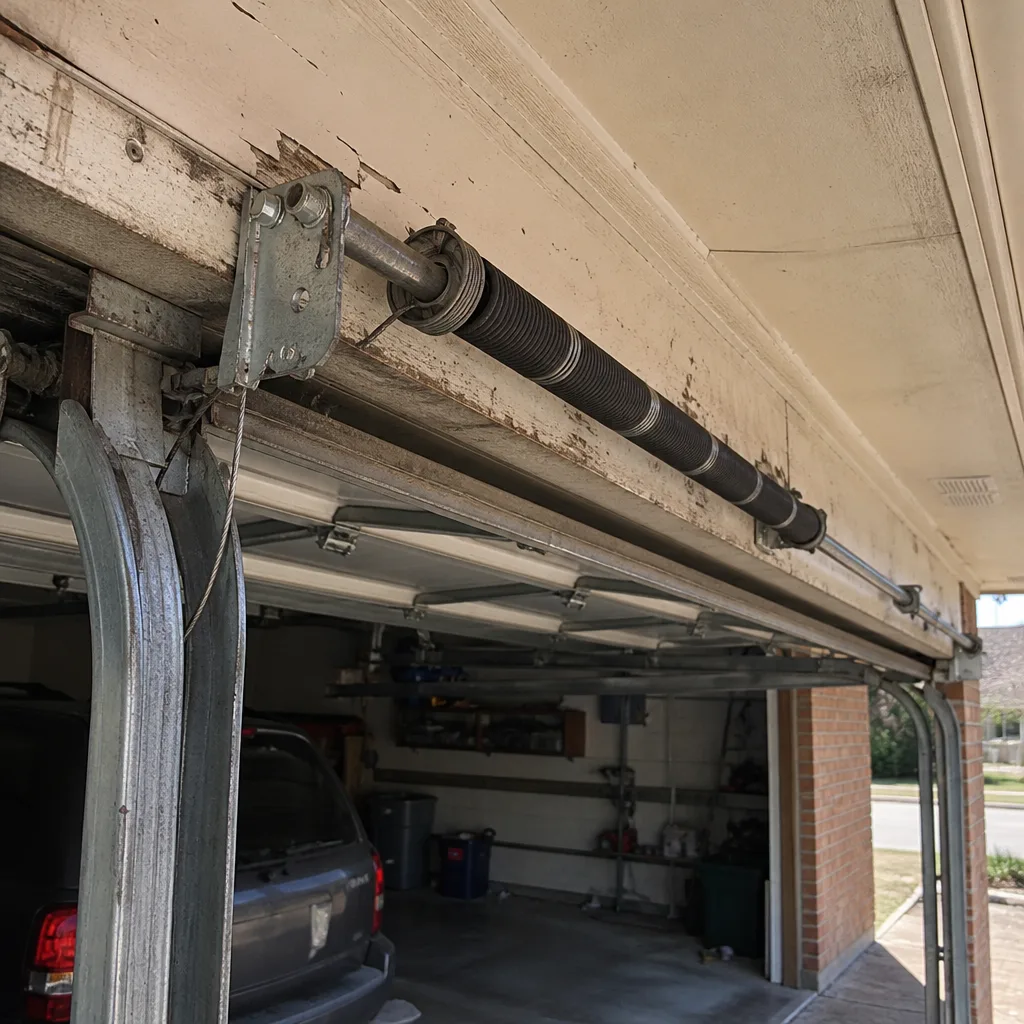 Before
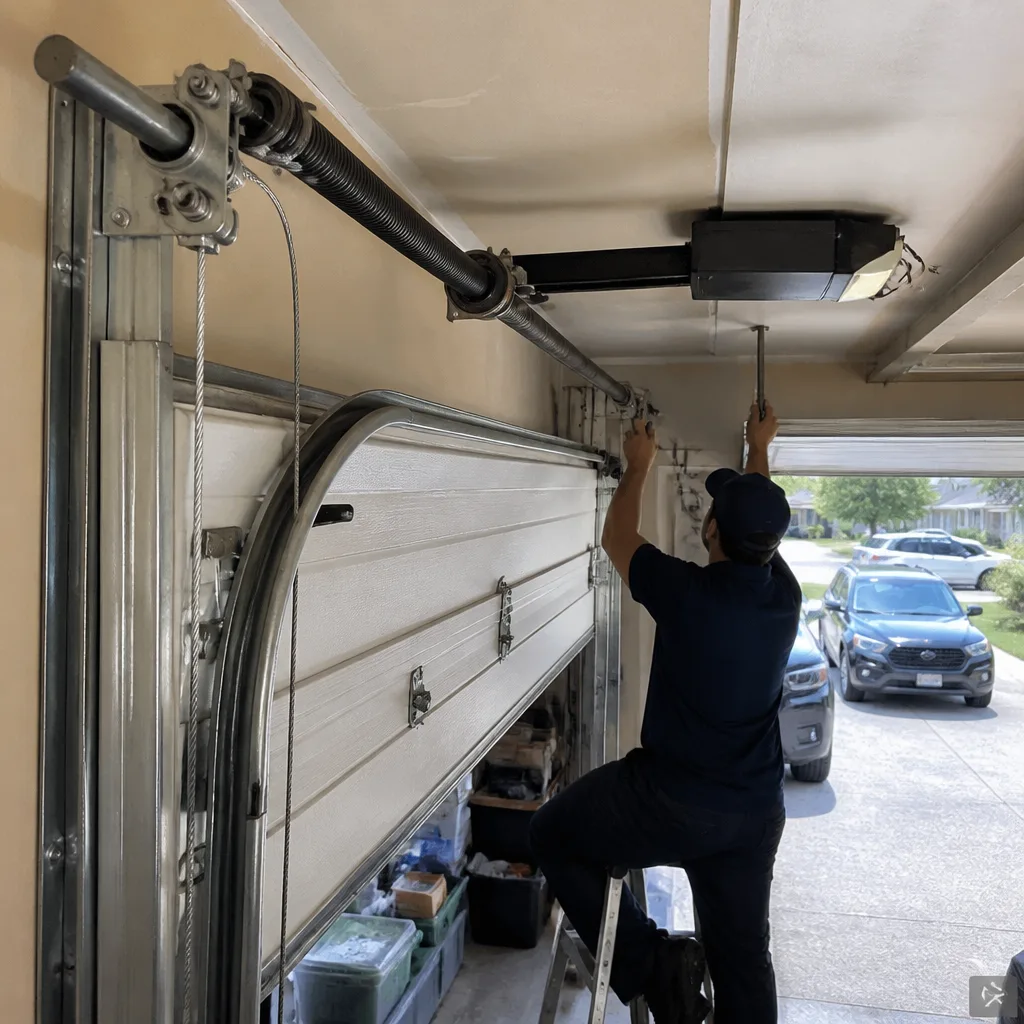 After
After