
Last updated October 16, 2026
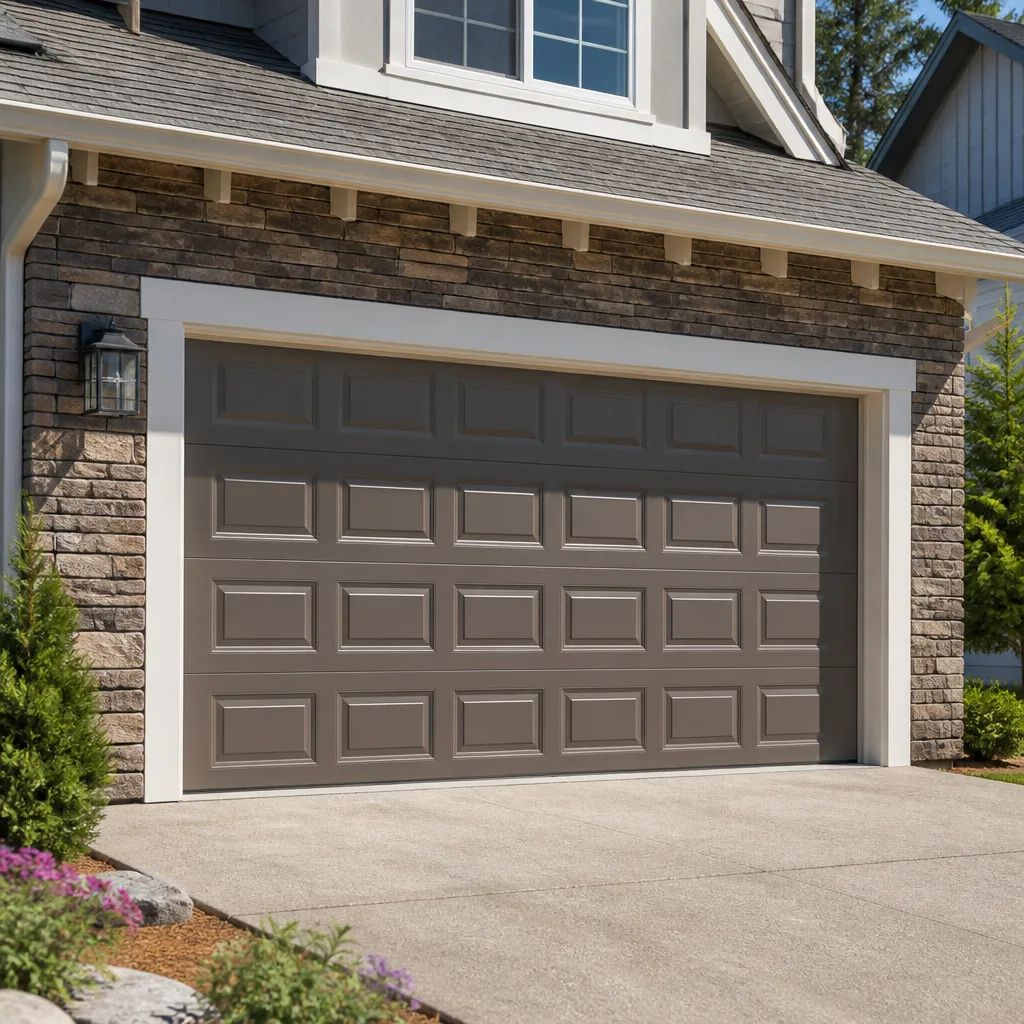 Raised-panel steel
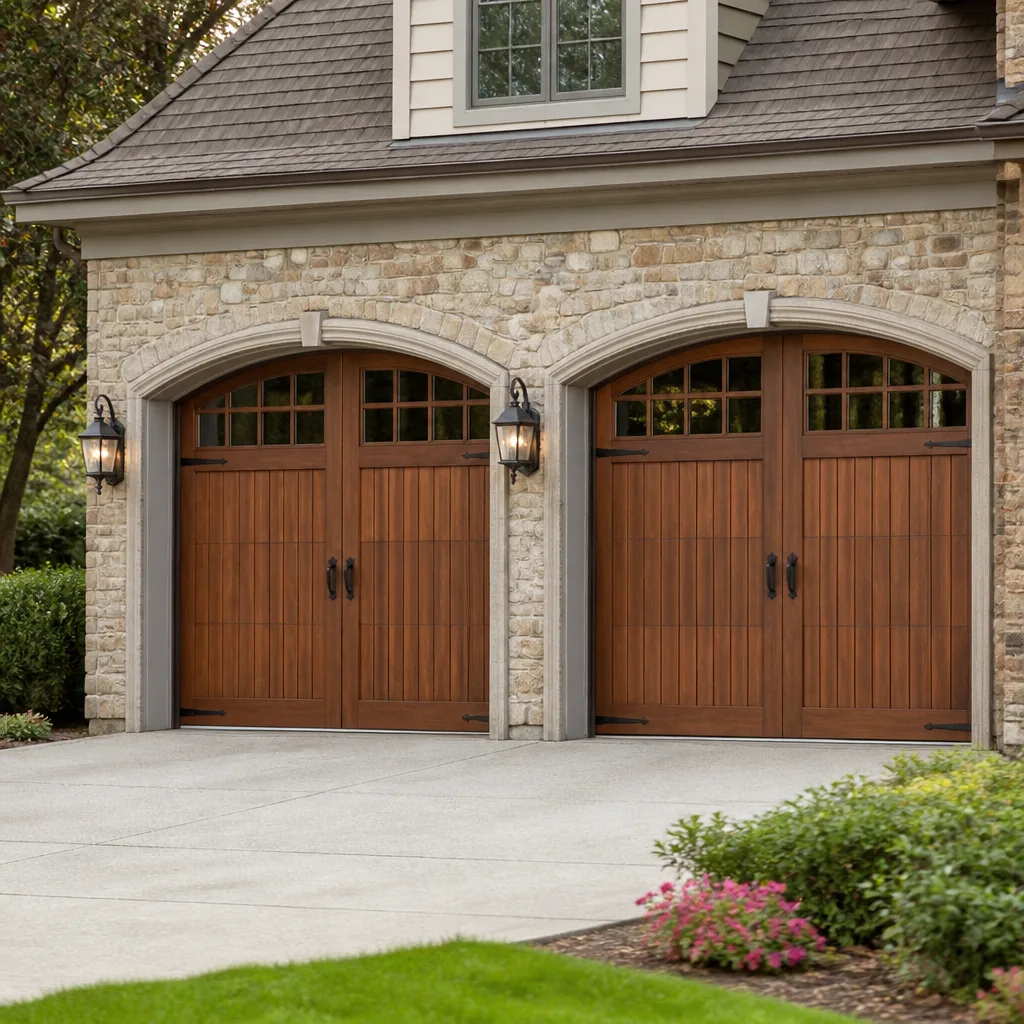 Carriage house
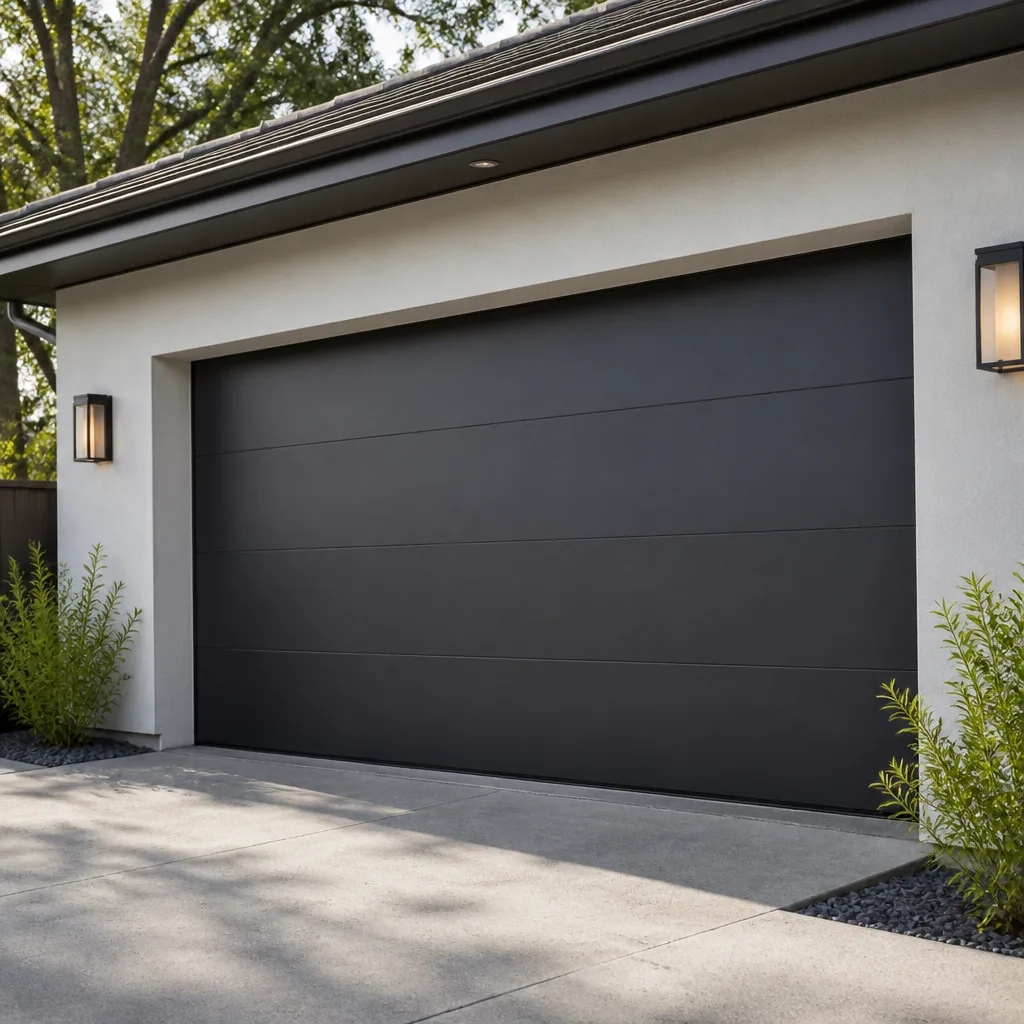 Modern flush
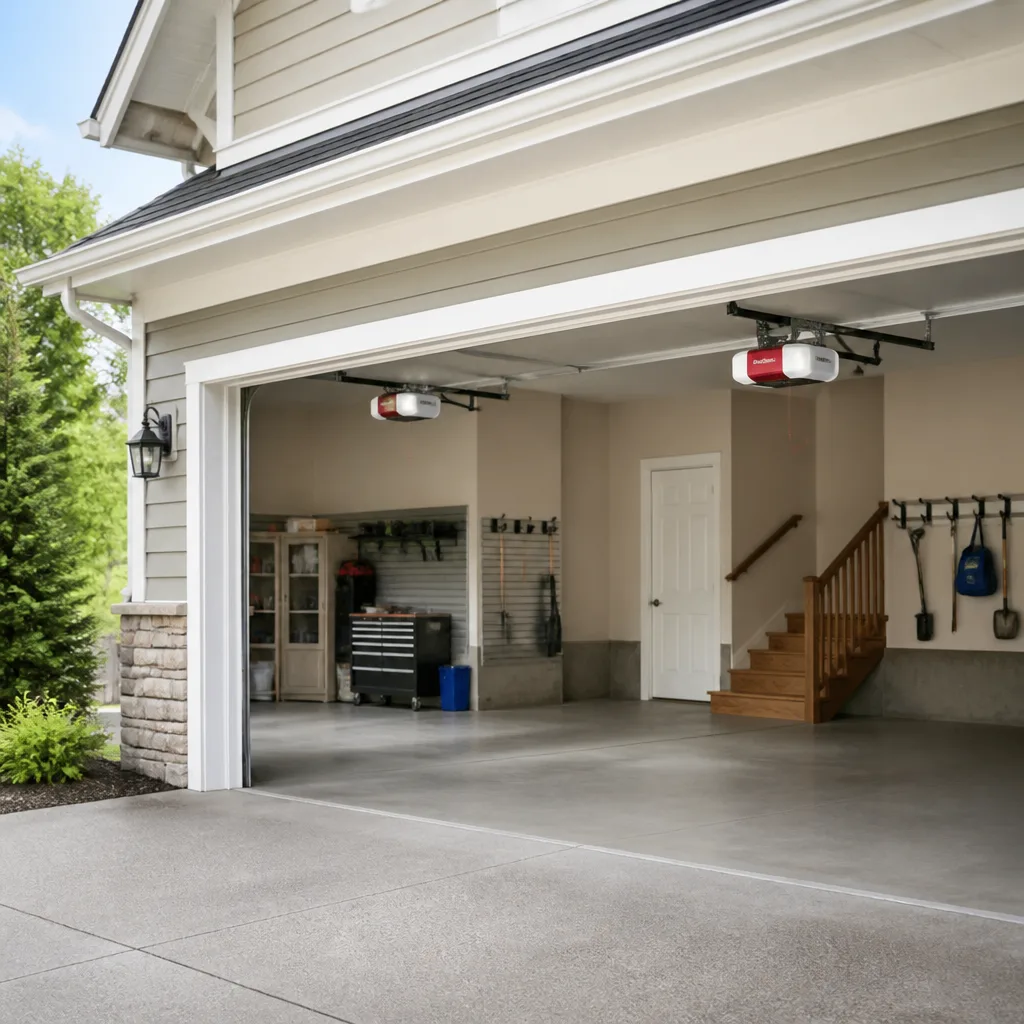 LiftMaster openers
 Chamberlain openers
Full 25-point door and opener safety check with every visit - springs, cables, rollers, tracks, and your LiftMaster or Chamberlain opener included
You get a price before we start. It does not change when the truck arrives.
Get your free estimateGarage Door Permits, Codes & Inspections in TX: What You Need to Know
Here’s a number most Austin homeowners never hear until it’s too late: home inspectors flagged unpermitted garage modifications as a deal-breaker on roughly 1 in 8 resale inspections in 2024. Not because the work was done badly. Because the paper trail didn’t exist when the title company started asking questions. A garage door project that seemed simple at the time becomes a five-figure negotiation chip at closing. This guide covers exactly what requires a permit in Austin, what doesn’t, what codes apply, what inspections cost when they go wrong, and how HOAs layer their own rules on top of city requirements. For Garage Door Warning Signs: A Austin Homeowner’s Reference Guide, see our related resource. By the end, you’ll know precisely which projects you can schedule without a second thought and which ones need a trip to the Development Services Department first.
Styles & brands we work with
Quick Answer
In Austin, repairing or replacing a garage door in the same opening with the same dimensions typically does not require a permit. You need a permit when the project changes the opening size, adds a new opening, converts a door to a wall (or vice versa), or touches fire-rated separation walls between an attached garage and living space. Most spring replacements, panel swaps, track adjustments, and opener installations are permit-free. The moment structural framing changes or fire-rated assemblies get altered, permitting becomes mandatory.
Table of Contents
- When a Garage Door Permit Is Required in Austin
- When No Permit Is Needed: The Repair vs. Replacement Line
- Fire-Rated Walls, Chapter 3 of the IRC, and Why They Matter in Austin
- The Austin Permit Process, Step by Step
- What a Failed Inspection Actually Costs in Austin
- The HOA Overlay: Steiner Ranch, Rough Hollow, and Circle C
- Unpermitted Work and the Resale Problem
- Common Mistakes to Avoid
- When to Call a Professional
- Frequently Asked Questions
When a Garage Door Permit Is Required in Austin
The City of Austin Development Services Department (DSD) regulates residential construction permits under the City of Austin Land Development Code and the adopted International Residential Code (IRC). For garage doors specifically, the permitting trigger is not the door itself. It’s the opening. A door is a manufactured product. The opening is structural.
Here is the plain-English threshold. You need a building permit in Austin when any of the following are true:
- The rough opening size changes. If you are cutting a wider hole or a taller hole to fit a larger door, that is structural work on a load-bearing wall. This requires engineering review and a permit, full stop.
- You are creating a new opening. Adding a garage door where there wasn’t one means altering the wall framing, possibly the header, and the shear wall or bracing system. Permit required.
- You are closing a garage door opening. Converting a garage door to a solid wall changes the building envelope, affects egress, and requires the same structural review as adding an opening.
- The work touches fire-rated separation assemblies. In attached garages, the wall between the garage and the house, and the garage ceiling if there is living space above, is fire-rated per IRC Chapter 3 (as adopted in Austin). If your project involves cutting into that wall, its header, or the ceiling structure, you need a permit and a fire-rated assembly inspection.
- Converting a garage to living space. If you are removing the garage door and framing in a wall with windows or a regular entry door to create a bedroom or office, this is a change of use. It triggers full permitting, including energy code review and potentially HVAC and electrical permits.
We’ve done door replacements in Mueller, Brentwood, and Crestview where the opening was untouched and no permit was ever discussed. We’ve also worked in Zilker and Travis Heights on 1940s and 1950s garages where the original openings were undersized by modern standards, and widening the opening for a modern two-car door meant a full structural permit and stamped engineering drawings. The age of the house is a good predictor: pre-1980 garages often don’t meet current minimum header specs, so a resize is rarely a simple saw-cut project.
One more Austin-specific point worth knowing: the City of Austin has an expedited review process for small residential projects under its Express Permitting program, but structural changes to openings almost never qualify. Expect plan review when the opening changes.
Permit Threshold Summary
- Repair, same opening: No permit
- Replace door, same size opening: No permit
- Replace opener, same opening: No permit (electrical outlet work may require a separate electrical permit)
- Widen or heighten opening: Permit required
- Add new opening: Permit required
- Close an opening: Permit required
- Any work on fire-rated separation: Permit required
- Garage conversion to living space: Permit required, plus change-of-use review
When No Permit Is Needed: The Repair vs. Replacement Line
Most of the calls we handle every week are squarely on the permit-free side of the line. Here’s what that looks like in practice:
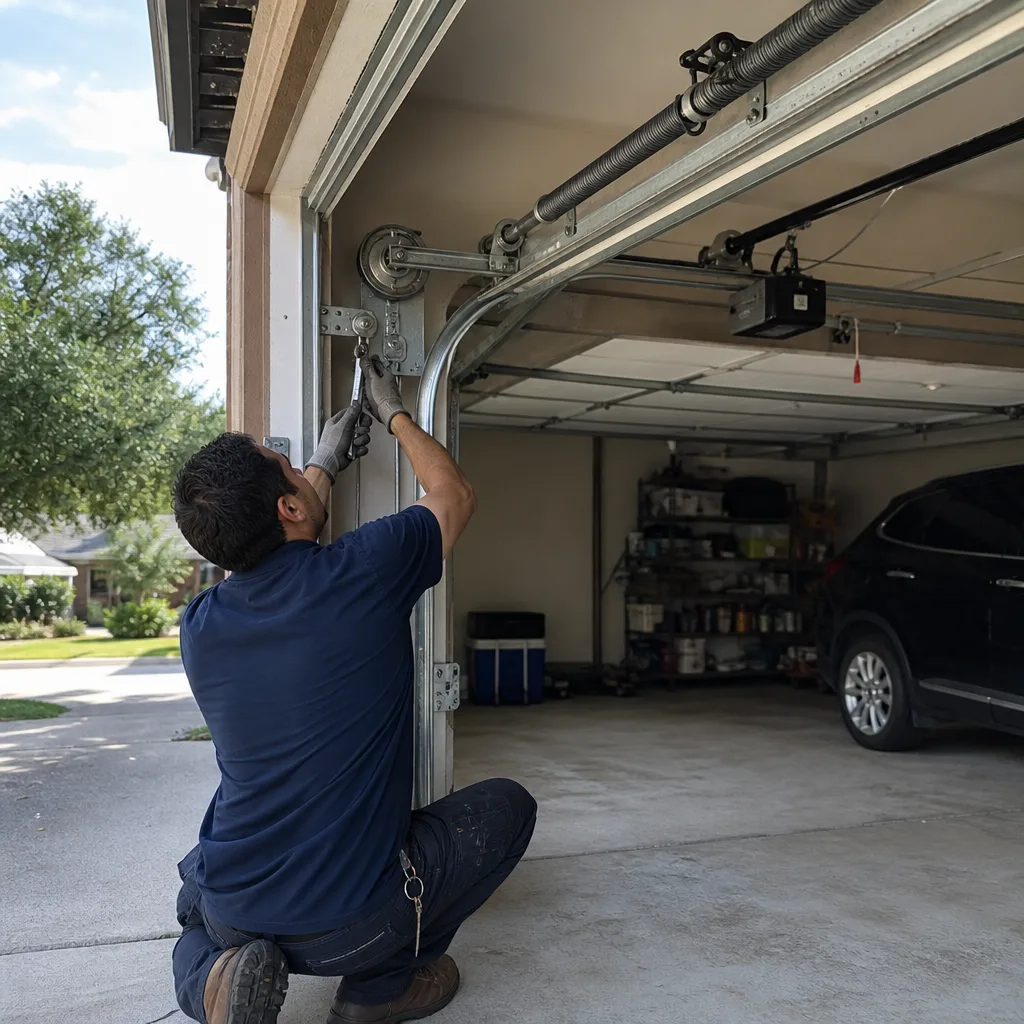
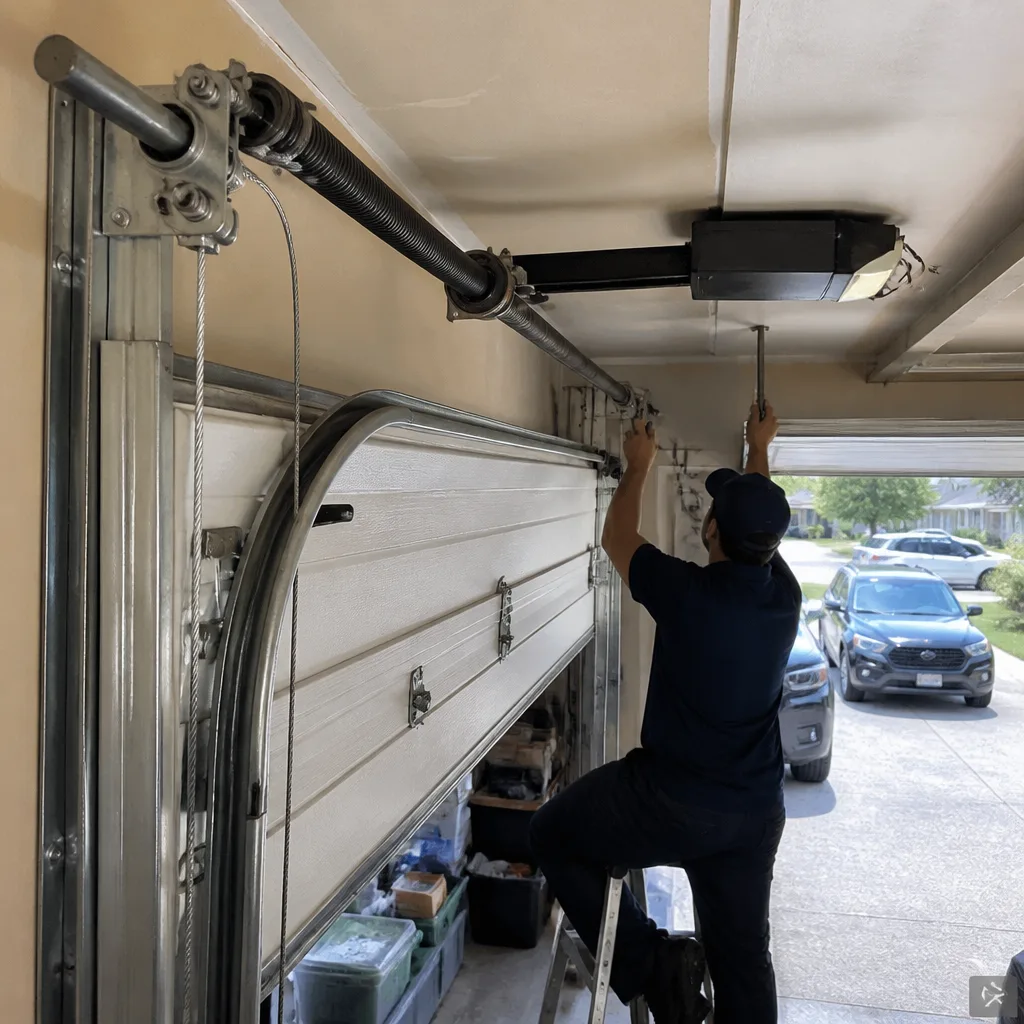
- Torsion spring replacement. The torsion spring is the large coil mounted above the door that does most of the lifting. It’s a mechanical component attached to the existing header with brackets. Replacing it does not alter the opening. No permit.
- Extension spring replacement. The older-style springs mounted alongside the horizontal tracks. Same logic. No permit.
- Cable replacement. The cables run along the sides and attach to the bottom brackets. They are wear items. No permit.
- Roller and hinge replacement. Standard maintenance on every moving garage door. No permit.
- Panel replacement. If a car or a storm dents one or more panels, you can replace the panels within the existing door without touching the opening. No permit.
- Track adjustment or replacement. Track work keeps the door in the same opening. No permit.
- Opener replacement. Replacing a burnt-out motor or upgrading to a belt-drive unit (like a LiftMaster or Chamberlain) does not change the opening size. No permit.
- Full door replacement in the same opening. Pulling out a 16-foot door and installing a new 16-foot door is a product replacement, not construction. No permit.
The dividing line Austin inspectors actually care about is whether the rough opening, meaning the framed hole in the wall, has changed dimension, changed location, or changed function. If the answer is no to all three, you are replacing a product, not altering a structure.
That doesn’t mean there are zero rules on the repair side. The 2021 IRC, adopted by Austin with local amendments, still requires that replacement doors meet current wind load requirements for the region. Most name-brand doors from Clopay, Amarr, and Wayne Dalton sold in Central Texas already meet these standards out of the box. If you’re ordering a custom door from a less common manufacturer, it’s worth confirming the wind load rating before you buy. Austin is not in the highest wind zone on the Texas coast, but we get strong spring storm winds, and the code treats the door as part of the exterior envelope.
If you’re replacing a garage door and you’re not sure whether your opening is considered “same size,” measure the rough opening after the old door is down. If the new door fits that same rough opening without cutting studs, moving a header, or modifying the king studs and jack studs at the sides, you are on the no-permit side. If you honestly can’t tell, call the City of Austin DSD at (361) 470-4316 and describe the job. They’ll tell you in five minutes.
Fire-Rated Walls, Chapter 3 of the IRC, and Why They Matter in Austin
Here’s the section most DIY guides skip entirely, and it’s the one that creates the most expensive problems in Austin. When your garage is attached to your house, the wall between the garage and the living space is not an ordinary wall. Under IRC Chapter 3, as adopted and enforced in Austin, that wall is a separation wall with a specific fire rating. The garage ceiling also carries a fire rating if there is habitable space above it, like a bedroom over the garage, which is extremely common in Austin’s two-story suburban homes in neighborhoods like Circle C, Avery Ranch, and Steiner Ranch.
The fire rating requirement is R302.6 in the IRC: the separation wall between a garage and a dwelling unit must be at least 1/2-inch gypsum board on the garage side if there is living space above, and at least 1/2-inch on both sides if the garage is under other habitable rooms. The door between the garage and the house must be solid wood or a 20-minute fire-rated door with self-closing hinges. Any penetration through that wall, including the garage door header area if it abuts living space, has to be sealed with approved fire caulking or gaskets.
Why this matters for garage door work: when a homeowner converts a single wide door to a double wide door on an attached garage, the new header often ties into that separation wall. The framing alteration can compromise the fire assembly. An inspector will want to see the gypsum board continuity, the fire blocking, and the penetration seals. If the work was done without a permit and the inspector discovers it later because of a complaint or a resale inspection, the fix can mean opening up finished drywall, re-framing, re-rocking, and re-taping, all before the re-inspection.
We’ve seen this exact situation in Crestview and Allandale, neighborhoods with a lot of original 1950s and 60s attached garages. A homeowner widened a single door to a double in 2019, never pulled a permit, and sold in 2023. The buyer’s inspector flagged the header, the title company asked for the permit, the seller had to pay for a structural review after the fact, and the deal nearly died. In that case the work itself was sound. The missing paper was the problem.
The same fire-rated logic applies when adding an opener to an attached garage if the opener’s motor unit or its support brackets require mounting to the ceiling assembly. Bolt the opener to the ceiling joists and the fire-rated gypsum board that seals the garage ceiling stays intact. That’s normal work and it’s permit-free. But if the opener installation requires cutting into the ceiling assembly to run new wiring or to recess the motor, that’s a penetration of a fire-rated assembly and it should be reviewed.
If you’re not sure whether your garage separation is up to current code, a garage door professional who works in Austin regularly can usually tell you in the first five minutes of looking. The red flags are missing fire tape on the drywall joints, gaps around pipes and wires running through the wall, and a hollow-core interior door between the garage and the kitchen. All common, all correctable, and all items an inspector will flag.
The Austin Permit Process, Step by Step
If your project does require a permit, here’s the honest version of what it takes in Austin. It’s not fast, but it’s predictable.
- Determine your permit type. Most garage door structural work falls under a Residential Building Permit through the City of Austin Development Services Department. If electrical work is involved (a new outlet for an opener, for example), you may need an associated Electrical Permit. The DSD website has a permit wizard that routes you based on scope.
- Prepare the drawings. For a simple opening change on a single-family home, you may get away with a dimensioned diagram showing the existing condition, the proposed condition, the header size, and the fire-rated assembly details. For anything beyond cosmetic resizing, the city will want sealed engineering drawings from a Texas-licensed engineer. That’s the reality of Austin’s code enforcement, especially in newer subdivisions with engineered shear wall systems.
- Submit through the Austin Build + Connect (AB+C) portal. Everything is online. You create an account, upload the drawings, pay the application fee, and wait for plan review. First review on a simple residential permit is typically one to two weeks, though it varies seasonally.
- Respond to review comments. The plan reviewer will send back comments. They always send comments. You address them, resubmit, and wait again. Budget two to four weeks total for review cycles on a straightforward project.
- Pay the permit fees. Austin’s residential permit fees are calculated from the project valuation. A single-width to double-width garage door opening change might run a few hundred dollars in permit fees, plus the cost of engineering if required. The permit fee is the cheap part. The engineer is the expensive part.
- Post the permit and do the work. The permit must be posted on the job site. The work proceeds, and you schedule inspections at the required stages. For garage door structural work, the inspection point is usually after framing and fire assembly work is complete but before finish materials cover it.
- Schedule the inspection. Austin uses a next-business-day or same-day inspection scheduling system in most cases through AB+C. The inspector arrives, reviews the work against the approved drawings, and either passes it or issues a correction list.
- Close the permit. After the final inspection passes, the permit is closed and the record exists. This is the piece of paper that matters at resale.
If all of that sounds like a lot, that’s because it is. It’s the same process whether you’re changing a garage door opening or adding a bathroom. The city does not have a “small project” shortcut for structural work. If you’d rather not run this gauntlet yourself, a licensed garage door contractor who has done permitted work in Austin before can draft the drawings, pull the permit, and manage the inspections. See How to Hire a Garage Door Contractor in Austin: A Step-by-Step Guide for what to look for. Expect that service to add a management fee to the project, and expect the schedule to stretch accordingly.
What a Failed Inspection Actually Costs in Austin
The question everyone skips until it’s too late: what happens when the inspection doesn’t pass? Here’s the honest math.
When a City of Austin building inspection fails, the inspector issues a written correction notice listing exactly what must be fixed. You are then responsible for scheduling a re-inspection after the corrections are made. In most cases, the first re-inspection is included in the original permit fee, but subsequent re-inspections can trigger an additional fee, and the clock is running on your construction timeline. More importantly, a failed inspection means the work has to be opened up. That means removing drywall, exposing framing, sometimes removing the door itself to let the inspector see the header connections. In practical terms, a failed framing inspection on a garage door opening change costs:
- Re-inspection fees: Variable, but re-inspections are not unlimited. Budget for at least one paid re-inspection if the first pass fails.
- Tear-out and redo labor: Pulling off finished drywall and re-doing it can be $800 to $2,500 on a single garage wall, depending on how far the finish work had gone before the failure was caught.
- Schedule slippage: A permit that’s in correction cycles can add two to six weeks to a project, and in Austin’s hot resale market that can mean the difference between closing in summer and closing after the school year starts.
- The disclosure requirement: Once work has been flagged as non-compliant, it creates a disclosure obligation at resale. A seller who knows the garage work failed inspection is legally required to disclose it on the Texas Seller’s Disclosure Notice. Unpermitted and uninspected work is the #1 garage-specific item we hear about from Austin title companies and inspectors in deals gone sideways.
There’s an asymmetry here worth naming plainly. A permit that’s pulled and passes costs a few hundred dollars in fees and a few weeks of time. Unpermitted work that gets flagged later can cost the seller $5,000 to $15,000 in corrections, concessions, and re-inspection, and that’s before we count the deal-time delay. In a city where the median home price makes every week of escrow meaningful, the cheap-looking shortcut is usually the expensive option.
The HOA Overlay: Steiner Ranch, Rough Hollow, and Circle C
If you live in a master-planned community, the City of Austin is not the only authority with opinions about your garage door. Large Austin-area HOAs, including Steiner Ranch, Rough Hollow, and Circle C Ranch, layer their own architectural review process on top of the city permitting system.
Here’s how the overlay works in practice. The city permit only governs safety, structure, and fire code. The HOA architectural committee governs appearance, style, materials, and sometimes brand. A garage door replacement that is entirely permit-free at the city level can still require HOA approval if the new door changes the color, material, panel style, or window configuration. The HOA’s concern is visual conformity, and their approval process exists completely separately from anything the city does.
Typical HOA garage door requirements in these communities include:
- Color palette compliance. Steiner Ranch and Rough Hollow both maintain approved color lists. A white door replaced with a dark bronze door may require written approval even if the opening is untouched.
- Material consistency. Some sections require wood-look doors, some require specific steel constructions, some prohibit custom materials. Circle C has sections where carriage-house style doors are effectively mandatory.
- Window placement and glass type. Doors with windows facing the street often require a specific glass tint or frosted pattern.
- Brand and model pre-approval. Some HOAs maintain lists of pre-approved door manufacturers. Clopay, Amarr, and Wayne Dalton are commonly on these lists because they offer enough style flexibility to satisfy design review.
- Replacement timing. A few HOAs require architectural approval for any door replacement, even identical in kind, if the door is visible from the street.
The practical takeaway: before you replace a garage door in a master-planned community, read your HOA’s design guidelines and submit the architectural review form if required. It costs nothing and takes a few days. Skipping it can result in a violation notice, a fine, and in some cases a demand to replace a brand-new door because the wrong tint was installed. We’ve seen homeowners in Avery Ranch have to swap out a perfectly good door over glass tint. The door worked fine. The tint didn’t match the block face.
The same logic applies to the city. Even where the HOA is silent, the city is not. The two systems operate in parallel, and compliance with one never covers compliance with the other.
Unpermitted Work and the Resale Problem
The resale market is where unpermitted garage door work turns from a technicality into a negotiation. Texas is a buyer-beware state in the literal sense, but it also requires sellers to disclose known material defects and unpermitted work on the Seller’s Disclosure Notice, a form that gets specific in its garage and structural sections. A seller who widened a garage door opening without a permit, and who then knowingly signs a disclosure that says “No” to the unpermitted-work question, has created a fraud claim that can follow the transaction even after closing.
Home inspectors in Austin are unusually attentive to garage openings for three reasons:
- The fire-rating rule creates hard visual tells. An inspector can spot a changed header, a fresh patch in the drywall over the door, or an odd gap in the fire tape from across the room.
- Most Austin resale transactions involve a title company that orders a permit history review. The title company doesn’t care if the work was good. They care whether the record exists. If the permit history shows a blank for an opening that clearly changed, the ball starts rolling.
- Buyers in Austin are educated about this now. The 2024 numbers get attention because they’re high, but the underlying pattern has been building for a decade. A buyer who knows the question to ask will ask it.
If you’re planning to sell an Austin home in the next five years and you’ve already done unpermitted structural garage work, the honest advice is to address it now, while you control the timeline and the contractor, rather than later, when a buyer’s agent is using it as a price concession. The city has a process for retroactive permits on existing work. It involves stripping back finishes, getting the work inspected, and paying fees. It’s not fun, but it’s cheaper and calmer when it’s not attached to a closing date.
Common Mistakes to Avoid
- Assuming all garage door work is permit-free. Repairs and same-size replacements are. The moment the opening changes dimension, the project moves into permit territory. This mistake is the most expensive one we see in Austin.
- Ignoring the fire-rated separation wall. Widening an opening on an attached garage without understanding the fire assembly is the mistake that produces the ugliest inspection failures. The header work can break the fire seal in ways that are invisible after drywall goes up.
- Skipping HOA review in a master-planned community. City compliance and HOA compliance are separate. A door that’s perfectly legal can violate design guidelines and trigger a replacement demand.
- Not documenting permit-free work. Even when no permit is required, keep the contractor’s invoice, the door specifications, and photos of the completed work. At resale, that paper trail is what confirms the work was a same-size replacement, not a structural change.
- Using a handyman for structural work. A handyman can replace a spring or a panel. A structural opening change requires engineering, permitting, and inspection. Hiring unlicensed labor for a permit job creates liability that runs with the house.
- Waiting until the open house to address it. Once the permit issue is discovered mid-transaction, you’re negotiating from a chair with no leverage. Fixing the problem is a seller-side responsibility. Doing it on your timeline costs less.
- Assuming the city inspector will “just pass it.” Austin inspectors follow the code, not the vibe of the project. An unopened permit, a missed inspection milestone, or a rough framing job that doesn’t match the drawings will produce a correction notice, not a pass.
When to Call a Professional
If the project is a spring replacement, a panel swap, or an opener swap in the same opening, you can hand it to any reputable garage door company and skip the permit conversation entirely. But the moment you’re thinking about changing the opening size, adding a door, closing in a garage, or doing anything that touches the wall between your garage and your house, call a professional who’s done permitted work in Austin before. A Garage Door Repair Maintenance Checklist for Austin Homeowners can help you assess your needs first. A licensed contractor can tell you in the first visit whether the project is actually structural, whether it’s worth doing, and what the permit path looks like.
Doyle Garage Doors Austin offers free estimates in Austin for garage door repair, installation, and opener work, and we’re happy to walk you through the permit question on the phone before we even schedule a visit. Call (361) 470-4316 and you’ll get a real person, day or night, who can tell you whether your project is on the repair side or the permit side.
Frequently Asked Questions
No permit is required in Austin to replace a garage door in the same opening with the same rough opening dimensions. The replacement is treated as a product swap, not structural work. If the opening size changes, a permit is required. Call (361) 470-4316 if you want a free answer on your specific situation.
For most residential garage door structural changes in Austin, permit fees run a few hundred dollars, calculated from the project valuation. That figure excludes engineering drawings, which are often required and typically cost more than the permit itself. The total cost of a permitted single-to-double door opening change usually lands between $1,500 and $4,000 above the door and labor costs, depending on the engineering and inspection requirements.
No. Converting a garage to habitable space in Austin requires a building permit, a change-of-use review, and typically separate electrical and mechanical permits. The garage door removal, the wall infill, the flooring, the insulation, and the HVAC all fall under the permit. Unpermitted garage conversions are among the most common deal-killers we hear about from Austin home inspectors.
In master-planned communities like Steiner Ranch, Rough Hollow, and Circle C, yes, the HOA will usually find out. Door replacements that change the color, material, style, or window treatment are visible from the street, and architectural review committees are active year-round. Submit the approval form before you order the door.
A failed inspection in Austin triggers a correction notice, a required re-inspection, and potentially tear-out work to expose the framing or fire assembly for review. Re-inspection fees may apply after the first attempt, and the failed record must be disclosed at resale. Resolving a failed inspection before the drywall goes back up is always cheaper than resolving it after.
In most cases, no. Replacing or installing a garage door opener in an existing opening, with an existing electrical outlet, does not require a building permit in Austin. If the installation requires new electrical wiring or a new circuit, a separate electrical permit may be needed. If the opener mounts through a fire-rated ceiling assembly, have the installation reviewed before any cuts are made.
Yes, repair work like spring replacement, panel replacement, and roller or hinge replacement is permit-free and technically within the reach of a determined homeowner. But torsion springs are under high tension and can cause severe injury if mishandled. If you’ve never worked with a winding bar and the spring’s stored energy, the safer choice is a trained professional. You’ll pay for labor and not for an emergency room.
The Bottom Line
Most garage door work in Austin is permit-free, and the line is easy to see. If the rough opening stays the same size and the fire-rated assembly stays intact, you’re replacing a product. If the opening changes, the separation wall gets touched, or the garage becomes living space, the project now has a permit home at the City of Austin Development Services Department. And if you live in a master-planned community, add an HOA review layer on top of that. The homeowners who get into trouble are rarely the ones who did bad work. They’re the ones who did good work with no paper trail, and didn’t find out until the title company asked the question. Get the answer before you start, not after the inspection. For more guides & resources, visit our blog.
Need a straight answer on your specific garage door project? Call Doyle Garage Doors Austin at (361) 470-4316 for a free estimate. We’ll tell you honestly whether it’s a repair we can do tomorrow or a permit we should discuss first. You can also learn more about our garage door installation in Austin services or read about garage door opener repair in Austin. Whether you’re in the middle of a project or just trying to figure out the rules before you spend a dollar, we’ll give you a real answer from a real person.
Written by Aaron Teague, Owner at Doyle Garage Doors Austin, serving Austin since 2001.
See the difference
 Before
 After
After Before
 After
After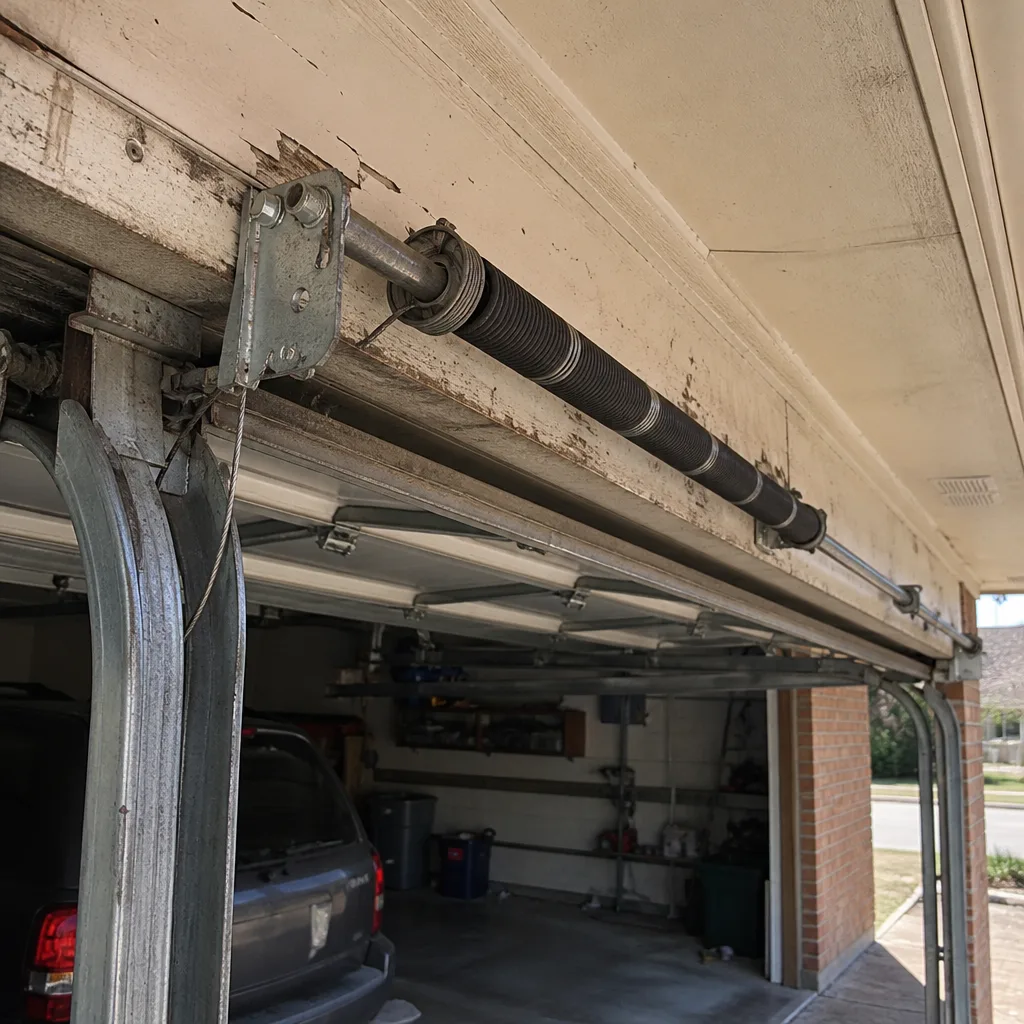 Before
 After
After