
Last updated October 16, 2026
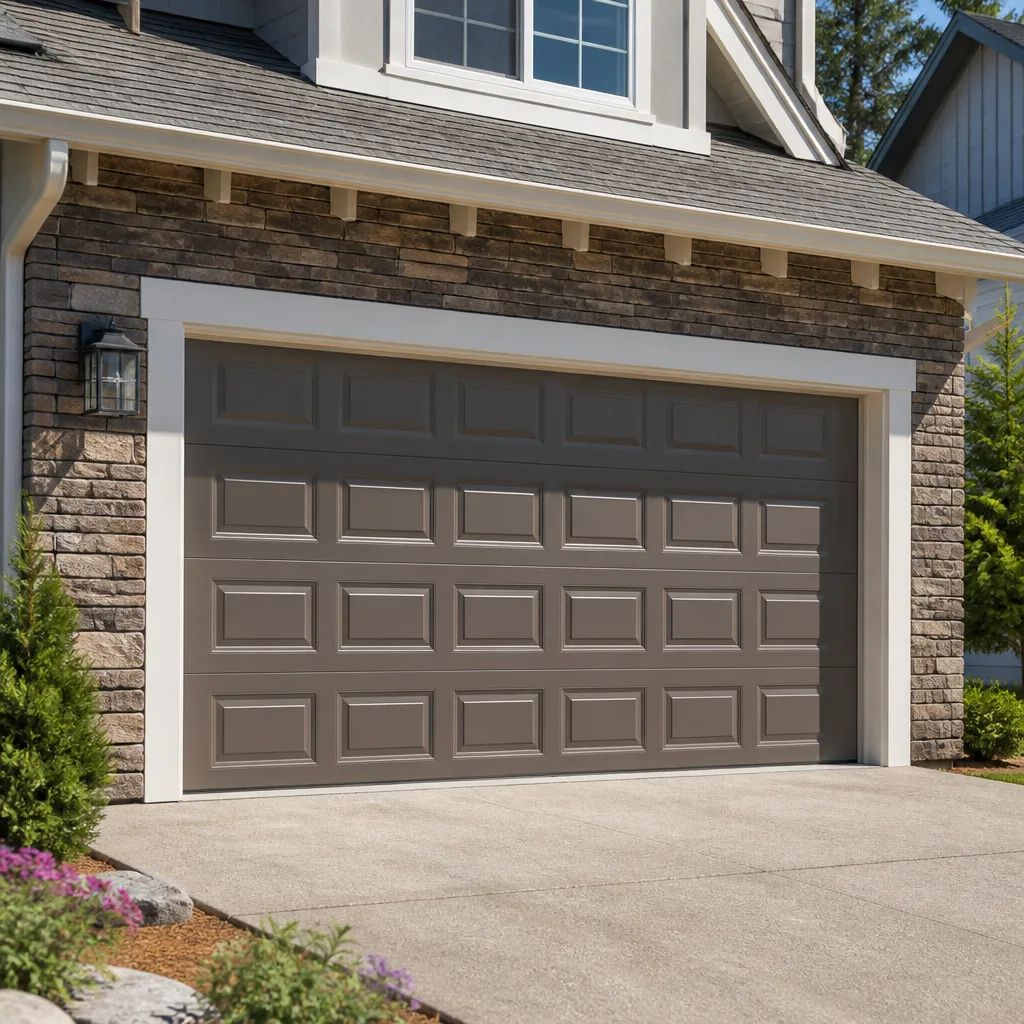 Raised-panel steel
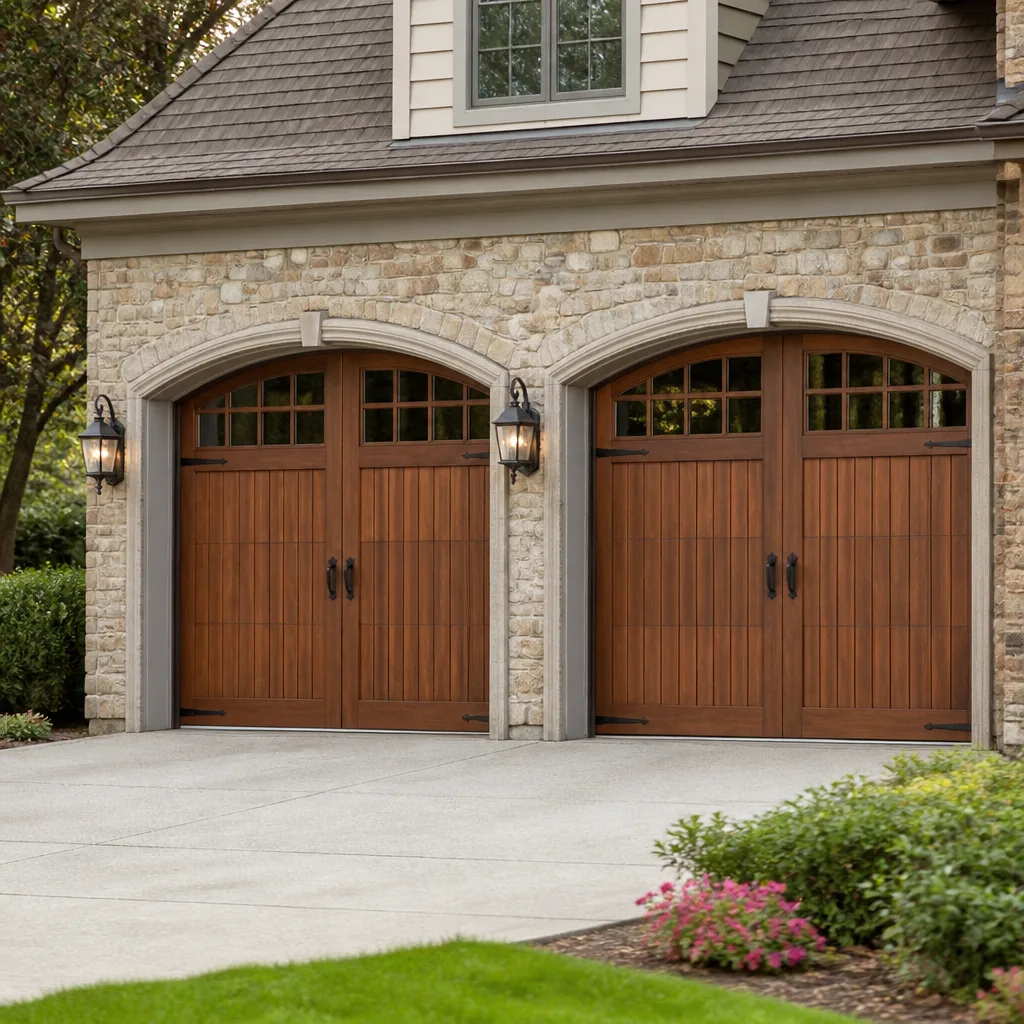 Carriage house
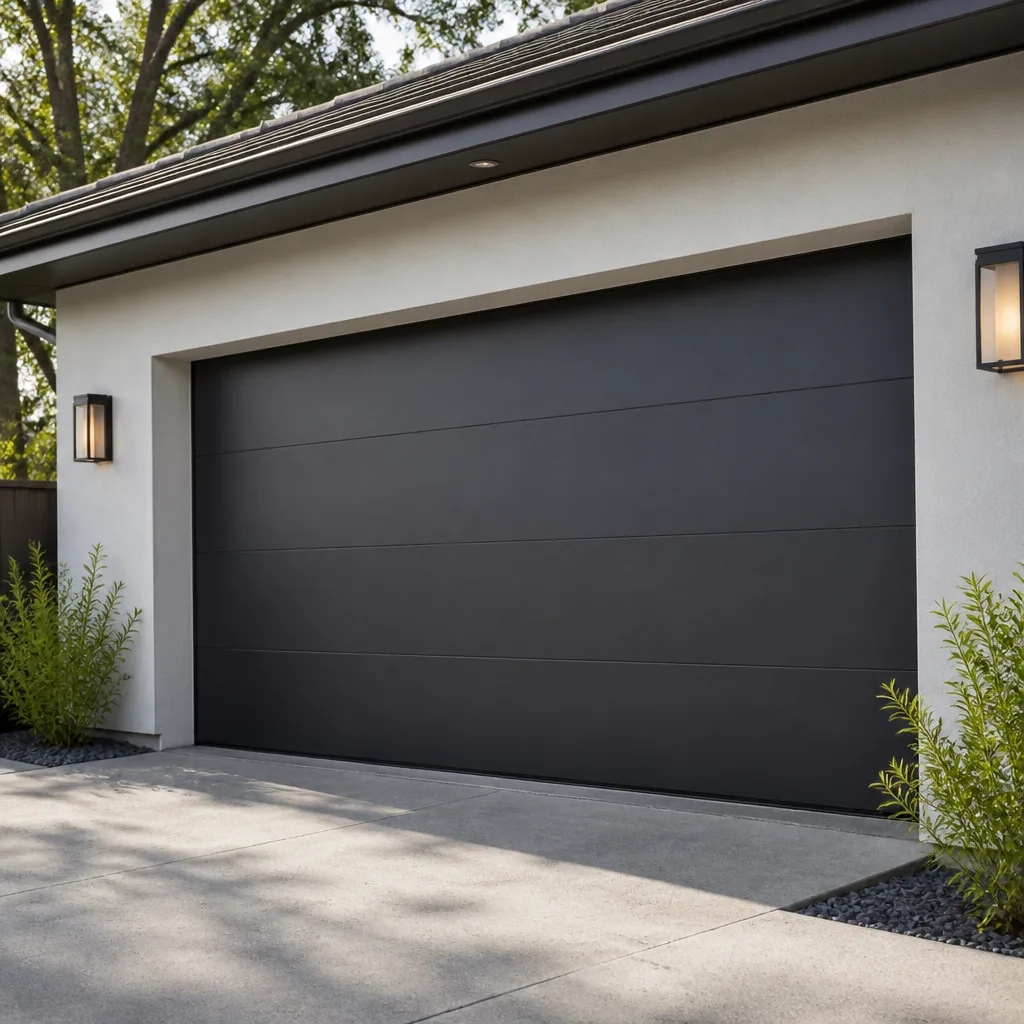 Modern flush
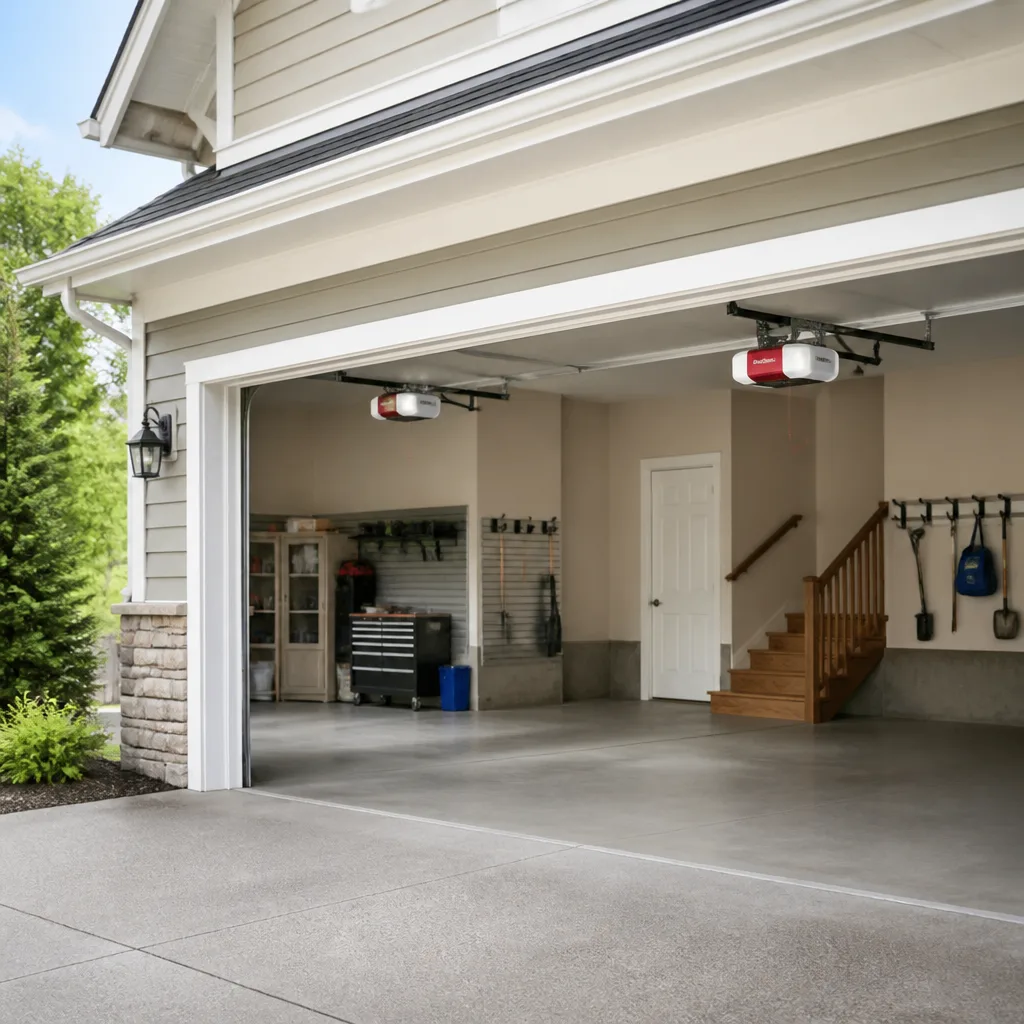 LiftMaster openers
 Chamberlain openers
Full 25-point door and opener safety check with every visit - springs, cables, rollers, tracks, and your LiftMaster or Chamberlain opener included
You get a price before we start. It does not change when the truck arrives.
Get your free estimateThe Complete Guide to Garage Door in Austin
Austin averages 232 sunny days a year, but it’s the other 133, the ones with cedar fever dust, flash-flood humidity spikes, and the occasional 19°F freeze, that destroy garage door hardware most homeowners never think about until it stops working. This guide is built for the conditions your door actually lives in, not the generic maintenance timelines written for places with predictable weather. We’ll walk through what fails first in Central Texas, what repairs actually cost in Austin, how to talk to any technician without being upsold, and which materials survive our UV index and limestone dust. You’ll finish knowing more about your garage door than most people who sell them.
Quick Answer
Garage door issues in Austin TX most commonly stem from three local factors: cedar pollen and caliche dust clogging tracks and trolley carriages, temperature swings causing metal fatigue in torsion springs, and UV exposure degrading weatherstripping faster than national averages. A torsion spring replacement in Austin typically runs $180 to $340, a new opener installation $350 to $650, and a full door replacement $1,100 to $2,400 depending on material and size. Doyle Garage Doors Austin provides written upfront pricing, a 365-day written guarantee on every repair, and sends a technician’s name and photo before any visit.
Styles & brands we work with
Table of Contents
- Why Austin’s Climate Is Harder on Garage Doors Than You Think
- Torsion, Extension, and Jackshaft: The Three Door Configurations Explained
- Steel, Wood Composite, or Aluminum: What Holds Up Under Austin’s UV Index
- What Garage Door Repairs Actually Cost in Austin
- Trade Terms in Plain English: A Glossary for Austin Homeowners
- Step-by-Step: What Happens During a Torsion Spring Replacement
- Step-by-Step: What a Professional Opener Installation Looks Like
- Austin-Specific Maintenance Timeline That Actually Works
Why Austin’s Climate Is Harder on Garage Doors Than You Think
Most garage door maintenance advice is written for national averages. It assumes your door deals with normal dust, normal humidity, normal freeze-thaw cycles. Your door doesn’t live in a national average. It lives in Austin.
The first thing we tell every homeowner is this: your garage door’s enemy list is longer than you think it is. Caliche dust, the fine chalky limestone powder that drifts up from Central Texas soil, works its way into trolley carriages and roller bearings. Cedar pollen, especially between December and February when cedar fever peaks, coats limit switches and photo-eye sensors with a fine yellow film that interrupts signal transmission. Combine that with January ice storms followed by July heat indices over 105°F, and you get metal expanding and contracting in ways that fatigue torsion springs years earlier than a door in, say, Dallas or Houston would experience.
Here’s what we see in Austin that generic guides miss:
- Cedar pollen on photo-eyes: The safety sensors at the bottom of your door tracks get coated with pollen, which blocks the infrared beam. The door thinks something is in the way and refuses to close. In January and February, this is one of the most common calls we get.
- Caliche dust in trolley carriages: The trolley carriage, the sliding mechanism that pulls your door along the opener rail, collects limestone dust that acts like sandpaper on the plastic gears inside. We see carriages failing at 7 to 9 years in Austin when the national average is 10 to 12.
- Freeze-thaw metal fatigue: When a January ice storm hits and then the sun comes out, the temperature swing on a single day can exceed 40 degrees. Torsion springs, the big coils that do the lifting, expand and contract with that swing. Every cycle adds microscopic stress. Austin springs typically fail at 8,000 to 10,000 cycles, which for most homes is 6 to 8 years.
- Bottom seal rot from flash-flood humidity: The rubber strip along the bottom of your door degrades faster when it cycles between soaked and sun-baked. Austin’s flash-flood humidity spikes followed by 100°F dry heat mean bottom seals crack and split within 2 to 3 years, not the 4 to 5 a national guide would suggest.
What this means for you: if your door is more than 7 years old and has never had its rollers, carriage, and seals inspected under Austin-specific conditions, you’re driving on borrowed time.
Torsion, Extension, and Jackshaft: The Three Door Configurations Explained
Most Austin homes have one of three garage door configurations: torsion spring, extension spring, or jackshaft. Knowing which one you have changes what repairs look like, what they cost, and how dangerous they are to handle yourself.
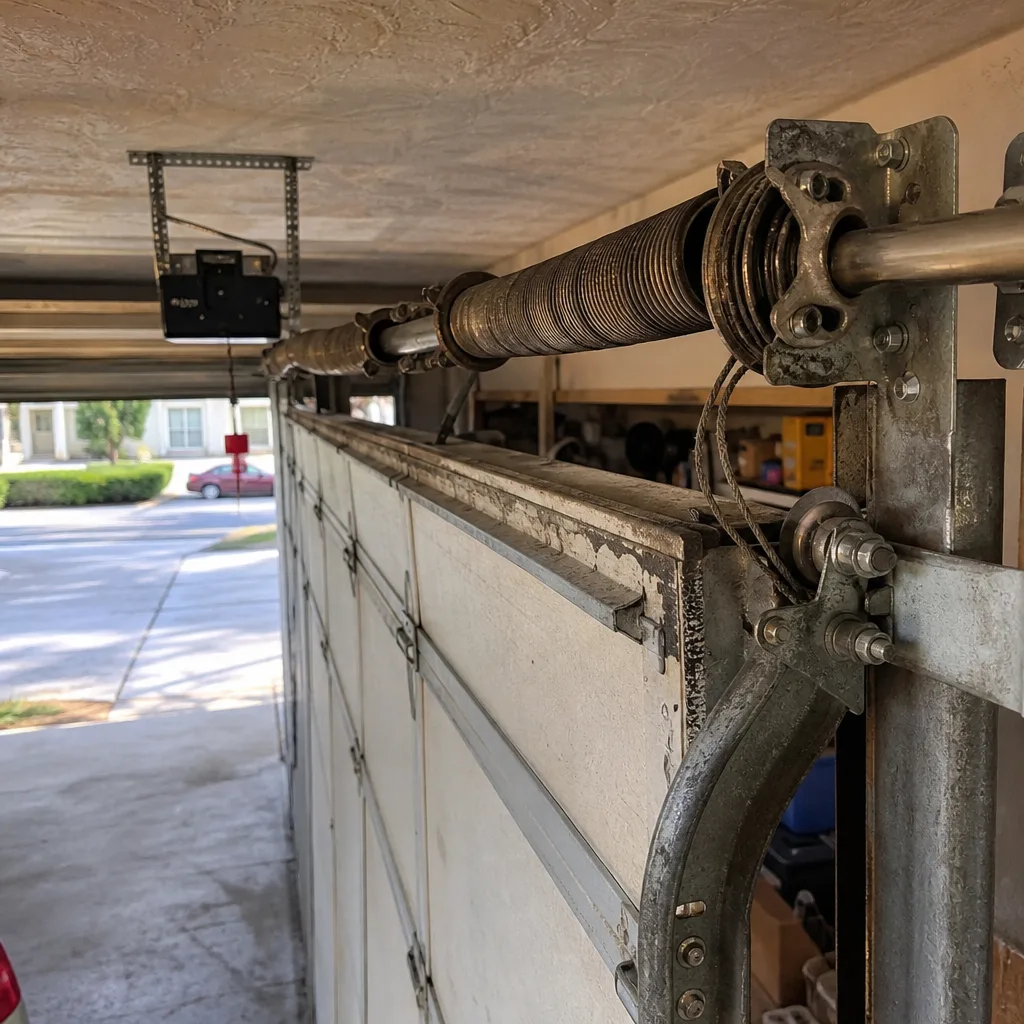
Torsion spring systems are the most common on doors installed after about 1995. The torsion spring is the large coil mounted horizontally on a metal tube above the door opening. When you press the opener, the spring winds and unwinds to counterbalance the door’s weight. These springs are under enormous tension, hundreds of pounds of stored force. If one snaps, you’ll hear it. It sounds like a gunshot from inside your garage. When we replace a torsion spring in a South Austin home, we always replace both springs, even if only one failed, because the unworn one is typically within 500 cycles of failing too.
Extension spring systems are older, common on doors from the 1980s and early 1990s. They use two long springs that stretch along the horizontal tracks on either side of the door. When they fail, they can launch metal fragments across the garage if the safety cable isn’t installed. We still find extension spring doors in older neighborhoods like Crestview and Allandale. If you have one, let a professional inspect the safety cables, because a missing cable on an extension spring is genuinely dangerous.
Jackshaft systems mount the motor on the wall beside the door opening instead of on the ceiling. They’re popular in Austin for two reasons: they free up ceiling space in garages that have been converted to workshops or home gyms, and they work well with high-lift track systems on 10-foot and 12-foot ceiling garages. Jackshaft openers, especially LiftMaster models, hold up well in Central Texas heat because the motor isn’t trapped in the hottest part of the garage ceiling cavity.
Which one performs best in Central Texas heat? That’s the question we get most often. The answer: torsion spring with a belt-drive opener. Torsion springs are better sealed against dust than extension springs, and belt drives don’t have metal-on-metal chain wear that gets accelerated by caliche grit. If you’re building or replacing, that’s the combination we’d steer you toward for an Austin garage.
Steel, Wood Composite, or Aluminum: What Holds Up Under Austin’s UV Index
Austin’s UV index sits in the high to extreme range from April through September. That matters for your door material, but not in the way most people assume.
Steel doors are the most common in Austin, and for good reason. A 24-gauge or 25-gauge steel door with a baked-on factory finish handles our sun well. The problem isn’t the steel, it’s the paint. Dark colors absorb more UV, and on west-facing garage doors in neighborhoods like Tarrytown or Westlake, we see paint fading and chalking within 4 to 6 years. Lighter colors fare better. If you want a dark door, ask for a UV-stable finish and plan to repaint every few years. Steel doors from Amarr and Clopay both offer insulated cores, which help in Austin summers when the garage can hit 130°F and radiate heat into your living space.
Wood composite doors look better than steel, but Austin’s humidity spikes test them hard. Solid wood doors swell when a flash flood event drives humidity up to 90 percent, then shrink and crack when July bakes them dry. Composite doors, made from wood fibers bonded with resin, handle that cycle better than solid wood. We’ve seen composite doors from Wayne Dalton last 12 to 15 years in Austin before needing panel replacement. Solid wood doors in the same neighborhoods often need panel work within 8 years.
Aluminum doors are the lightest and most rust-resistant. They make sense in Austin if you have a detached garage that gets no climate control and you want zero rust risk. The tradeoff is dent resistance. Aluminum dents more easily than steel, which matters if your garage doubles as a play area for bikes and scooters. For most Austin homeowners, aluminum full-view doors with glass panels are an aesthetic choice, not a durability upgrade.
Here’s the honest summary: for pure longevity under Austin’s UV index and humidity swings, insulated steel is the value pick, wood composite is the premium pick, and aluminum is the niche pick for specific design goals. Any of the three can work if you maintain the seals and hinges.
What Garage Door Repairs Actually Cost in Austin
Let’s talk numbers. Austin pricing is higher than San Antonio or Houston because labor costs in Travis County reflect the cost of doing business here. But the ranges below are what we quote and what you should expect from any honest local company. The price is the price, written down, before we touch a single bolt.
Common Repair Costs in Austin
- Torsion spring replacement (both springs): $180 to $340. This includes the springs, labor, and a written 365-day guarantee at Doyle Garage Doors Austin. You should never pay for just one spring. If a company quotes you half the price for one spring, they’re leaving the other one to fail next month.
- Garage door opener installation: $350 to $650. A belt-drive LiftMaster or Genie opener with installation typically falls in this range. Chain drives run lower, around $300 to $450, but they’re louder and wear faster in Austin’s dusty conditions.
- Cable replacement: $120 to $180. The cables that run along the sides of the door carry tension and keep the door square. When one snaps, the door can drop crooked and jam.
- Roller replacement: $90 to $160 for a full set of nylon rollers. Nylon rollers run quieter and hold up better against caliche dust than steel rollers.
- Track adjustment or alignment: $80 to $140. A door that’s binding or rubbing against the track is often a simple adjustment, but if the track is bent, replacement runs $150 to $250.
- Full door replacement: $1,100 to $2,400 for a standard 16×7 insulated steel door installed, depending on insulation, window options, and hardware. Custom sizes and full-view glass doors run higher.
- Bottom seal replacement: $70 to $110. In Austin, budget for this every 2 to 3 years because of the wet-dry cycle breaking down the rubber.
Two things we want you to know. First, any company that quotes verbally and won’t put the number in writing before the work starts is leaving room for the invoice to surprise you. We hand you a written price before we turn a single wrench. Second, the price you see is the price you pay. No upsell, no “while we’re in there” add-ons unless you ask.
For a more detailed breakdown, see our full Garage Door Repair in Austin guide.
Trade Terms in Plain English: A Glossary for Austin Homeowners
Here’s the vocabulary you need so you can talk to any technician, compare quotes, and never feel talked past. We use these terms daily.
- Torsion spring: The large coil mounted on a metal tube above the door opening. It does the heavy lifting. When you hear a loud bang from the garage, this is usually what broke.
- Extension spring: An older style of spring that stretches along the horizontal tracks instead of coiling above the door. Found on many pre-1995 Austin homes.
- Limit switch: The component in your opener that tells the motor when to stop. If your door opens too far and bounces, or doesn’t close all the way, the limit switch needs adjustment. Cedar pollen can interfere with the optical limit switches on newer openers.
- Trolley carriage: The sliding mechanism that attaches the opener rail to the door itself. It travels back and forth along the rail. Caliche dust gets inside and grinds the plastic gears down.
- Photo-eye sensors: The two small boxes mounted near the floor on each side of the door. They project an invisible beam. If anything crosses the beam, the door won’t close. Pollen and dust are the enemy here.
- Torsion tube: The metal bar running through the center of the torsion springs. It transfers spring force to the cable drums.
- Cable drums: The spool-like fittings at each end of the torsion tube. The lifting cables wrap around them.
- High-lift track: A track configuration that runs the door closer to the ceiling before turning horizontal. Common in Austin homes with tall ceilings or ceiling-mounted storage.
- Belt drive vs. chain drive: Belt drives use a rubber belt, chain drives use a metal chain. Belts are quieter. We recommend belt drive for attached garages in Austin because the garage is often under a bedroom.
- Insulation R-value: A measure of how well the door resists heat transfer. In Austin, an R-12 to R-18 insulated door meaningfully reduces how much heat bleeds into your house from the garage.
You should never have to nod along while a tech talks over your head. If anyone uses a term you don’t understand, ask them to explain it. A good tech will. If they can’t, that tells you something.
Step-by-Step: What Happens During a Torsion Spring Replacement
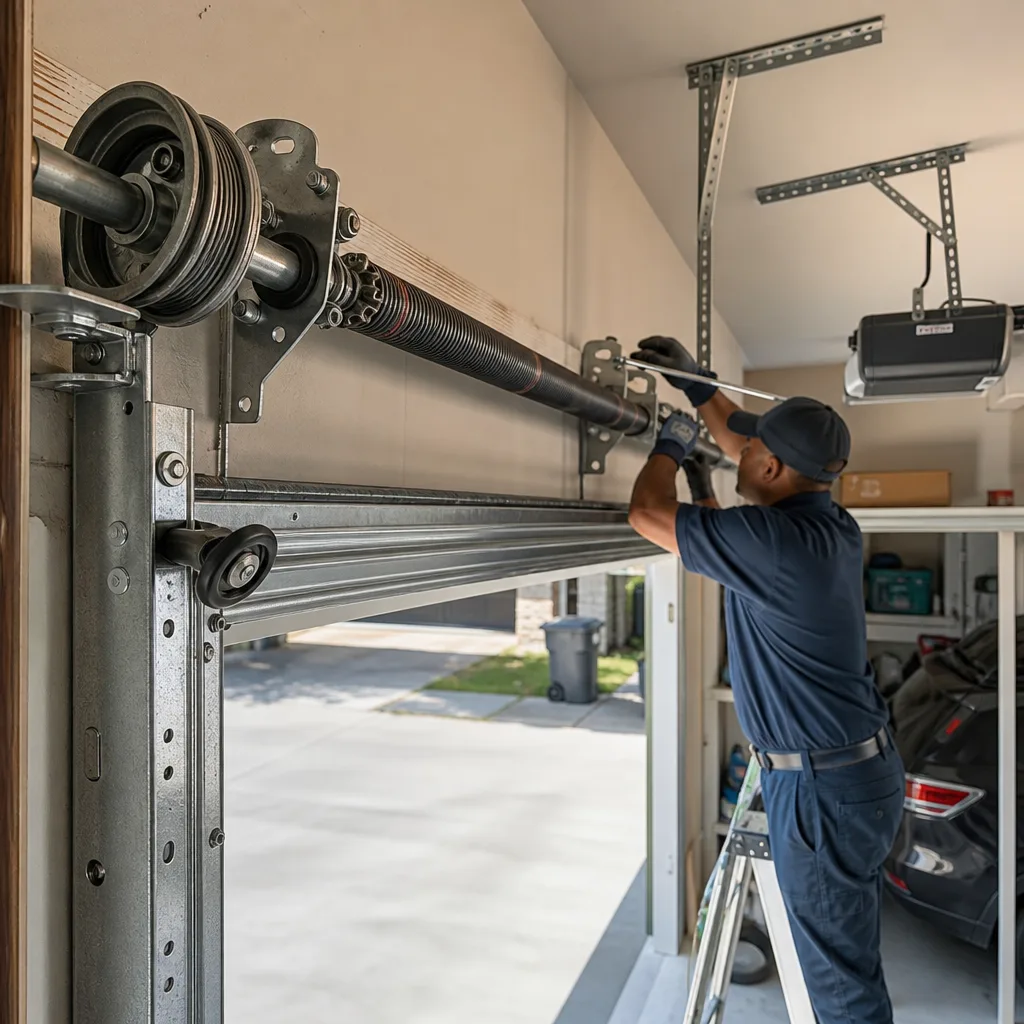
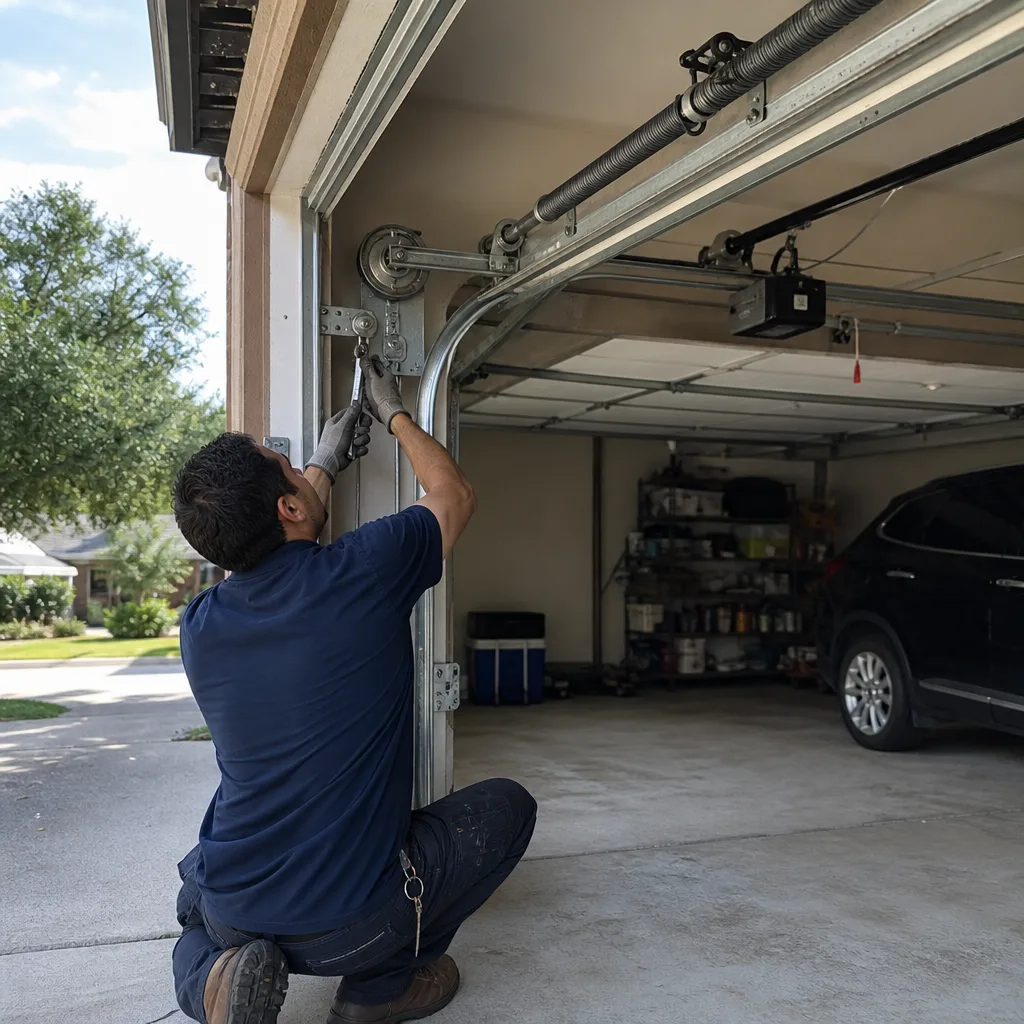
Torsion springs are under huge tension. When a spring fails and needs replacement, this is not a DIY job. A spring under load can cause serious injury or death if mishandled. Here’s what a professional replacement looks like, start to finish, so you know what to expect and what a thorough job includes.
- Technician verification at the door: At Doyle Garage Doors Austin, the technician shows a photo ID badge and is wearing a marked uniform. We already sent their name and photo before the visit, so you know exactly who’s at the door before you open it.
- Spring measurement and written quote: The tech measures the existing spring’s wire diameter, inside diameter, and length to determine the correct replacement cycle rating. Then you get a written price before any work begins. No verbal estimate, no surprises.
- Door secured: The door is locked in the fully open position with clamps so it can’t fall during the work.
- Old springs removed: The tension is released from the old springs using winding bars, then the springs are slid off the torsion tube.
- New springs installed: Both springs are replaced, not just the failed one. They’re slid onto the tube, the cable drums are checked, and the springs are wound to the correct number of turns for the door’s weight.
- Balance test: The door is tested manually at the halfway point. It should stay in place without falling or rising. If it doesn’t, the spring tension gets adjusted until it balances.
- Opener force reset: The opener’s force settings are reset so it doesn’t overwork against the new springs.
- Written guarantee: You receive a written 365-Day Done Right Promise. If the spring fails within 365 days, we come back and make it right at no charge. That’s written, not verbal.
The whole job takes 45 to 90 minutes for a standard two-spring system. If a company tells you they can swap a torsion spring in 15 minutes and doesn’t offer a written guarantee, ask yourself what’s being skipped.
Step-by-Step: What a Professional Opener Installation Looks Like
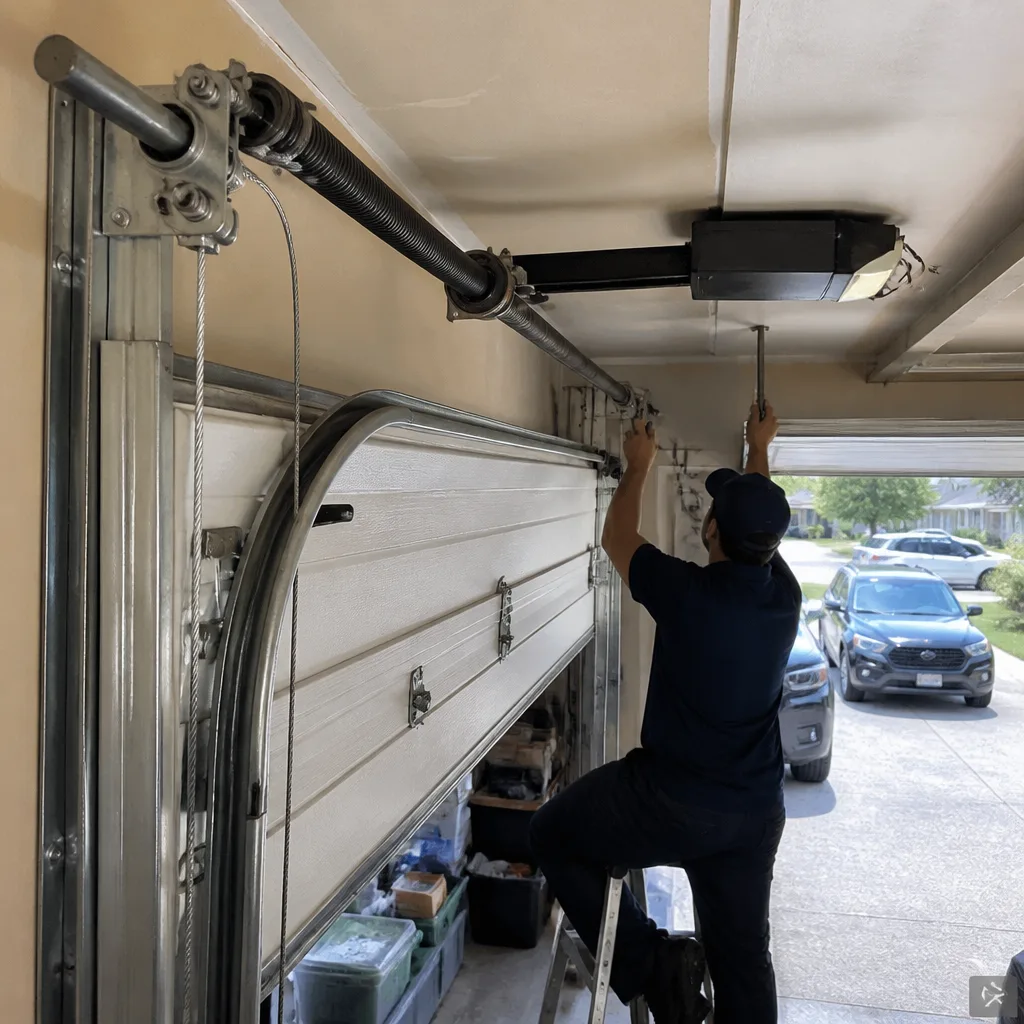
A garage door opener installation is measured work. It’s not an emergency call. You schedule it, we bring the right opener for your door, and the job takes 2 to 4 hours depending on your setup. Here’s what’s involved.
- Consultation and measured recommendation: We ask about your door’s weight, size, and current configuration. A chain drive works for a detached garage where noise doesn’t matter. A belt drive is better for an attached garage, especially if there’s a bedroom above. Jackshaft makes sense for high ceilings or ceiling-mounted storage. We give you the recommendation in writing with a price.
- Old opener removed: The old motor, rail, and wiring come out. If the old opener is a chain drive with a worn carriage, that caliche dust you’ve been battling goes with it.
- Rail and motor assembly mounted: The new rail is assembled and the motor is hung from the ceiling or wall. The rail needs to be level and aligned with the center of the door.
- Trolley carriage connected: The new carriage, fresh and clean, is attached to the rail and connected to the door arm.
- Safety sensors installed and aligned: Photo-eyes go in at floor level on both sides. They must be aligned perfectly, or the door won’t close. In Austin, we position them slightly above the typical dust line to reduce pollen interference.
- Limits and force settings configured: The opener’s open and close limits are set so the door stops exactly where it should. Force settings are tuned so the opener doesn’t push through an obstruction.
- Remote and keypad programming: Your remotes, wall button, and any keypad entry are synced. If you have a vehicle with built-in HomeLink, we can sync that too if you want help.
- Full cycle test and noise check: We run the door through several complete cycles, listen for grinding, and confirm the balance is correct.
- Written guarantee: The 365-Day Done Right Promise applies to opener installations too. If anything fails within a year, we come back free.
Curious what opener repairs cost instead of full replacement? Our Garage Door Opener Repair in Austin page covers noise fixes, sensor issues, and circuit board failures.
Austin-Specific Maintenance Timeline That Actually Works
Generic maintenance advice says “lubricate your garage door twice a year.” That’s a good baseline, but Austin conditions demand more precision. Here’s the timeline we recommend to our own customers.
Every 3 months (quarterly): Wipe down the photo-eye sensor lenses with a dry microfiber cloth. This is the single highest-impact thing you can do during cedar season. Also check that the safety reversal works by placing a 2×4 under the door and closing it. The door should reverse when it hits the board.
Every 6 months (spring and fall): Lubricate the rollers, hinges, and torsion springs with a white lithium or silicone spray. Don’t use WD-40, it’s a solvent, not a lubricant, and it’ll accelerate wear. Tighten any loose bolts on the track brackets. Clean the track interiors with a dry rag to remove caliche buildup.
Every year (before cedar season, around November): Inspect the bottom seal for cracks and splits. If it’s brittle, replace it before the January freeze cycles do the real damage. Test the opener’s force settings by opening the door manually halfway. It should stay put. Check the balance. If it’s off, the opener is working harder than it should.
Every 2 to 3 years: Replace the bottom seal, even if it looks okay. Austin’s wet-dry cycle breaks down the rubber from the inside. Replace nylon rollers if they’re chattering or wobbling. Have a professional inspect the torsion spring condition.
If you follow this timeline, most Austin homeowners can get 10 to 12 years out of a door and 6 to 8 out of springs. Skip it, and you’ll be calling us on a Saturday in July, which we’ll happily answer, but you’d rather be in Barton Springs.
Common Mistakes to Avoid
- Replacing only one torsion spring: When a spring breaks, the other one has done the same number of cycles. Replacing one saves maybe $80 today and costs you another service call when the second breaks within months. We always replace both. A company that won’t is doing half a job.
- Using WD-40 instead of a proper garage door lubricant: WD-40 strips the existing lubricant off your rollers and hinges. In Austin’s dusty conditions, dry rollers grind themselves down. Use white lithium grease or silicone spray.
- Ignoring photo-eye sensor pollen buildup: When your door refuses to close in January and February, the most common cause in Austin is cedar pollen on the sensor lenses. Five minutes with a dry cloth fixes most of these calls.
- Skipping bottom seal replacement because it “looks fine”: The seal degrades from the inside due to the wet-dry cycle. If it’s more than 3 years old in Austin, it’s probably letting dust and moisture into your garage, and it’s not sealing the bottom edge against critters.
- Painting a garage door dark brown or black on a west-facing wall: You’ll repaint every 3 to 4 years in Austin if you go dark. Light colors reflect UV and look new longer. If you want dark, budget for the maintenance.
- Hiring a handyman for torsion spring work: A handyman who doesn’t work on garage doors daily can misjudge spring size, wind it wrong, and create a door that’s dangerously unbalanced. Spring work under tension is specialized. This is one area where the trained professional is non-negotiable.
- Waiting for a loud bang before thinking about your springs: Springs do fail suddenly, but the weeks before a failure often bring warning signs: the door feels heavy when you open it manually, the opener sounds strained, or the door opens a few inches then stops. If you notice any of these, call before the bang.
See the difference
 Before
 After
After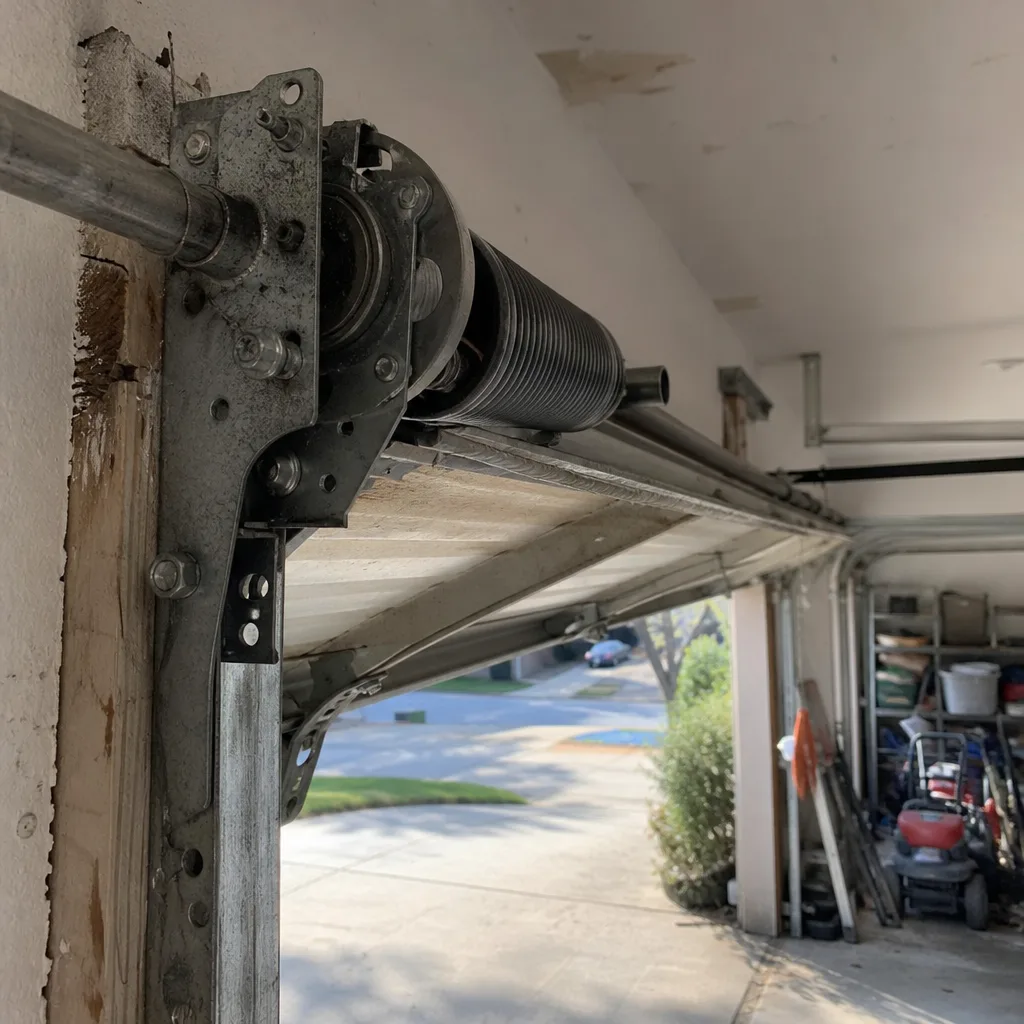 Before
 After
After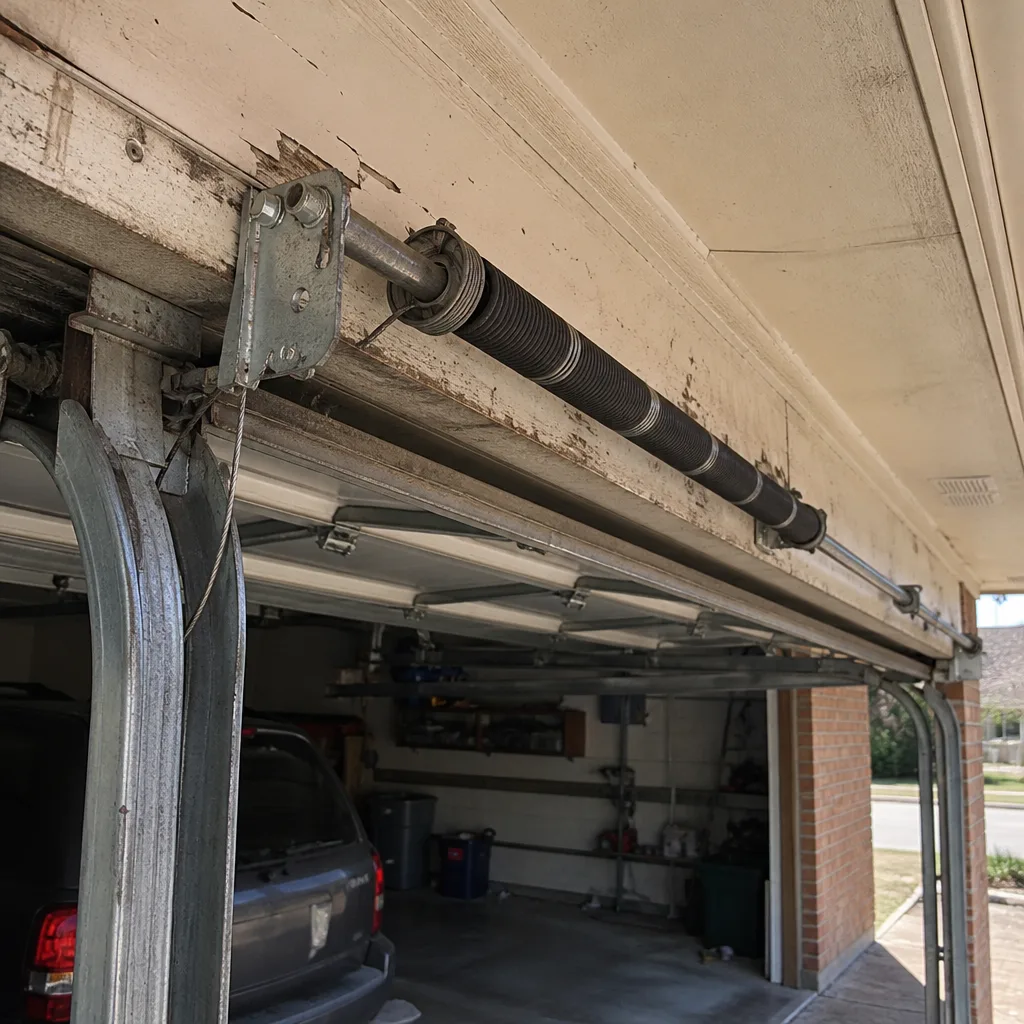 Before
 After
AfterWhen to Call a Professional
Any time a torsion spring, extension spring, or lift cable is involved, a trained professional is non-negotiable. The stored energy in these components can cause serious injury if mishandled. Signs you need a pro now: the door won’t open or close, you hear grinding or popping, the door opens crooked, the opener runs but the door doesn’t move, or the door is stuck in the open or closed position. If you’re unsure whether something is a safety issue, err on the side of calling. Doyle Garage Doors Austin offers free estimates in Austin, call (361) 470-4316, and a real person answers day, night, weekends, and holidays. We’ll help you determine whether you need a service visit or just need to wipe off a sensor.
Frequently Asked Questions
Most garage door repairs in Austin cost between $80 and $340 depending on the component. Torsion spring replacement runs $180 to $340, cable replacement $120 to $180, and roller replacement $90 to $160. These prices include written pricing before the work starts and a 365-day written guarantee at Doyle Garage Doors Austin. For an exact quote, call (361) 470-4316, estimates are free and there’s no obligation.
In Austin, the primary cause of spring failure is the metal fatigue caused by our freeze-thaw temperature swings and the spring’s cycle count. Most residential torsion springs last 8,000 to 10,000 cycles, which equates to 6 to 8 years for a typical home. Cedar pollen and caliche dust don’t directly break springs, but they add friction to the door system that makes springs work harder. If your door is over 7 years old and the springs have never been replaced, plan for it now rather than during a January freeze.
No. Torsion springs are under hundreds of pounds of tension. Releasing that tension requires specialized winding bars and training. Improper handling can cause serious injury or death. Extension springs without safety cables can launch metal fragments. This is work for a background-checked, trained technician. At Doyle Garage Doors Austin, our techs handle spring work daily and back every replacement with a written 365-day guarantee.
Insulated steel with a factory UV-stable finish offers the best longevity-to-cost ratio in Austin. Steel doors from Clopay and Amarr handle our sun well when painted in lighter colors and maintained with regular cleaning. Wood composite doors from Wayne Dalton last 12 to 15 years before panel work. Aluminum doors resist rust but dent more easily. For most Austin homes, an R-12 or higher insulated steel door is the value pick.
The Threshold Standard is a technician verification system used by Doyle Garage Doors Austin. Every technician is background-checked, identity-verified, and arrives in a clean marked uniform with a photo ID badge. Before the visit, we send the technician’s name and photo so you know exactly who to expect at your door. Every job includes a written price before the work starts and a written guarantee on every repair. It’s how we make the stranger-at-the-door concern something you don’t have to think about, and you can find more guides & resources on our blog.
Yes. We provide full Garage Door Installation in Austin, including new door selection, measurement, removal of the old door, installation of the new door and track system, and opener mounting. We service all major brands including Genie, Clopay, Amarr, and Wayne Dalton. Every installation includes a written price before the work begins and the 365-Day Done Right Promise. Call (361) 470-4316 to schedule a free measure and get a written quote.
The Bottom Line
Your Austin garage door lives in a rougher environment than most maintenance guides account for. Cedar pollen and caliche dust clog sensors and carriages. Freeze-thaw cycles fatigue torsion springs. UV bakes weatherstripping and dark paint. The countermeasures are specific: quarterly sensor cleaning, twice-yearly lubrication with the right product, spring replacement in pairs, and material choices that match our UV index. Doyle Garage Doors Austin has served Austin since 2001, and every visit includes a written price before the work starts, a written 365-day guarantee on every repair, and a technician whose name and photo you receive before they arrive. If your door needs work or you just want a professional opinion, Doyle Garage Doors Austin home is the place to start. Call (361) 470-4316 for a free estimate, and a real person will pick up, day, night, weekends, or holidays. You’ll know exactly who’s coming and exactly what it costs before a single bolt is turned.
Written by Aaron Teague, Owner at Doyle Garage Doors Austin, serving Austin since 2001.