
Last updated October 16, 2026
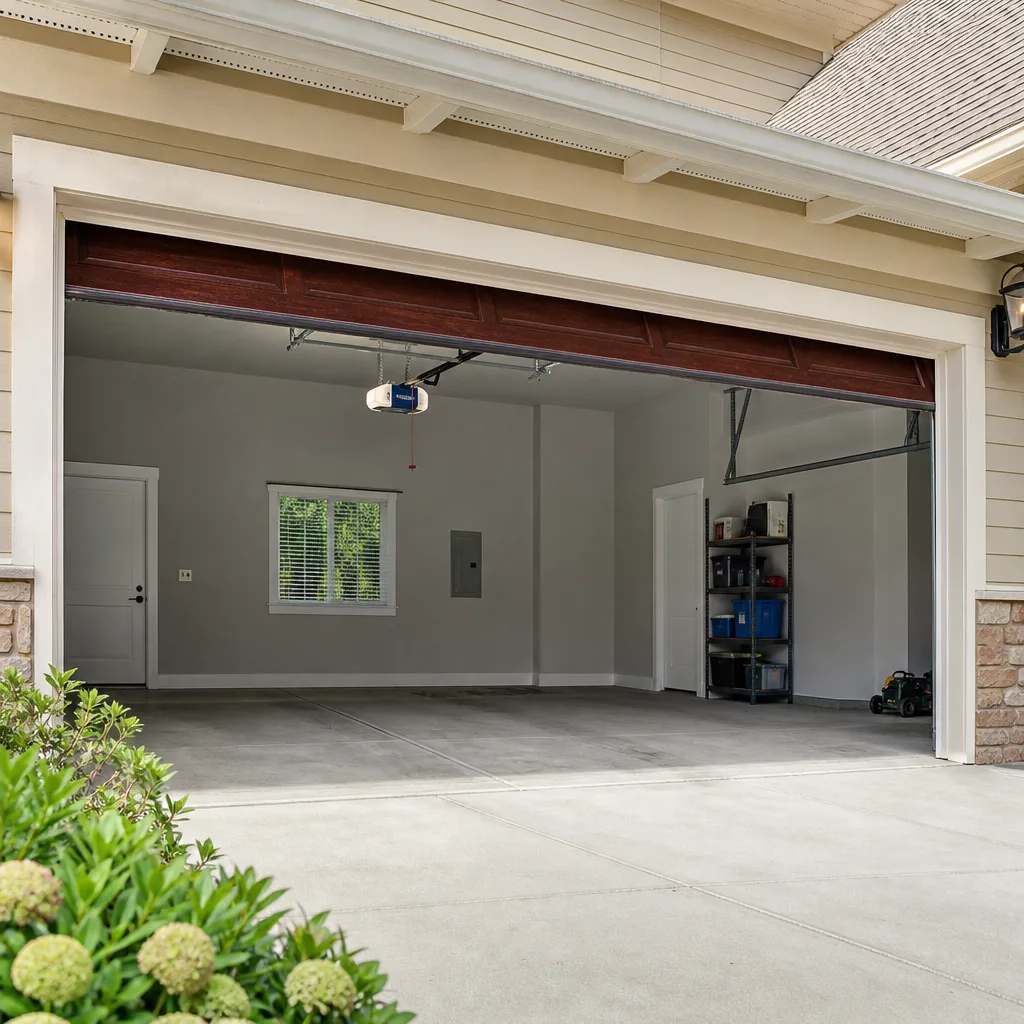
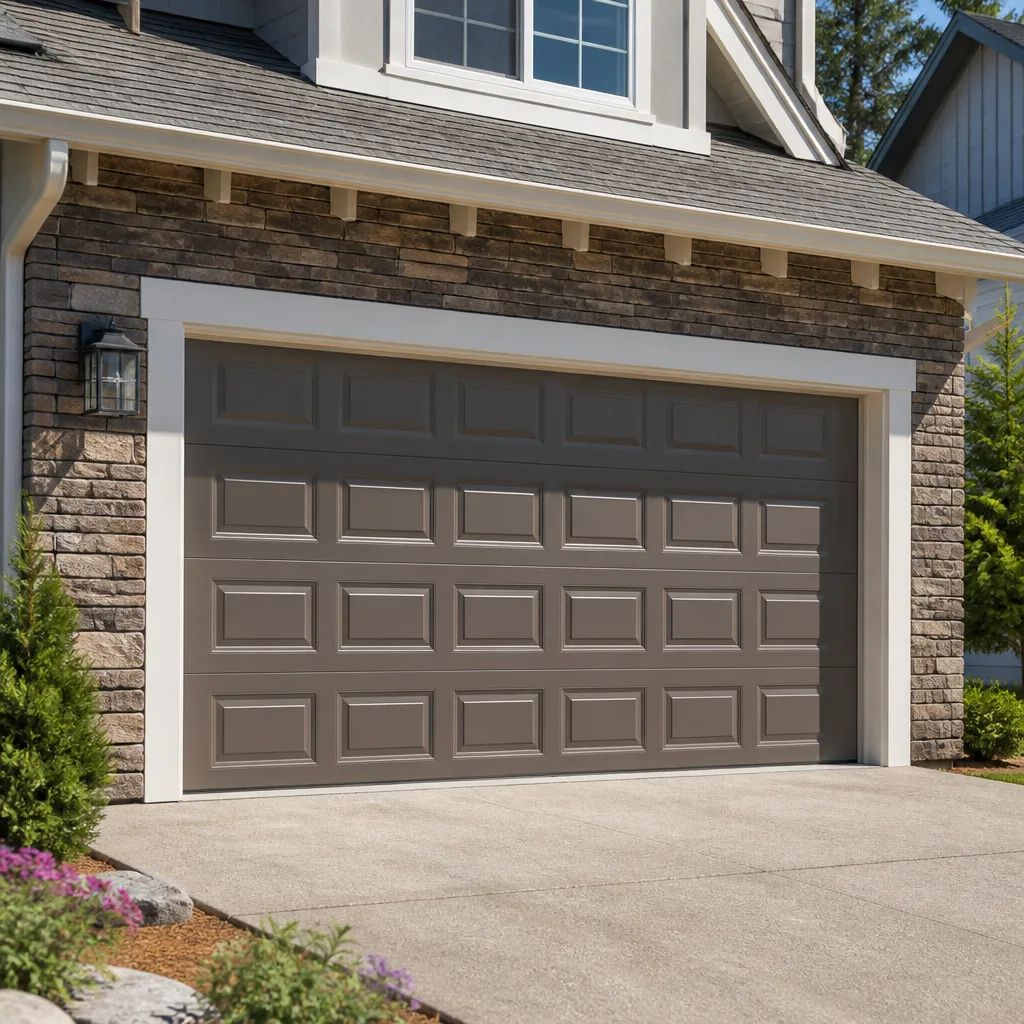 Raised-panel steel
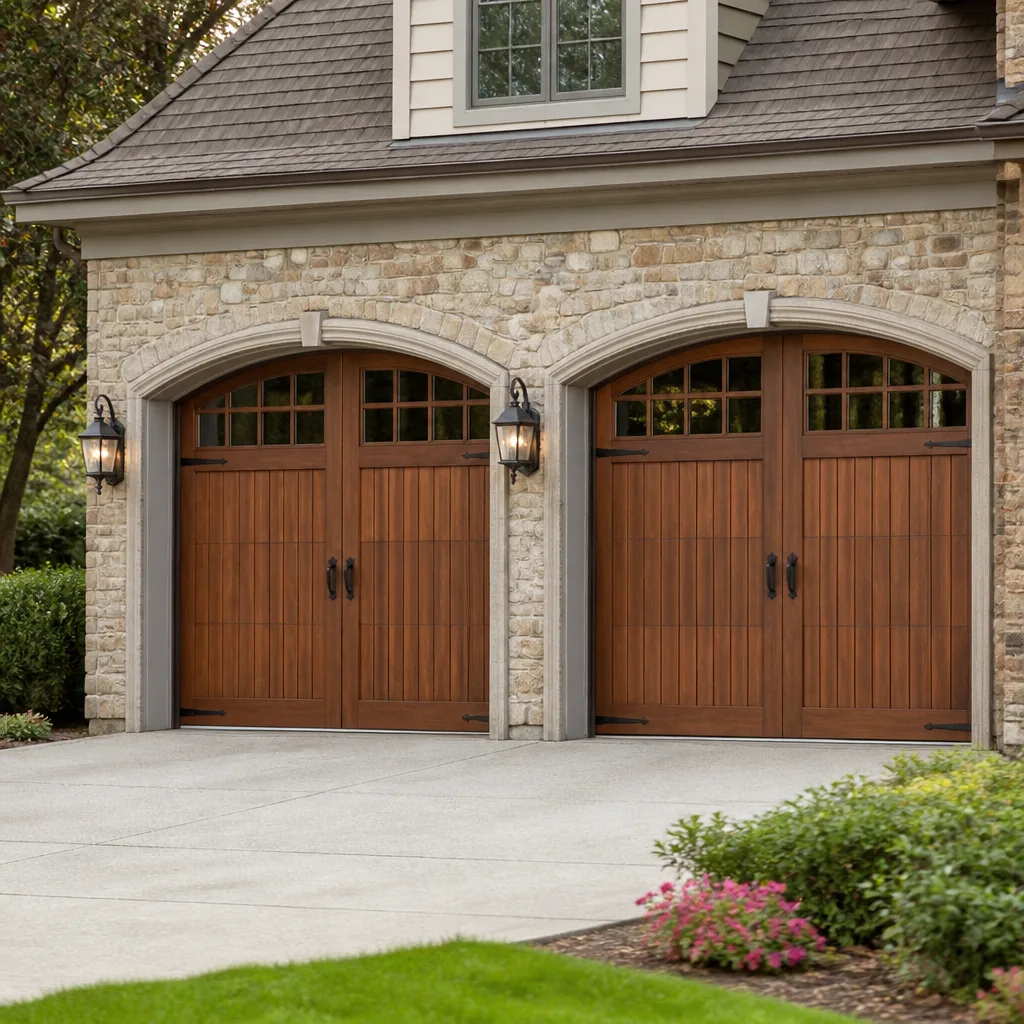 Carriage house
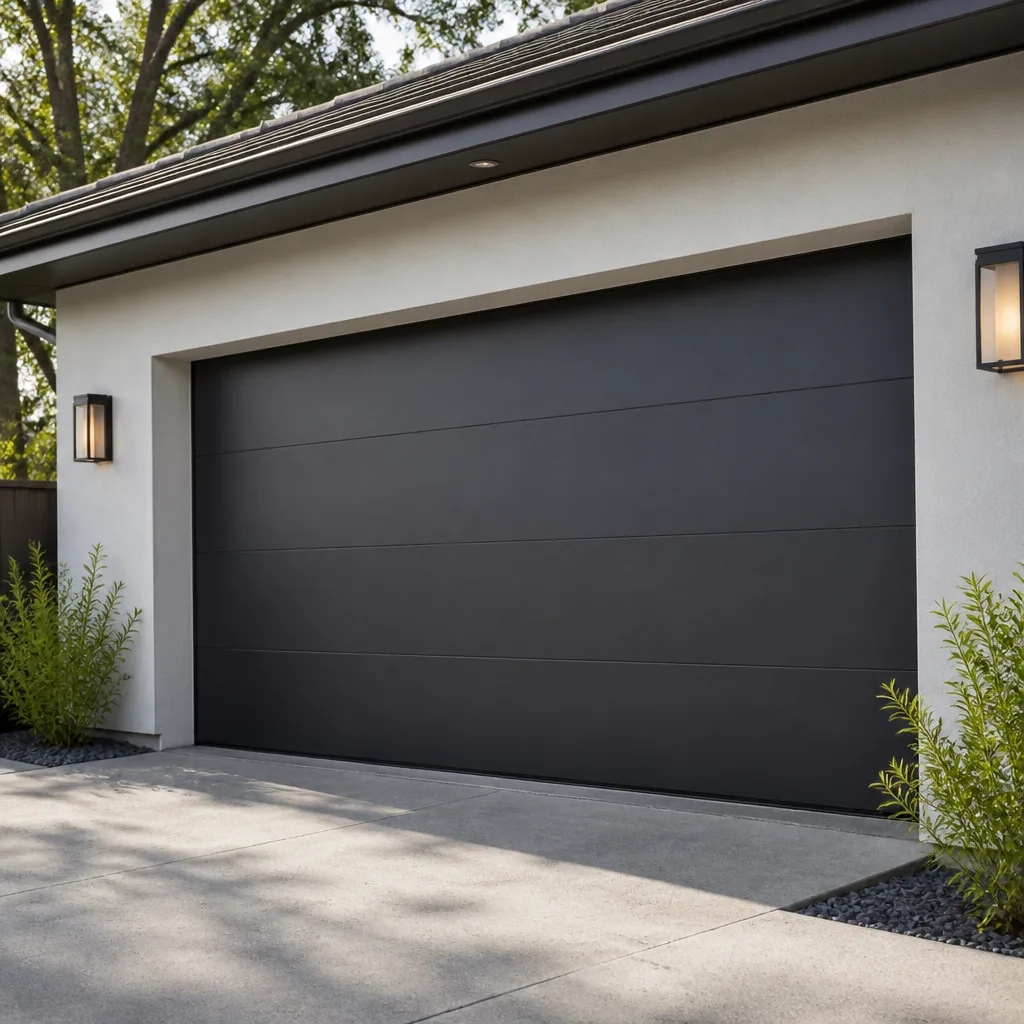 Modern flush
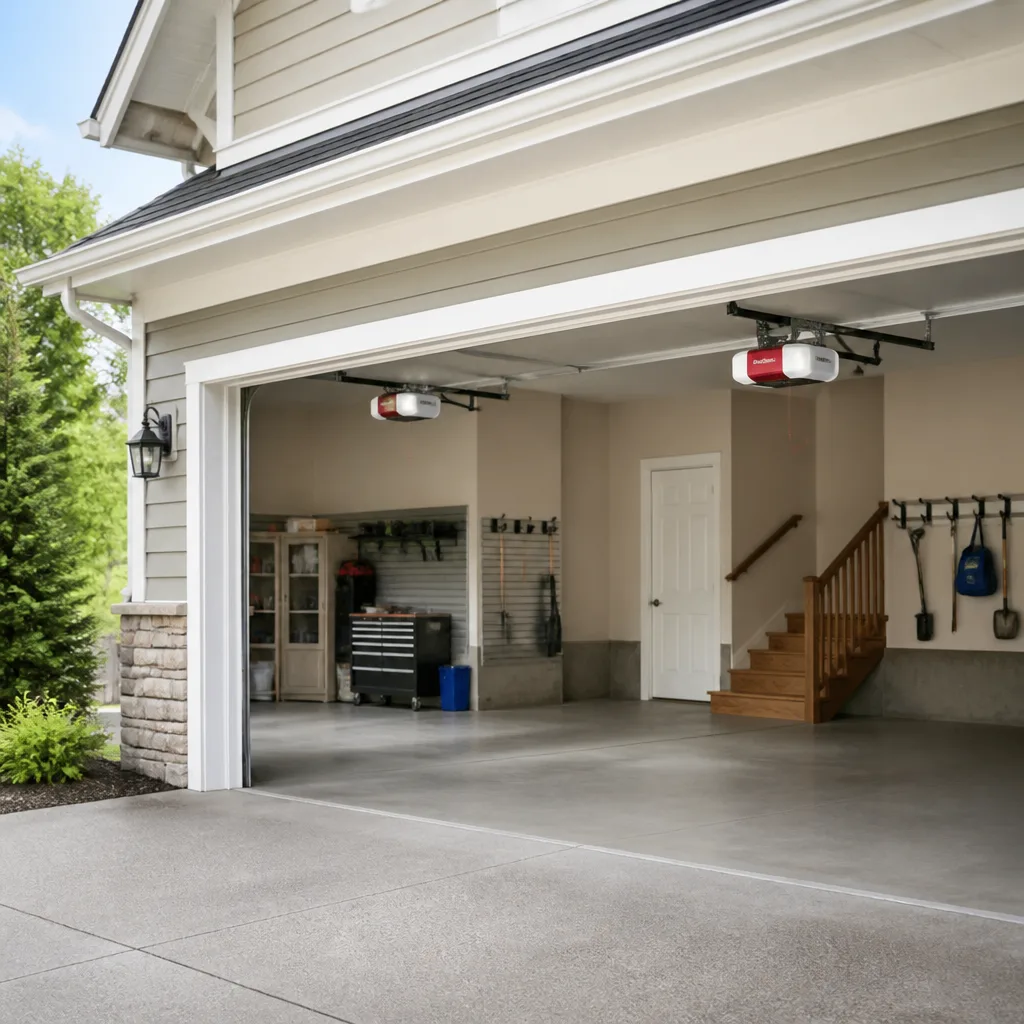 LiftMaster openers
 Chamberlain openers
Full 25-point door and opener safety check with every visit - springs, cables, rollers, tracks, and your LiftMaster or Chamberlain opener included
You get a price before we start. It does not change when the truck arrives.
Get your free estimateDIY vs Professional Garage Door: The Austin Homeowner’s Decision Guide
YouTube tutorials on garage door spring replacement have racked up over 4 million views, while the Consumer Product Safety Commission estimates roughly 30,000 garage door injuries occur every year in the United States. The overlap between those two numbers is not a coincidence, and Austin homeowners searching “can I fix this myself” land squarely in the middle of it. This guide-along with our Garage Door Repair Maintenance Checklist for Austin Homeowners-tells you exactly which garage door tasks are safe to do yourself, which ones require a trained professional, and what an honest decision actually looks like for each. We’re not here to scare you off a wrench, and we’re not here to pretend every repair needs a truck roll either. We’re here to give you the real line, based on two decades of service work across Austin, from houses in Mueller to ranch-style homes in Round Rock.
Styles & brands we work with
Quick Answer
About 80% of garage door maintenance tasks are genuinely safe for a careful homeowner: lubrication, weatherstrip replacement, sensor realignment, keypad reprogramming, and manual lock adjustment all fall in that category. The other 20% involves stored mechanical energy, and that’s the line: torsion springs, cable drums, and track realignment under tension can cause serious injury or death if mishandled, and should always be done by a licensed professional. In Austin, where summer heat expands metal tracks and cedar pollen clogs rollers faster than most of the country, that line matters even more than it does elsewhere.
Table of Contents
- The Real Divider: Stored Energy, Not Skill
- Safe DIY Tasks: The Complete Do-It-Yourself List
- Never DIY: The Physics of Why These Tasks Are Dangerous
- The Honest Truth About DIY Repair Kits Sold Online
- The Real Cost of a DIY Mistake
- The Middle Path: Prep Work You Can Do Before a Tech Arrives
- Common Mistakes to Avoid
- When to Call a Professional
- Frequently Asked Questions
- The Bottom Line
The Real Divider: Stored Energy, Not Skill
Most homeowners assume the DIY-versus-professional question comes down to mechanical aptitude. It doesn’t. A careful person with no trade background can absolutely replace a weather seal or reprogram a keypad. A confident person with a decent tool collection can still lose a finger or worse if they unwind a torsion spring the wrong way. The actual divider is stored energy. A standard residential torsion spring, the large coil mounted above the door that does most of the lifting, holds roughly the equivalent mechanical energy of a shotgun blast when fully wound. That’s not an exaggeration. When it releases uncontrolled, the winding bar becomes a projectile. We’ve been doing garage door repair in Austin since 2001 and in our experience almost every serious garage door injury follows the same pattern: someone watched a video, felt confident, and never learned where the energy was sitting before they touched it.
How the Energy Works
Think of it this way. When you lift your garage door by hand, you’re doing the work your opener normally does. But when the door is closed, the spring is doing the work. On a typical 16-foot double door, that spring is under about 130 to 160 pounds of torque, depending on door weight. The winding cone on the end is what holds all of that torque in place. One quarter-turn of that cone releases or adds a meaningful amount of force. One full turn, done wrong, is enough to break a wrist. This is why the guidance that follows is not about “confidence” or “experience.” It’s about whether the task requires touching components under stored mechanical load.
Safe DIY Tasks: The Complete Do-It-Yourself List
Here is the part most guides never give you: a definitive list of what you can actually do, with enough detail to do it right. Every task below is one we would happily talk a homeowner through over the phone, and none of them put you near stored energy.
1. Weatherstrip Replacement
The rubber strip along the bottom of your door wears out every two to four years in Austin, faster if your driveway gets direct afternoon sun. When it cracks or flattens, you’ll see daylight under the door and feel heat bleeding into the garage. Replacing it takes about 20 minutes and requires only a flathead screwdriver, a pair of pliers, and the replacement strip. The old strip slides out of the aluminum retainer track. The new one slides in. No tension, no load, no risk. Wayne Dalton and Raynor doors sometimes use a T-style retainer rather than a U-channel, so check your door brand before ordering the part.
2. Safety Sensor Alignment
Those two small boxes on either side of the door track, usually four to six inches off the floor, are photo-eye sensors. When they’re out of alignment, your door won’t close, or it reverses immediately after touching the ground. The fix is often just loosening the wingnut that holds the sensor, nudging it until the alignment light turns solid, and retightening. On Austin homes with shifting clay soil, door frames move seasonally, which means sensors come out of alignment more often here than in cities with more stable ground.
3. Lubrication
Once every six months, spray the hinges, rollers, and the torsion spring itself with a lithium-based garage door lubricant. Not WD-40. WD-40 is a degreaser, not a lubricant, and it will strip the grease that keeps your rollers spinning quietly. Austin’s dry heat and cedar pollen create a gummy build-up on hinges that a proper lubricant will quiet within minutes.
4. Manual Lock Adjustment
If your door has a manual slide lock on the inside, usually a handle with two bars that slide into the track, it can come out of alignment and make the lock hard to engage. The fix is adjusting the striker plates on the track with a socket wrench, no spring tension involved.
5. Keypad Reprogramming
LiftMaster and Chamberlain keypads share nearly identical programming steps. You locate the “Learn” button on the ceiling-mounted opener unit, press it, and then enter your new code on the wall-mounted keypad within 30 seconds. No tools, no danger, no reason to pay a service call. If you’re in a newer Austin subdivision with fiber internet running through the garage, the interference from your router can occasionally scramble the signal, which is usually resolved by moving the opener’s antenna slightly.
Never DIY: The Physics of Why These Tasks Are Dangerous
These four tasks should never be attempted by a homeowner. Not because you lack ability, but because the consequence of a mistake compounds too fast to control. Each one involves stored energy or load-bearing components that fail suddenly.
Torsion Spring Winding and Replacement
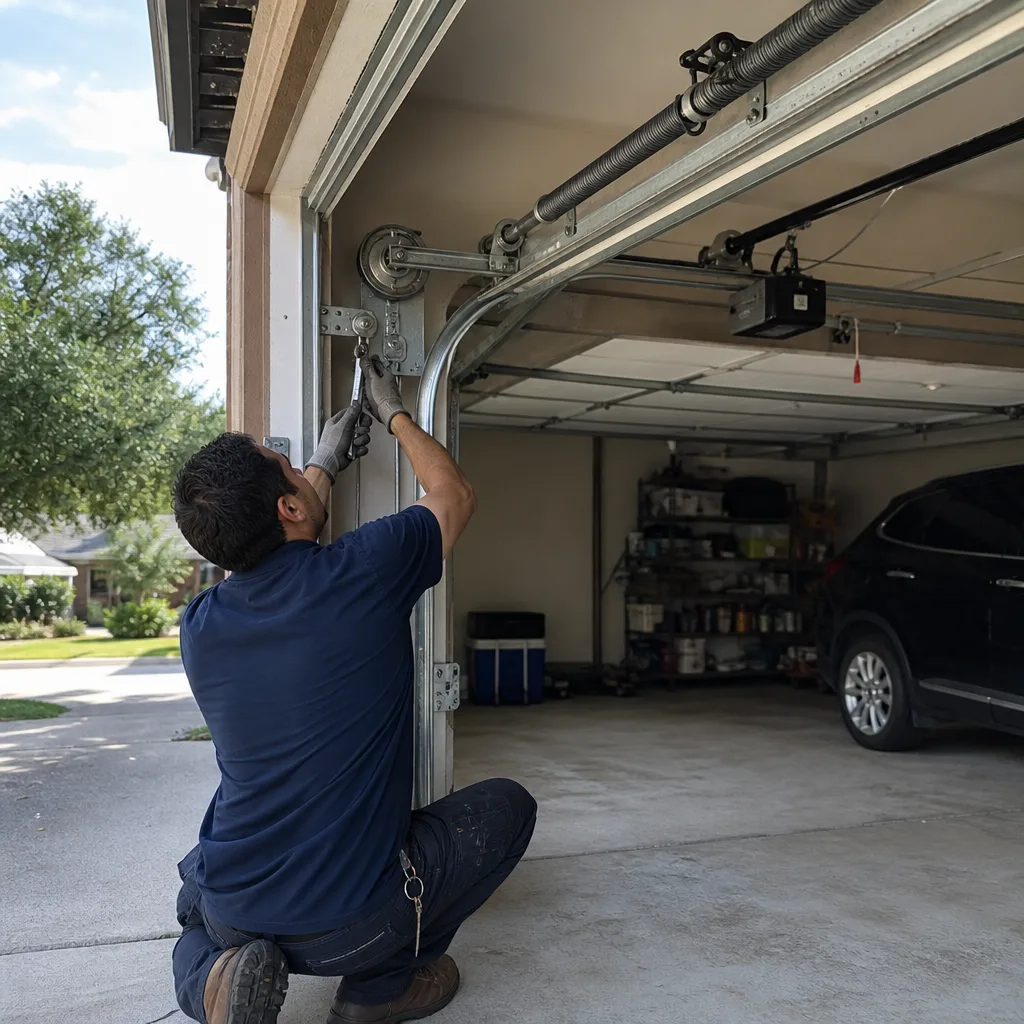
We said it earlier and we’ll repeat it because it bears repeating: a fully wound torsion spring stores enough energy to hurl a steel winding bar through a car door. The process of winding and unwinding requires two solid steel rods inserted into the winding cone, incrementally, a quarter-turn at a time. One slip while under load and that rod becomes a missile. Spring replacement also requires matching the wire diameter, inside diameter, and length to the exact door weight. Get it wrong and the door won’t balance, which means your opener motor burns out early or the door slams shut when the spring lets go. Austin’s temperature swings actually make this worse: springs lose about 1-2% of their tension for every 20 degrees of temperature change, which means a spring wound in January behaves differently in July.
Cable Drum Re-Spooling
The cables that run up the sides of your door attach to drums at the top. When a cable comes off the drum, it’s almost always because the spring lost tension first, which allowed slack into the system. Re-spooling the cable without first, correctly unloading the spring, means the door is hanging by whatever’s left of the other cable while you work. On a double door, that’s often 150+ pounds of loaded steel. If the remaining cable snaps, the door drops vertically. No one recovers from that quickly enough to avoid injury.
Track Realignment on a Bent Header
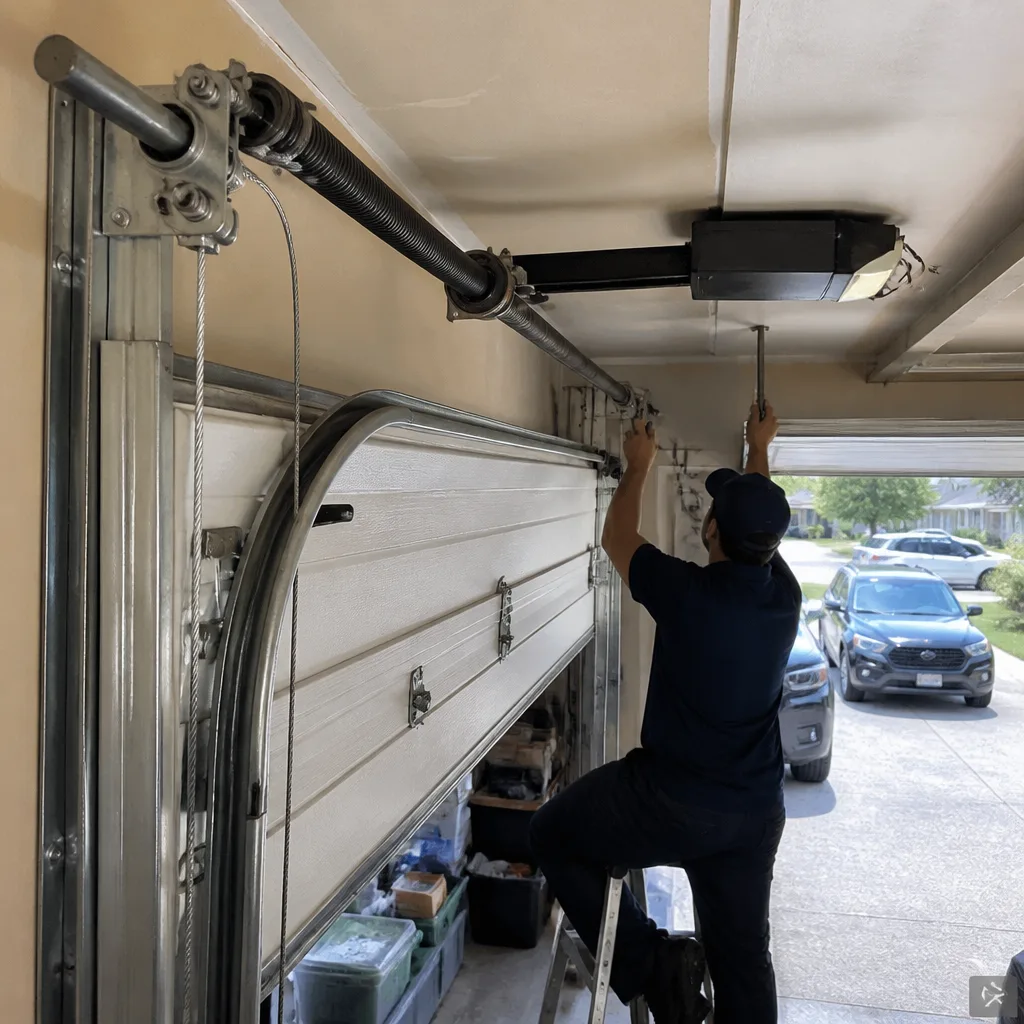
The horizontal track that runs back into your garage is bolted to the wall and suspended from the ceiling. If the door hit something, or if a spring broke and the door dropped, the track can bend. Realigning it means loosening the bolts that hold the entire track system while the door is in the raised position, which is only safe when the spring holds the weight. If you’ve ever watched a garage door fall when a spring snaps, you understand the risk. Austin homes built before the late 1990s often have headers that were installed directly into untreated lumber, and termite activity in Central Texas can compromise the fasteners, meaning the track may not be as secure as it looks.
Opener Wiring in an Attached Garage
This one surprises people. Wiring a garage door opener seems simple, a few low-voltage wires from the wall button to the motor. But openers are plugged into or hardwired to home electrical circuits, often on shared breakers with kitchen appliances or laundry rooms in older Austin homes. A wiring mistake can create a fire hazard inside the wall, or send current through the low-voltage circuit and damage the opener’s logic board. If your garage is attached to the house, the fire risk is the same as any interior electrical work. This is not a DIY task unless you have actual electrical training.
The Honest Truth About DIY Repair Kits Sold Online
Search “garage door spring repair kit” and you’ll find dozens of listings for $40 to $90, usually with the spring, the winding bars, and a set of instructions that claim the job takes an afternoon. Here’s what the marketing never tells you.
What the kit includes: a pair of springs, usually of a standardized size like 7-foot height and 16×7 door width, two winding bars, and a printed instruction sheet. What the kit doesn’t include: a way to know whether those springs are the correct wire gauge for your specific door, a tension gauge to verify the spring is wound correctly, or any guidance on what to do when your door is a non-standard weight. Austin garage doors are often heavier than average because of the insulation required for our heat, or because the previous owner installed a solid wood door for curb appeal in neighborhoods like Hyde Park or Tarrytown.
The kit instructions also assume a neutral installation environment, which Austin rarely provides. Summer heat expands the metal track and makes the door slightly taller. Cedar pollen, abundant from December through February in Central Texas, gums up the rollers and adds friction to the door’s movement. The spring tension that works for a clean, well-lubricated door in mild weather will be wrong for a door that’s carrying pollen-fouled rollers in August. A kit cannot account for that. It just tells you to wind the spring a certain number of quarter-turns and then test the door.
Our honest recommendation: if you want to understand your door better so you can maintain it, a DIY kit is a fine educational purchase. If you’re hoping to save money on a spring replacement, a kit is a false economy, and the next section explains why.
The Real Cost of a DIY Mistake
The ER visit is the cost everyone thinks about, and it’s real. A torsion spring injury can mean broken bones, deep lacerations, or worse. But even if you avoid injury, the financial math of a DIY attempt gone wrong usually makes hiring a pro the cheaper option. Here’s the breakdown.
The Warranty Void
Most garage door manufacturers, including Raynor and Wayne Dalton, have language in their warranties that voids coverage on doors that have been repaired with non-factory parts or worked on by untrained individuals. That means if your door is five years old and you replace a spring with a generic kit spring, and then the panel cracks because the door was out of balance, the manufacturer will not honor the claim. You’ve traded a $300 repair for a $900 panel replacement.
The Insurance Complication
Homeowner’s insurance policies generally cover garage door damage from storms, accidents, or theft attempts. They generally do not cover damage caused by an unreported DIY repair that went wrong. If your door falls off the tracks because you re-spooled the cable incorrectly, and then you file a claim, you may be denied. Some adjusters will outright classify it as negligence.
The Cost to Undo Incorrect Work
This is the one most homeowners never plan for. A pro can’t fix a door with a half-wound spring, an out-of-balance track, and a stripped winding cone without first undoing all the incorrect work. That takes longer than starting from a clean break. You’ll pay for the labor to unwind your spring, inspect it for damage, re-spool the cable, and then do the correct repair on top. In our experience serving Austin since 2001, the average DIY repair failure costs about 40% more to fix than the original repair would have cost. If you do the math on a broken spring, the original professional fix runs around $180 to $340 in Austin. A botched DIY attempt that requires undoing and then redoing the work can easily hit $450 to $600.
Where the Money Actually Goes
Here’s the honest breakdown of what a professional spring replacement costs in Austin and why:
- Springs (pair): $80 to $180 depending on door weight and wire gauge
- Labor and calibration: $100 to $160 including balancing the door and testing travel limits
- Total typical range: $180 to $340 for a standard 7-foot or 8-foot residential door
What that money buys is a spring that matches your door’s exact weight, balanced so the opener isn’t working harder than it should, and a written guarantee. If the spring gives out early, the Doyle Garage Doors Austin home team comes back at no charge. That’s the calculation the DIY savings never accounts for.
The Middle Path: Prep Work You Can Do Before a Tech Arrives
There’s a third option between full DIY and full-service, and it’s the one smart Austin homeowners use. Prep work reduces billable time, which can reduce your quote, and it helps the technician diagnose the problem faster.
What to Prep Before a Pro Arrives
- Clear the garage floor. Move boxes, bikes, and stored furniture at least six feet back from the door. Technicians need room to work on the spring line and track.
- Test the door manually. Pull the emergency release cord and try lifting the door by hand. Note whether it stays up on its own, feels heavy, or slams down. That tells the tech whether the spring is broken or just weak.
- Write down the symptoms. When did the problem start? Was there a loud noise? Does the door start and then stop, or not move at all? Specifics cut diagnostic time.
- Take a photo of the opener model number. LiftMaster, Chamberlain, Craftsman, and Genie all print model numbers on the motor unit. A photo saves the tech a ladder trip.
- Note any recent changes. Did you install shelving near the sensors? Did a car bump the track? Did you have pest control work done recently? In Austin, fire ant treatments can leave granules on the photo-eye lenses and cause intermittent sensor failures.
When you call a company like Doyle Garage Doors Austin, tell the dispatcher you’ve done the prep work and can describe the symptoms. Under the Threshold Standard, you’ll get a technician’s name and photo before they arrive, and the written quote you receive will reflect the time your prep saved. That’s the honest middle path: you stay in control of the process without touching a spring.
Common Mistakes to Avoid
- Skipping the tension check before working on any part of the door. Even tasks like replacing a roller can become dangerous if you don’t first confirm the spring is holding the door’s weight. On an Austin summer day, a weak spring can fail without warning.
- Using WD-40 on bearings and hinges. It strips grease and accelerates wear. A proper lithium-based lubricant costs about the same and actually lubricates.
- Assuming all springs are the same. A 7-foot spring will not work on an 8-foot door, and Austin homes with custom carriage doors often have non-standard spring sizes that generic kits don’t cover.
- Forcing the door when it sticks. If the door binds on one side, the issue is usually a track problem or a broken cable, not something brute force will fix. Forcing it risks bending the track and turning a $150 fix into a $700 one.
- Overlooking the opener’s travel limits. After a power outage or a door replacement, the opener’s limits can be wrong. The door may over-travel and press on the ground, or under-travel and leave a gap. Adjusting travel limits is generally safe once you’ve read the manual, but doing it incorrectly can cause the door to reverse or fail to close.
- Hiring based on price alone. Austin has plenty of one-truck operators offering garage door work at half the going rate. Many are skilled. Some are not. What’s missing is the verification: no name and photo in advance, no written guarantee, no accountability if the repair fails. The tradeoff is never worth it when the job involves stored energy.
- Waiting until failure to maintain. A spring that gets lubricated twice a year and visually checked can last 10,000 to 15,000 cycles, roughly 8 to 12 years of normal use. A spring that’s ignored will fail sooner, and usually at the worst possible moment, like when you’re leaving for work on a morning when it’s 100 degrees in the garage and the last thing you want is a repair bill.
When to Call a Professional
Call a pro any time the work involves the spring, the cables, the track, or the opener’s electrical connection. If your door won’t open, makes a loud bang, drops suddenly, or hangs crooked, don’t try to fix it yourself. If a cable is frayed or off the drum, call. If the spring is visibly broken or stretched, call. If the door feels unusually heavy when you pull the release cord, the spring is compromised and the door is not safe to operate. Doyle Garage Doors Austin offers free estimates in Austin – call (361) 470-4316 and a live person will answer, day or night, no voicemail tree. If you’ve already attempted a repair and it’s not working, call anyway. We’ve undone plenty of DIY attempts over the years, and no one at Doyle will shame you for trying to save money. We’ll just get the door fixed correctly, put the price in writing, and back the repair for 365 days.
Frequently Asked Questions
A DIY weatherstrip replacement costs $20 to $50 in materials. A professional spring replacement in Austin typically runs $180 to $340 including the correct springs and labor. The gap widens when DIY goes wrong, because undoing incorrect work and then doing the repair properly often costs 40% more than the original repair would have. Call (361) 470-4316 for an exact quote on your specific door.
You can, but you should not. Torsion springs hold enough stored energy to cause severe injury when released incorrectly, and Austin’s temperature swings make proper tension calibration harder than a generic instruction sheet accounts for. A free estimate from Doyle Garage Doors Austin gives you the real number without touching a winding bar.
Weatherstrip replacement, sensor realignment, hinge and roller lubrication, manual lock adjustment, and keypad reprogramming are all safe DIY tasks. For step-by-step help on these and other projects, explore more guides & resources on our blog. None of them involve stored spring tension or load-bearing cables. Everything else is safer left to a professional.
Heat cycling and humidity. Austin’s summer highs above 100 degrees and winter lows near freezing put repeated thermal stress on the steel coil, and the cedar pollen and dry dust common in Central Texas add friction to the door’s movement, which shortens spring life. A spring that would last 12 years in a milder climate might last 8 years here without proper lubrication.
Usually not if the damage was caused by the repair. Insurance covers storm damage, vehicle impacts, and theft. It does not cover self-inflicted damage from an untrained repair, and some policies classify it as negligence. Read your policy before you pick up a wrench, or just call a licensed tech and keep the receipt.
Yes. Our trucks carry the common spring sizes, cable sets, rollers, hinges, and opener components for most residential doors, including garage door opener repair in Austin. That means most repairs are completed in one visit, same day, with the price written down before we start. Call (361) 470-4316 and a real person will answer, day or night, weekends and holidays included.
The Bottom Line
The DIY-versus-professional question for garage doors is not a test of your competence. It’s a test of whether the task involves stored energy. Weatherstrip, sensors, lubrication, locks, and keypads are all fair game. Springs, cables, tracks, and wiring are not, and pushing that boundary is where Austin homeowners get hurt and where the real costs pile up, in hospital bills, voided warranties, and insurance denials. You don’t have to choose between doing everything yourself and paying a fortune. Prep the garage, know the symptoms, ask for the written quote, and verify who’s coming to your door. Doyle Garage Doors Austin has been serving Austin since 2001 under the Threshold Standard, with name and photo sent before every visit, written pricing before any work starts, and a 365-Day Done Right Promise on every repair. For garage door installation in Austin, repair, or opener work, call (361) 470-4316 and talk to a real person 24/7. Free estimates, no surprises, no pressure.
Written by Aaron Teague, Owner at Doyle Garage Doors Austin, serving Austin since 2001.
See the difference
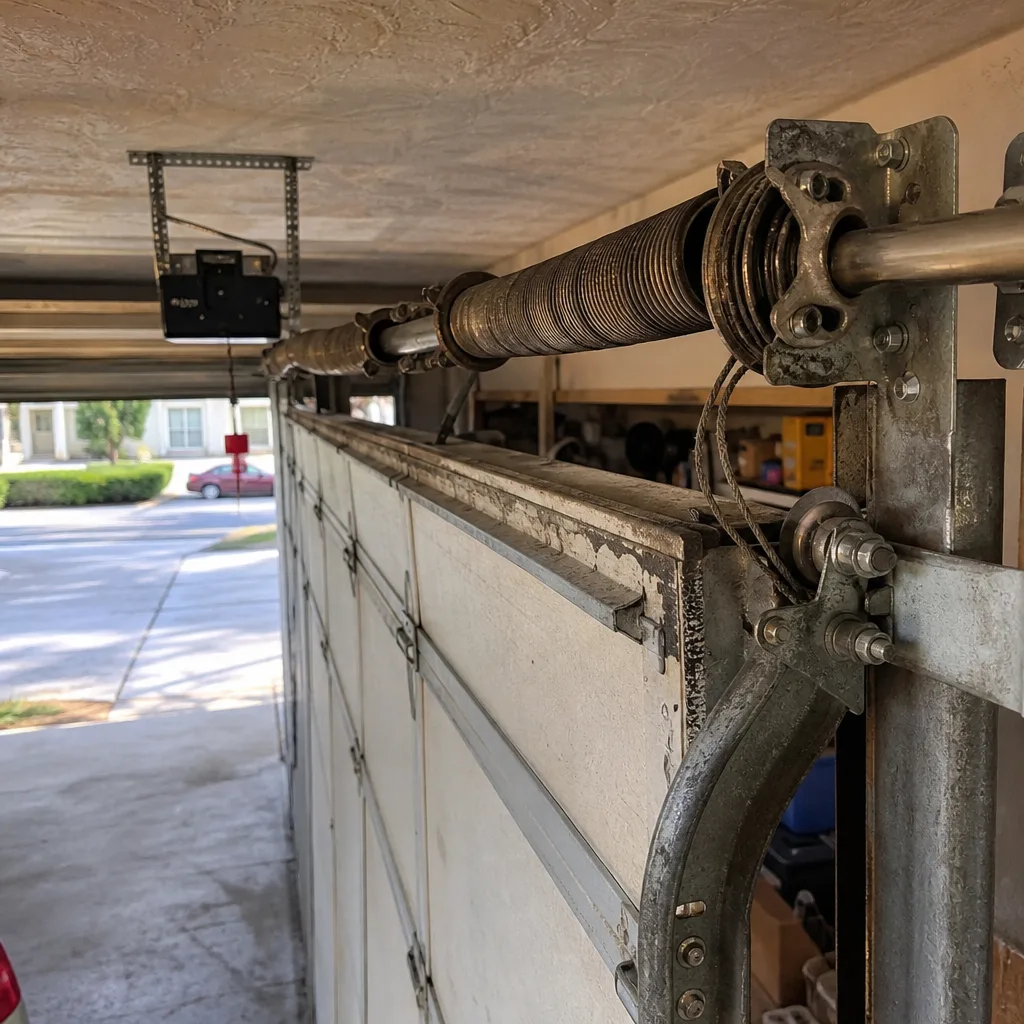 Before
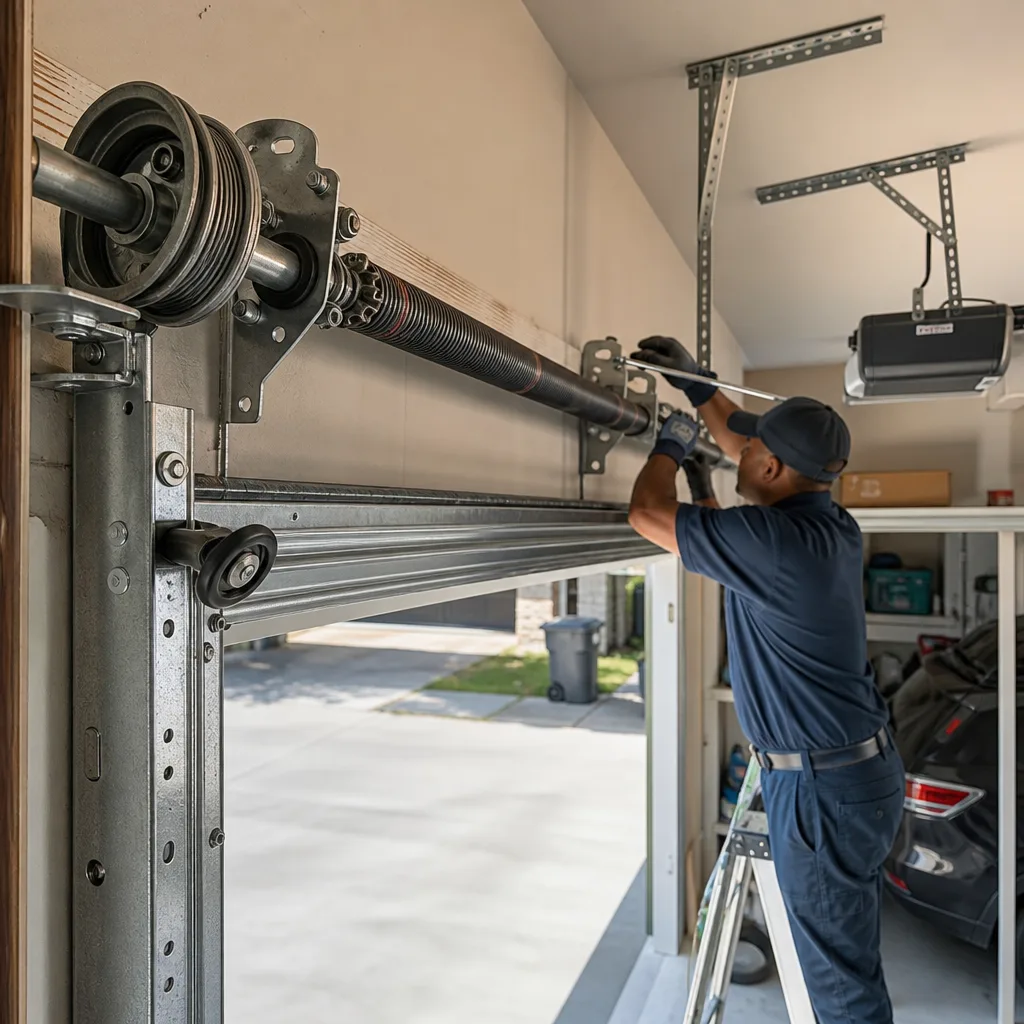 After
After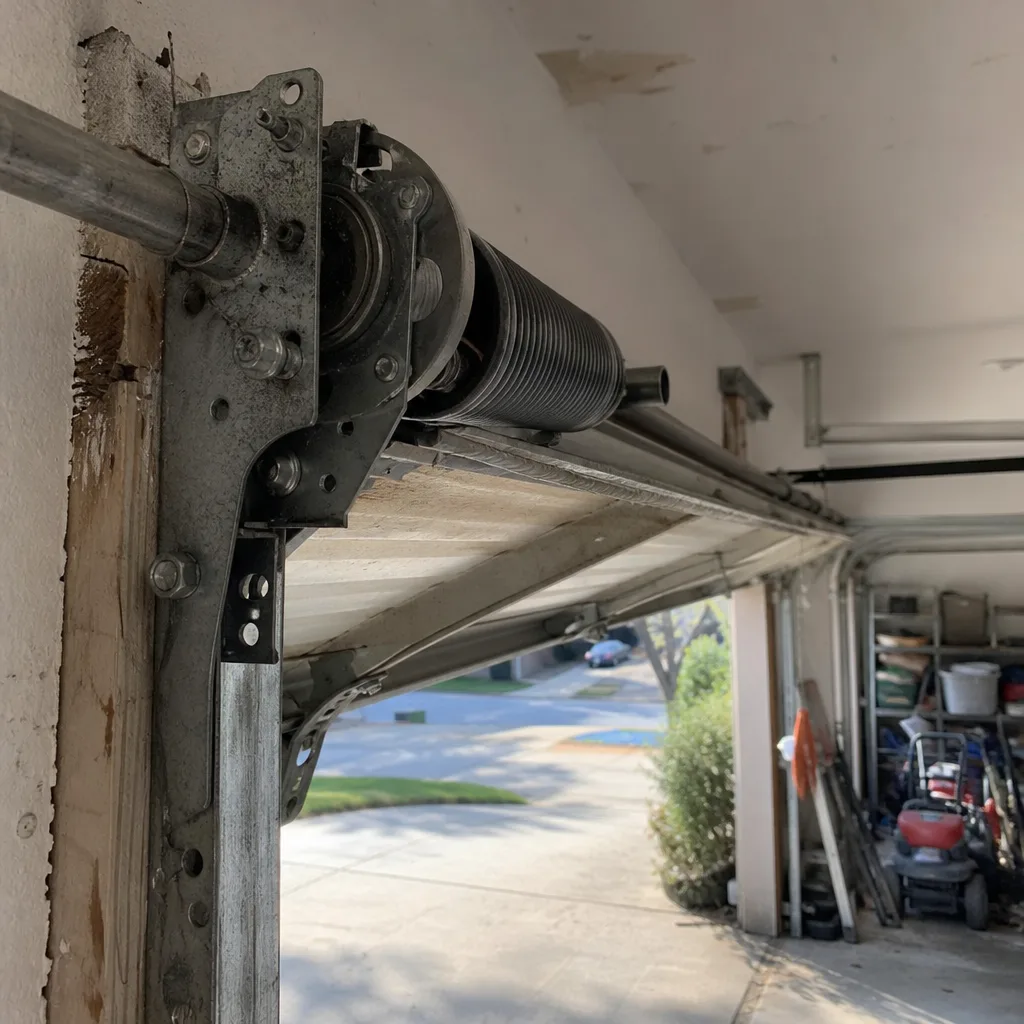 Before
 After
After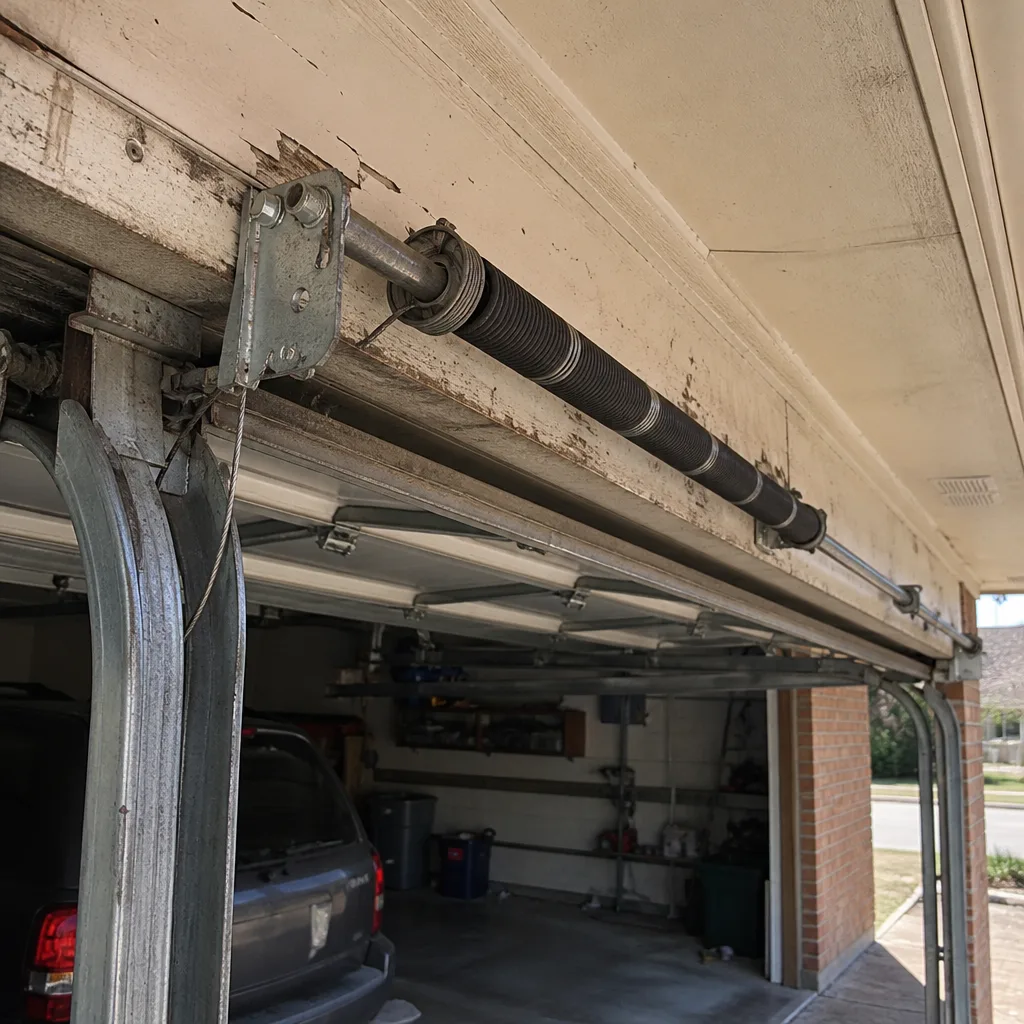 Before
 After
After